
(Picture) The southern tree agama is out and about in your garden
The male tree agamas are real show-offs with their bright blue heads that they often bob up and down in territorial displays.
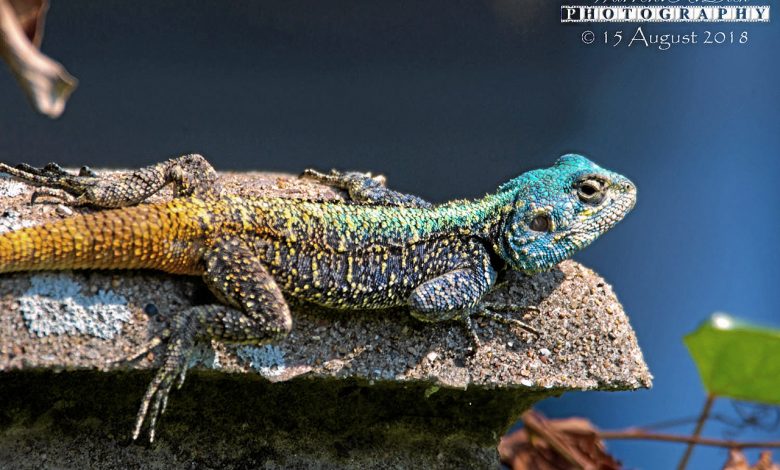
THE Southern tree agama is probably the largest lizard species that you will encounter in your garden in the Durban South area, except for the water monitor, which is considerably larger than the tree agama, but as their name suggests the water monitor is usually found near rivers, dams, and so on.
The male tree agamas are real show-offs with their bright blue heads that they often bob up and down in territorial displays. The females are a lot less colourful than their male counterparts.
“I have noticed that if the male lizard feels as if its colour has led to him being seen, he can lose all the blue colouration almost instantly.
I enjoy watching these majestic, powerful lizards climbing and hunting insects on my boundary wall at my home on the Bluff. However, to get a good picture of one is far from easy, as they have excellent eye sight and at the first sign of danger they scatter, often putting the wall or the other side of a tree between me and themselves. The tree agama is an opportunistic hunter and will eat any insect or even smaller reptile that they can overpower,” said Warren Dick
ALSO READ: Learn about the spotted bush snake in this week’s natures column
A question that is often asked by people who fear them, “are they dangerous?”
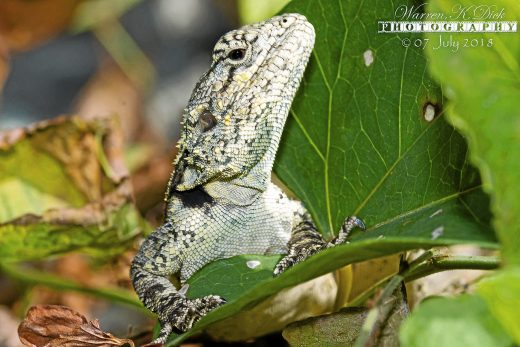
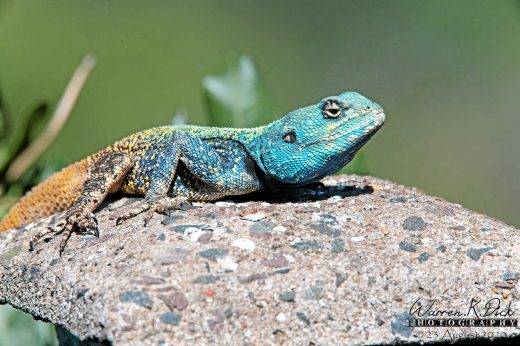
“The answer is no. These lizards do not possess any sort of venom, nor do they have any sort of poisonous saliva, making them completely harmless. As is the case with all other reptiles, if danger comes their way, they would rather flee than stand and fight, these lizards can run at high speed and will usually try find the nearest tree or wall to climb to get away from danger. However, if they are caught, they will not hesitate to bite in order to defend themselves, if the danger persists they will then turn tail and chase their attacker with mouth agape and hissing,” he added.
According to Warren, these lizards are becoming an increasingly rare sight in urban areas due to habitat destruction, as well as the introduction of cats and dogs into the environment. They are also needlessly killed by people who fear them as they think that they may be harmful.
“The next time you see one of these majestic lizards in your garden, take a minute to observe and enjoy the presence of a wild creature in your garden, as there is absolutely no need to fear the tree agama.”
Contact Warren to have some of your interesting insects, snakes or spiders identified. Call or WhatsApp him on 072 211 0353.
DID YOU KNOW?
Click on the words highlighted in red to read more on this and related topics.
To receive news links via WhatsApp or Telegram, send an invite to 061 876 3179.
The Southlands Sun is also on Facebook, Twitter and Instagram – why not join us there?
Do you have more information pertaining to this story?
Feel free to let us know by commenting on our Facebook page or you can contact our newsroom on 031 903 2341 and speak to a journalist.
(Comments posted on this issue may be used for publication in the Sun).