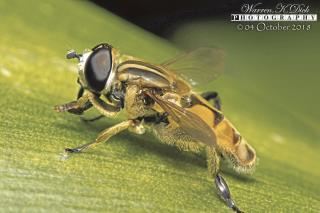
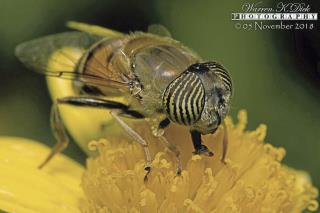
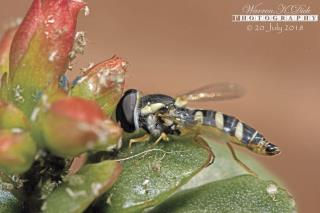
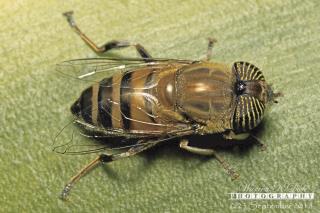
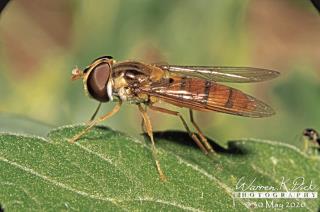
(Pictures) Hoverflies make for an interesting species of flies
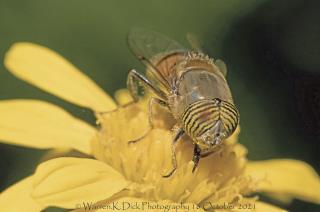
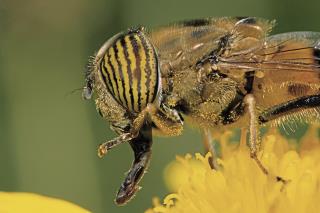
The hoverfly is also known as the 'flower fly' due to their uncommon habitat around flowers.
WHEN we think of flies, we usually only think of those disgusting disease carrying pests that like to share our food.
“However, there are many thousands of different species of flies in the world and all of them are actually helpful to us as humans, just some we should not share food with,” said Warren Dick.
According to him, the most beneficial fly species are the hoverflies. There are more than 6 000 different species of hoverflies found worldwide, while almost all adult hoverflies feed on nectar from flowers. The diet of the babies (maggots) can vary a bit.
“With the different species of hoverfly, there are generally two different diets for their babies. Around 70% of baby hoverflies feed on decomposing plant matter, some live in stagnant pools of water.
The other 30% of species are a true friend for gardeners, as they feed on aphids, just like the ladybug.”
ALSO READ: (Pictures) Learn more about the stiletto fly in this week’s nature’s calling column
The vast majority of hoverflies mimic the look of bees. This is done simply to fool a potential predator and avoid becoming its lunch.
“Hoverflies have been recognised as a vitally important friend to crop farmers, not only for their aphid munching maggots, but also for their flower pollinating abilities,” he added.
“Again, I want to discourage the use of poisons in the garden. Apart from killing the target species, poisons invariably end up killing many other species that could have helped if you just let nature take its course. Poisons can stay in the soil and continue doing damage for more than 20 years. This is the reason why the vast majority of our urban eco-systems are out of balance and at the end of the day it is usually the “pests” that find a way of surviving the poison onslaught.”
“The use of poisons has led to many species, which were once common, to become extinct from suburban gardens, for example chameleons. If you simply have to use something to control those pests, there are many more natural ways in which to do it without causing harm to the rest of the environment.”
“There are many websites that one can find on Google about this, there is also a wealth of knowledge to be gained by becoming a member of a local garden club,” he concluded.
To have some of your bugs, spiders or even snakes identified, call or WhatsApp Warren on 072 211 0353.
DID YOU KNOW?
Click on the words highlighted in red to read more on this and related topics.
To receive news links via WhatsApp or Telegram, send an invite to 084 418 2286.
The Southlands Sun is also on Facebook, Twitter and Instagram – why not join us there?
Do you have more information pertaining to this story?
Feel free to let us know by commenting on our Facebook page or you can contact our newsroom on 031 903 2341 and speak to a journalist.
(Comments posted on this issue may be used for publication in the Sun).