
Crow makes historic tortoise release in KZN
The Centre for Rehabilitation of Wildlife alongside EKZN Wildlife and UKZN were able to establish release protocols for tortoises in KZN.
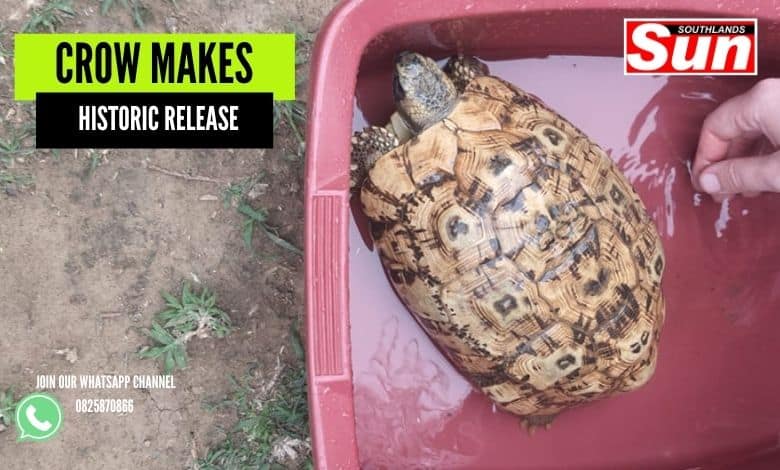
THE Centre for Rehabilitation of Wildlife has achieved a major milestone in KZN’s conservation efforts with the release of a group of Eastern hinge tortoises, some of which have been in its care for up to 15 years. This comes after the development of the first scientifically approved tortoise release protocol for the province, which sets the standard for future ethical, informed and environmentally sound releases.
Also read: Compass Cares launches new wildlife calendar in support of Crow
How did they end up here?
Clint Halkett-Siddall, director at Crow, said several of the tortoises had spent more than a decade undergoing rehabilitation, while others had only recently arrived at the centre.
“Many of the Eastern hinge tortoises at Crow originally arrived after being injured by dogs, struck by vehicles, confiscated as former pets or rescued by concerned members of the public,” said Halkett-Siddall.
The challenge:
For many years, one of the biggest deterrents to returning rehabilitated tortoises into the wild in KZN was the lack of a recognised, scientifically based release protocol. Without such guidelines, releases risked disrupting ecosystems, spreading disease or placing the animals back into unsuitable habitats.
“Fortunately, based on the long-term data from Crow, the pioneering work by UKZN and EKZN Wildlife has now provided the first-ever release protocol. This breakthrough enables future releases to be performed in a non-harmful manner, safely, ethically and in line with scientific standards,” said Halkett-Siddall.
Being indigenous to KZN, the Eastern hinge tortoises do not need DNA testing before release, unlike the leopard tortoises, which have to be genetically tested to confirm their geographic origins.
Also read: Baboon business: Crow rescues two young baboons on the run
Studying for a better future
“Each tortoise has been microchipped, photographed from all angles for identification, and is currently housed in a pre-release boma at Zingela for a 12-month acclimatisation period before final release. Once released, they will be fitted with tracking devices and monitored for an additional year to ensure successful reintegration,” said Halkett-Siddall.
Why can you not just keep it?
Despite their harmless look, said Halkett-Siddall, the Eastern hinge tortoise should never be kept as a pet.
“They are highly sensitive and prone to illness, often without showing visible signs until it is too late. They also require a very specialised diet,” he said.
Halkett-Siddal extended special thanks to Peter Calverley, the Zingela team, EKZN Wildlife and UKZN for their incredible partnership and commitment to making this pioneering release possible.
Their collaboration has helped make history for wildlife rehabilitation in KZN.
For more Southlands Sun news, follow us on Facebook, Twitter and Instagram. You can also check out our videos on our YouTube channel or follow us on TikTok