
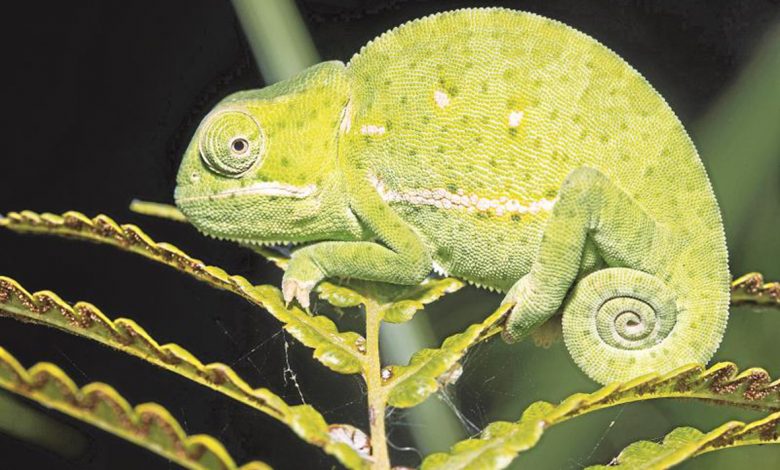
The flap-neck chameleon is probably the most widespread chameleon in sub-Saharan Africa.
It is also common in the Durban South area, however, it is mostly restricted to nature reserves and areas of coastal forest and grasslands. Whenever Warren Dick posts a picture on Facebook of one of these chameleons, there are folks commenting on how they have not seen one in many years.
Sadly, this is true as they have become extinct in gardens. This is mostly due to the need of people living in pristine, well trimmed insect free gardens.
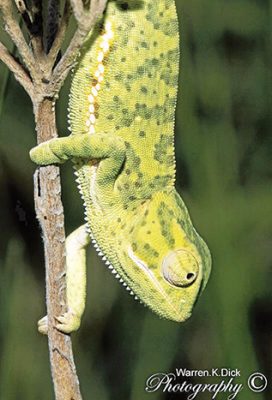
These chameleons are large lizards, measuring up to about 15cm in body length with a prehensile tail measuring just as long. These chameleons are generally green in colour, making them difficult to see during daylight.
When feeling threatened they often turn dark, almost black patches and spots on their bodies. They will also inflate themselves to look bigger, hissing and gaping their mouth.
They feed on all sorts of insects which are caught using their long sticky tongue that can measure just as long as their bodies. Chameleons have unusual eyes, being able to move them independently giving them surround vision.
The only blind spots they have is behind the head and in front of their noses. They can also see far better than humans.
Breeding:
Mating takes place in early to mid-summer and eggs are laid in late summer. Females spend several hours digging holes to lay between 25 to 60 eggs and carefully covering it. The eggs can take up to a year to hatch.
Chameleons are unfortunately highly sought after in the pet trade, however, it is illegal to keep or sell them.
Contact Warren to have some of your interesting finds of spiders, snakes or other wildlife identified. Call or WhatsApp him on 072-211-0353. Join in the conversation on Facebook, Warren’s Small World.