Remains of struggle fighters handed to families for burial
The families of struggle heroes Benjamin Moloise and Abraham Mngomezulu finally have closure.
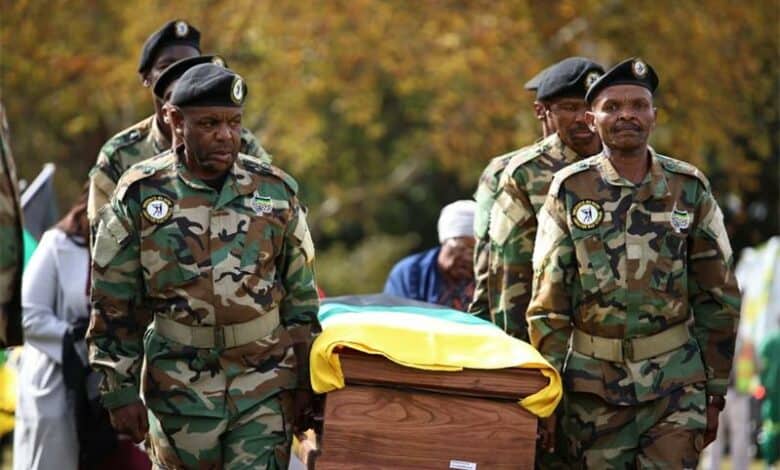
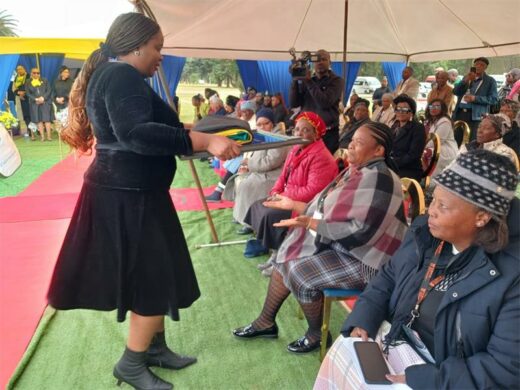
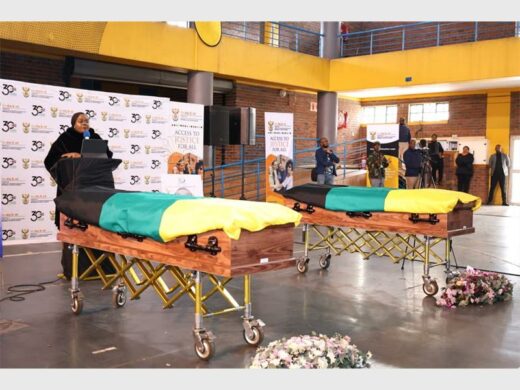
Minister of Justice and Constitutional Development Mmamoloko Kubayi presided over a solemn and historic handover and reburial ceremony of the exhumed remains of political activists hanged on death row for politically related offences.
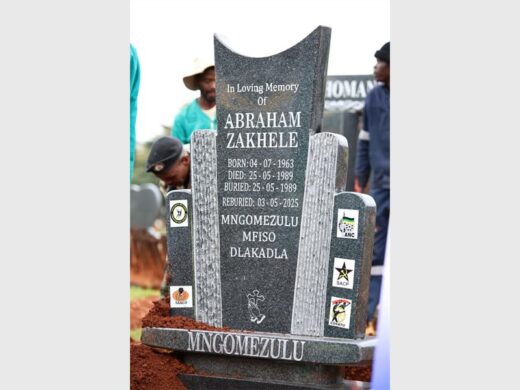
The event on May 3 saw the handover and reburial of ANC activists Benjamin Malesella Moloise and Abram Zakhele Mngomezulu, marking a milestone in SA’s ongoing journey towards healing, justice and reconciliation.
Between 1960 and 1990, at least 130 people were executed on death row for politically motivated offences.
At the time, the State withheld their remains, denying families the chance to mourn and bury their loved ones with dignity.
ALSO READ: Winnie Khumalo laid to rest at Westpark Cemetery
These individuals were interred as paupers in cemeteries around Tshwane without the knowledge or consent of their families.
Moloise was convicted in 1983 and executed in 1985 for the 1982 assassination of a security policeman.
He denied any involvement, claiming he confessed under duress. The ANC consistently maintained his innocence.
Mngomezulu was executed on May 25, 1989, after being convicted for the 1987 murder of Mandla Khoza during a rent boycott protest in Soweto.
ALSO READ: Residents warned of sunken graves in Olifantsvlei cemetery
He was sentenced to death, while four teenage co-accused received prison terms ranging from eight to 15 years.
“These two patriots are part of the great army of liberation that took up arms and fought for the liberation of the oppressed Africans since the dawn of colonialism.
“It was because of their heroic deeds and unbreakable spirit that the apartheid regime decided it should be forever silenced.
“Yet, it was because of their heroic deeds and unbreakable spirit that the apartheid regime was destroyed and thrown into the dustbin of history,” said Kubayi.
She added, “Not only did the regime want them silenced, but it was also the apartheid regime’s wish that our heroes should be forgotten for good. It is for this reason that the regime decided that after they were executed, our struggle heroes would be buried as paupers in unmarked graves.
“By burying them in an unmarked grave, the enemy wanted to ensure that the stories of their bravery would never be told.
ALSO READ: Foreign man wanted for rape and murder of girl (6) in Orlando
The enemy wanted to ensure that their courageous and heroic deeds would also be buried with them so that they could normalise oppression and racial segregation.
“In their short-sightedness and arrogance in power, the enemies of freedom were under the illusion that apartheid would last forever and the liberation struggle would end in vain. They were wrong.”
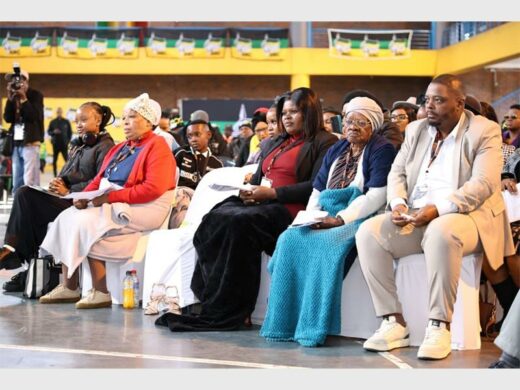
During the ceremony, their remains were returned to their families, offering long-overdue closure and recognition of the ultimate sacrifice made in the struggle for freedom.
“It is significant that this handover ceremony is also taking place during the Africa Month celebration, which we are celebrating this year under the theme Justice for Africans and People of African Descent Through Reparations.
Moloise and Mngomezulu fought for justice for Africans, so today, we are here to restore their dignity through a proper burial and celebrate their contribution towards the liberation of this country.
“Their remains were exhumed by the Missing Persons Task Team, assisted by the Truth and Reconciliation Unit in its co-ordinating capacity.
ALSO READ: Relatives urged to come forward to claim bodies of loved ones by local hospital
The exhumation was done in line with the Gallows Exhumation Project, officially launched by the Department of Justice and Constitutional Development in March 2016 by the former minister of Justice and Correctional Services.
“The project aims to locate and recover the graves of all political prisoners executed on the gallows and whose bodies remained the property of the State.
“These political prisoners were buried as paupers in unmarked graves in local municipal cemeteries within hours of their executions.”