
Bophelong youth benefit from kasi
Ster North undertook an insightful visit to this closely-knit community, aiming to investigate the emergence of several businesses initiated by South African citizens.
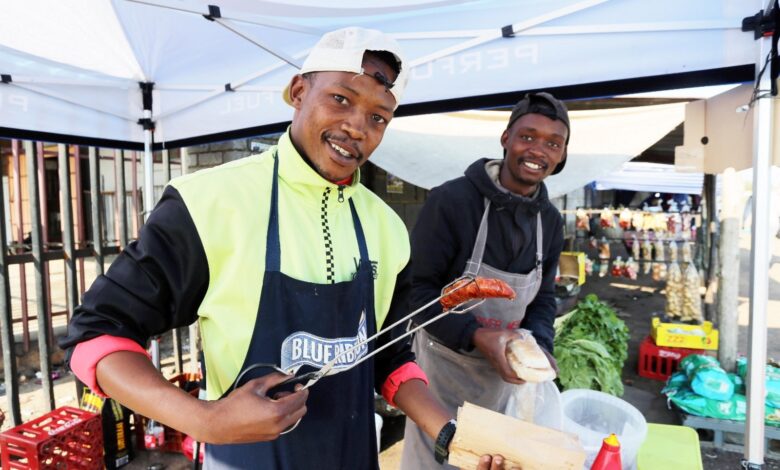
BOPHELONG – Transitioning from loitering at foreign national stores and kasi corners to establishing small businesses marks a significant testimonial to the aspirations of the people of Bophelong.
Overcoming past clashes between residents and foreign national shop owners in the pursuit of reclaiming the kasi economy, the community now appears to be experiencing positive transformation.
Ster North undertook an insightful visit to this closely-knit community, aiming to investigate the emergence of several businesses initiated by South African citizens. Among the entrepreneurs encountered by the Ster team were Boitumelo Makhalanyane (27) and Mpho Tlhole (24), who embarked on the venture of Hot Dogs Tsa Strata – a business focused on selling and delivering hotdogs in and around Bophelong. With a modest investment of only R350, the couple procured rolls, sausages, and charcoal to initiate their operations. Makhalanyane reflected on their journey, stating: “We always had the idea but never really implemented it. When we learned that foreign shop owners were removed from our township, we then decided to take the opportunity and start the long-planned idea.”
Tlhole highlighted the success of their business within a week of its inception, mentioning: “Since last week Thursday, we have been doing great, and we continue to move up the ranks. We now buy twice the stock we started with, and residents are supporting us.” The duo has further refined their business model, now employing a bicycle for the delivery of hotdogs to customers purchasing five or more.
Another noteworthy example is Mbulelo Mthimkhulu (23), who, having initially run a smoker’s tavern, expanded his family business to a larger tuck shop. Reflecting on the growth, Mthimkhulu shared: “We didn’t have much profit since we began running the shop three years ago. Since the removal of foreign shops, we have added some items.
From cigarettes, now we also sell bread, milk, fruits, Grandpa, and other products used daily. I can safely say the profit margins are growing.” Mthimkhulu emphasised that the collective push by residents to reclaim the kasi economy served as a catalyst for many young individuals to transition into entrepreneurs. He noted: “We needed that push factor to hype us to start businesses.
Normally, you would find us loitering around shops; now, we run those shops.”