Know the basics of baby CPR
What would you do if your baby stopped breathing? Would you know how to perform CPR (cardiopulmonary resuscitation)?

Nobody really knows how they’ll cope in a medical emergency. However, learning basic CPR skills can give you the confidence to take action in an emergency, rather than panicking and doing nothing. Parents may sometimes question themselves and lack confidence regarding emergency situations.
Life-saving skills
Darren van Zyl, a paramedic registered with the Resuscitation Council of Southern Africa (RCSA), explains the significance of the understanding basics of CPR. The best thing you can do in an emergency situation is to stay calm and if you know basic infant first aid, you will cope a lot better than someone who hasn’t had training.

The CPR guidelines are the same for everyone regardless of their age. However, there is a greater emphasis on providing breaths to babies and children than for adults. Babies’ physiology is slightly different from adults’ because they are small: their heart and breathing rates are faster to accommodate their faster metabolic rate for growth.
Basic baby CPR
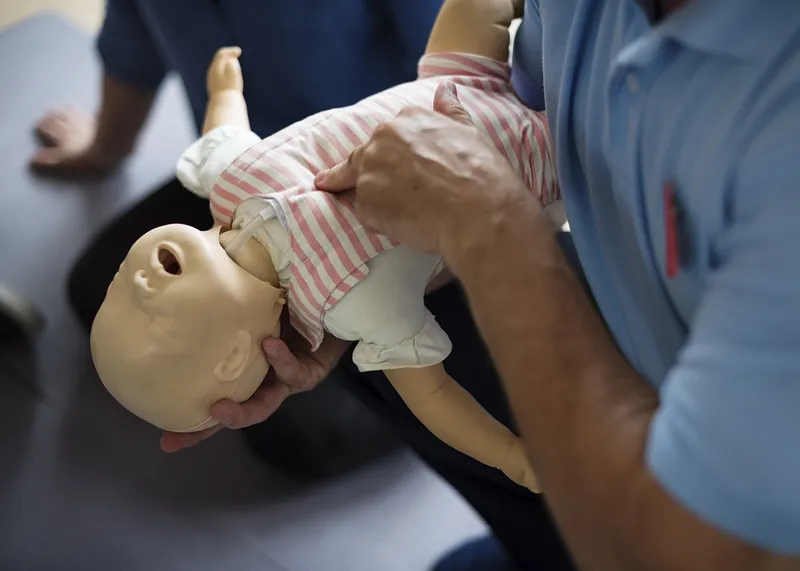
Here’s what to do in the event your baby is in distress, as per the Baby CPR Kit:
1. Tap the infant’s feet firmly and check for a response. If the infant does not respond and is not breathing, place him or her on a firm, flat surface and call for help.
2. Place two fingers in the centre of the infant’s chest and begin 30 chest compressions.
3. Cover the infant’s nose and mouth with your mouth and give two breaths until you see the chest rise. Repeat 30 chest compressions, alternating with two breaths.
For more information, visit the Resuscitation Council of South Africa Facebook page.
In the event of an emergency, contact the Life Cosmos Hospital Emergency Unit on 013 653 8001/2. For more information on Life Cosmos Hospital, contact christelle.matthee@lifehealthcare.co.za or visit our website.
The information is shared on condition that readers will make their own determination, including seeking advice from a healthcare professional. E&OE. Life Healthcare Group Ltd does not accept any responsibility for any loss or damage suffered by the reader as a result of the information provided.