
Coffee with Reverend Maans – Good Friday is a reminder that being a good leader isn’t always easy
When leaders choose to do what’s right, even if it’s hard, that’s when you see their true character.
Leadership is really put to the test when things get tough, not when everything is going great. It’s in those moments of stress, crisis, and when things seem hopeless that we see what a leader is truly made of.
If you look at the last week of Jesus’ life, known as Holy Week, which ends with Good Friday, you’ll see a perfect example of leadership under pressure.
During this time, all the fancy stuff is stripped away, and you’re left with the essentials: the character, courage, and willingness to sacrifice that define a true leader.
When Jesus came into Jerusalem, people treated Him like a king. But He didn’t do what most people would expect a king to do.
He didn’t build up an army, make deals with other powerful people, or try to keep His position safe. Instead, He kept moving toward a path that would lead to His suffering.
This shows us something important about leadership: it’s not about holding onto power or a certain status, but about doing what you’re meant to do. Real leaders are focused on fulfilling their purpose, not just keeping their position.
One of the most striking leadership moments occurs during the Last Supper. In a context of betrayal, denial, and confusion among His followers, Jesus takes a towel and washes His disciples’ feet.
In the ancient world, this was the task of the lowest servant. Here, leadership is redefined – not as authority over others, but as responsibility toward others. Leadership becomes service, not status.
This act challenges a deeply ingrained model of leadership still visible in many societies, including South Africa, where leadership is often associated with power, privilege, and control.
Jesus demonstrates the opposite: leadership that kneels before it stands, serves before it commands, and gives before it demands. What happens next really shows us what’s going on.
In Gethsemane, Jesus is dealing with some serious inner turmoil. Being a leader isn’t about being fearless, it’s about being brave enough to do what’s right even when you’re scared.
He doesn’t try to get out of suffering, instead he accepts it because it’s part of something bigger than himself. This is a really important thing about leadership: when leaders choose to do what’s right, even if it’s hard, that’s when you see their true character.
Over a cup of coffee, Reverend Maans van Zyl looks at punctuality
— WitbankNews (@WitbankN) April 1, 2026
https://t.co/9I8o8cxLwC #reverendmaans #witbanknews #opinion pic.twitter.com/KJ9ZhpJ0be
It’s not about taking the easy way out, it’s about staying true to what matters. During His trial, Jesus stands silent before false accusations. In a world where leaders often defend themselves aggressively or manipulate narratives, His restraint is remarkable.
Leadership is shown not only in what one says, but also in what one refuses to say. It is grounded in truth rather than image management.
Good Friday is a perfect example of how leadership can be really confusing. On the surface, it looks like Jesus failed big time – he was humiliated, rejected, and killed in public.
But if you look deeper, you’ll see that it’s actually the ultimate form of leadership: loving people so much that you’re willing to sacrifice everything for them. Jesus didn’t try to save himself, instead he gave himself up for others.
He didn’t run away from people’s problems, he took them on and carried the burden for them. This kind of leadership is all about putting others first, even if it means putting yourself last.
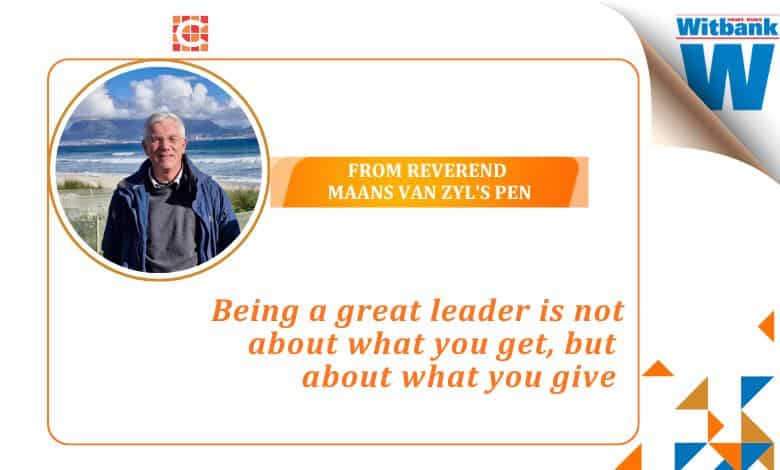
It’s a pretty powerful message, and one that can teach us a lot about what it means to be a real leader. What we learn from this is that being a great leader is not about what you get, but about what you give.
When we look at leaders who really make a difference, we see that they are focused on helping others, even if it means they have to make sacrifices. This is what we call servant leadership, where the leader’s main goal is to make sure everyone else is doing well and growing, no matter what it takes.
In South Africa, this issue really hits home. The country is still struggling with big problems in leadership, like corruption and leaders only looking out for themselves. Many leaders are more interested in gaining power and wealth than in helping the people they are supposed to serve.
This is a big challenge because it can be very tempting for leaders to use their position for personal gain instead of doing what’s best for everyone. Jesus’ leadership in His final week offers a corrective vision.
First, leadership requires moral courage – the willingness to stand for truth even when it is costly. Second, leadership requires humility – the ability to serve rather than dominate. Third, leadership requires sacrifice – the readiness to place the needs of others above personal gain.
This approach is actually a sign of strength, not weakness. It’s about being strong enough to keep going, to stay true to your values, and to do the right thing even when things get tough.
Servant leadership is not about being passive or laid-back, it’s about being actively committed to helping others and making a positive impact. It takes a lot of intention and effort to lead in this way, but it’s worth it in the end.
Another key insight is relational leadership. Jesus does not lead in isolation but in relationship. Even in His final hours, He speaks to His followers, comforts them, and prepares them for the future.
Leadership is thus not merely functional but deeply relational – built on trust, care, and presence. In the South African context, where communities often feel neglected or unheard, this relational dimension is critical.
Leadership must move beyond policy and performance to genuine engagement with people’s lived realities. Good Friday is a reminder that being a good leader isn’t always easy or immediately rewarding.
Sometimes, doing the right thing means facing tough times, being misunderstood, and even dealing with rejection. But the impact of strong leadership can be felt for a long time, even after the leader is gone.
It’s like planting seeds that will grow and flourish, making a real difference in the world. In a society longing for trustworthy leadership, the example of Jesus during Holy Week offers a powerful vision.
It calls leaders to move beyond self-interest, to embrace service, and to lead with integrity – even when the cost is high.
Leadership, in its truest form, is not about being followed. It is about being faithful.
This column is the opinion of the writer and does not represent the views of Witbank News.
Your city, your story, as it happens. Stay in the loop with WITBANK NEWS.
Find us on our website, Facebook, X, Instagram or TikTok