Day in the life of a paramedic
Paramedic, Robert McKenzie shares some insight into a typical day in the life of a medic.
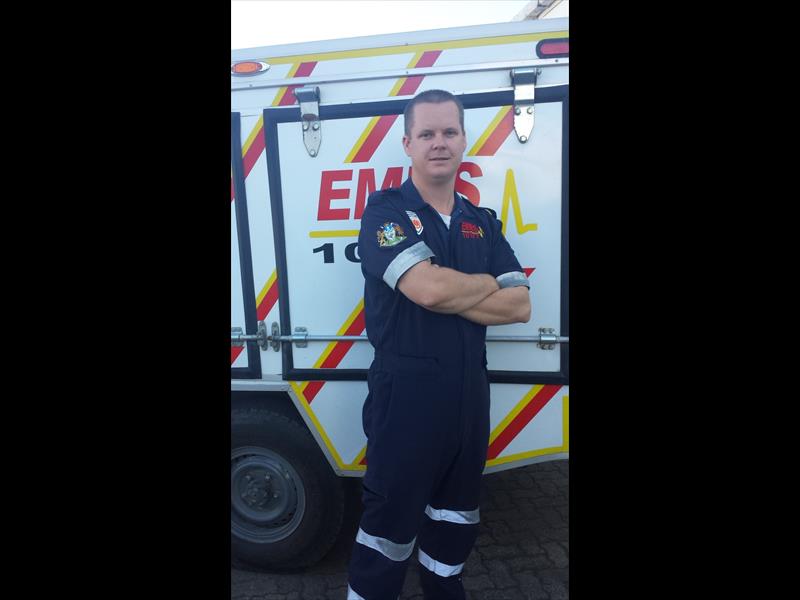
FOR most people a morning would start with warm sun rays filtering through the blinds, a cup of coffee and a loving good morning message from a special person, but for KZN EMS Advanced Life Support Paramedic and Media Liaison, Robert Mckenzie, countless messages about motor vehicle collisions and blue code incidents is his morning wake-up call.
In this three-part diary, Mckenzie shares some insight on a typical day in the life of a paramedic.
Part One: The day begins
‘While driving to work, I start to prepare myself mentally for the day ahead, which is quite hard, as you don’t know what’s going to happen during the day. The day shift is from 7am to 7pm and at times I stand in on a shift that does not have an Advanced Life Support paramedic,’
‘When I arrive at base, I’m met by some of the paramedics who had worked the night shift. They are tired and in a light-hearted mood, glad that their shift is over. I asked how the night was and, ‘it was crazy man’, is the usual response.
Handover
‘I met the night shift paramedic in the Advanced Life Support paramedics office, which is more of a mini store room with medical stock and various medical equipment and monitors, than a traditional office.
She had just returned from an ICU transfer, where a patient is moved between two hospitals.
‘You just have to change the oxygen and I’ll see you tonight’, was the very brief but conclusive handover as she walked out of the base directly to her car, deliberately not stopping to talk to anyone, as it would delay her getting home and into bed.
‘A quick staff parade is done before checking the response vehicle. You have to check not only the vehicle for defects and damages, but also all the medical stock and equipment.
You must ensure the equipment works and is charged and that there is enough medical sundries. As a rough guide, we try to keep enough stock on the response vehicle, between our jump bags and the spare stock on the spare bags, to be able to start basic treatment for a mini bus load of patients which is normally 16.
Case details
‘After checking the response vehicle I make a turn at the Emergency Call Management Centre, where the emergency calls are received.
Some of the day shift paramedics have already taken details for cases; there are still cases where an ambulance needs to be sent.
‘I help the dispatcher re-prioritise the cases, which are mostly assault cases.
While in the centre, a call comes in, there has been a house fire and the police and fire department who are at the scene, suspect that an elderly lady has died.
An ambulance crew and I are dispatched to the case.