
World Health Organisation declares Zika virus ‘global emergency’
In an effort to fast-track research and international action, the WHO has declared the deforming and fast-spreading Zika virus a global health emergency
THE World Health Organisation (WHO) this week, declared the rapidly spreading Zika virus a global health emergency,
Numbers of people infected with the Zika virus, which is spread to people through an infected type of mosquito usually found in tropical regions, have soared astronomically in parts of South America, especially Brazil.
Brazilian Health Minister Marcelo Castor said on Monday (yesterday) that the Zika outbreak is proving to be worse than believed as most of the cases showed no symptoms.
Public Health Emergency of Intl Concern: the cluster of #microcephaly cases & its possible association w/ #ZikaVirus https://t.co/jgnorT0Ia1
— World Health Organization (WHO) (@WHO) February 1, 2016
The outbreak has sparked fear among pregnant women after local health experts linked the virus to thousands of cases of microcephaly, a condition where newborns have abnormally small heads and underdeveloped brains.
The Centre for Disease Control and Prevention (CDC) in the US said the declaration by the WHO will focus new attention and resources on fighting the virus.
According to the Pan-American Health Organisation the Zika virus, which is suspected to have been brought to Brazil during the 2014 Soccer World Cup by someone from Africa or Oceania where it is endemic, the virus has spread to 24 countries in the hemisphere while an estimated 1.5-million Brazilians have contracted the virus.
Will it spread to South Africa?
Honduras declares national emergency over Zika virus https://t.co/31cxcJHs0c pic.twitter.com/apZNcWUToL
— AFP News Agency (@AFP) February 2, 2016
Not likely, says the National Institute of Communicable Diseases (NICD).
The NICD believes the South Africa is not likely to be at risk of Zika, despite the WHO describing it as ‘spreading explosively’.
‘I think South Africa really doesn’t have a risk of Zika,’ said deputy director at the NCID Professor Lucille Blumberg during a SABC news TV interview.
The same mosquito that spreads dengue, chikungunya and yellow fever transmits Zika.
Those infected with the virus will experience mild symptoms susch as a rash, joint pain, fever and conjunctivitis. According to reports, severe cases that require hospitalisation is uncommon.
Origins
#UPDATE Brazil urges pregnant women to avoid Olympics over #Zika https://t.co/KrNcloQJeI pic.twitter.com/en7rXI4whv
— AFP News Agency (@AFP) February 1, 2016
According to Dr Blumberg, Zika originated in the Ugandan Zika forest in 1947 where it was identified in rhesus monkeys.
Blumberg said pregnant women who contracted the virus are at risk of microcephaly – which causes babies to be born with an abnormally small head and brain – and neurological development problems.
How to avoid contracting Zika
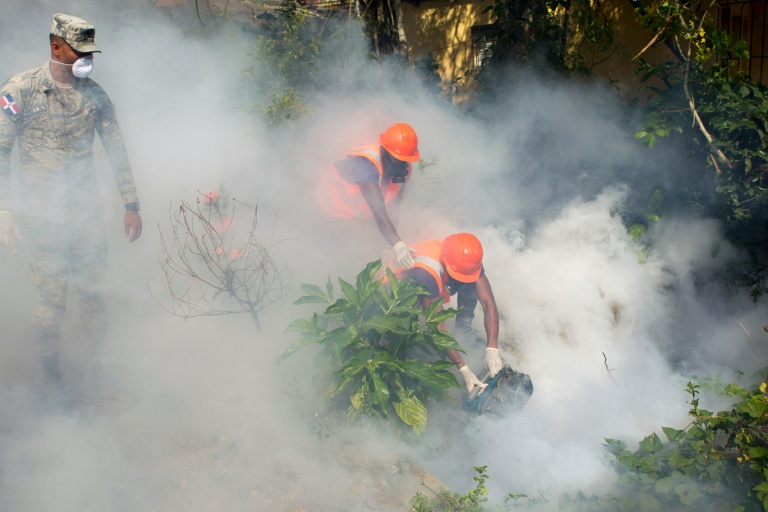
Health ministry personnel in Honduras fumigate against the Aedes aegypti mosquito, which transmits the #Zika virus pic.twitter.com/4byVxmUwD8
— AFP News Agency (@AFP) February 2, 2016
On the off chance that Zika does spread to South Africa, those infected should know that there is no cure or vaccine yet.
Pregnant women have been discouraged from travelling to countries affected by the virus, as they would running a risk of harming their unborn children.
The declaration by WHO will now merit multiple organisations to combine their efforts in finding a vaccine and or a solution to stop the virus from spreading.
Sources: Mail & Guardian, AFP and Health24