
Education should be in the best interest of the child
All schools, including rural schools should have three streams says Dr AM Truter
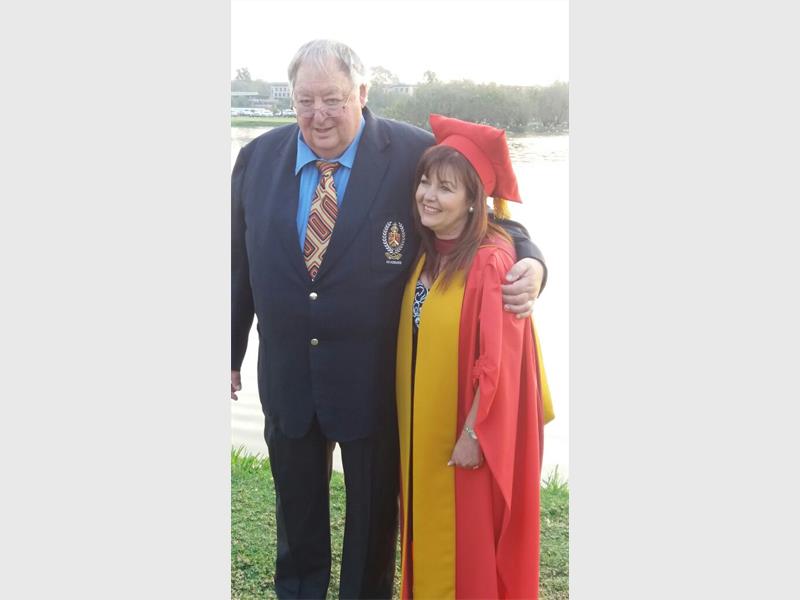
SCHOOLS should be managed to ensure that all children learn in a friendly, safe and stimulating environment so that pupils can reach their full potential.
This is according to Dr Marianne Truter, Deputy Principal of Veldenvlei Primary School, who recently completed her PhD Thesis entitled ‘Education in the best interests of the child: a case study of rural schools in KZN.’
She also recommends that all schools, including rural ones, should offer at least three streams.
Dr Truter’s study focused on education managers of under-performing schools in the uThungulu District, to determine why many were under-performing and how the output and progression of their learners could be improved.
According to the Constitution, a child’s best interests are of paramount importance in every matter concerning the child.
The question is how this Constitutional provision should be interpreted and implemented in education?
‘Quality education is one of the cornerstones of society and each country should therefore develop a functional education system,’ says Dr Truter.
‘South Africa’s education system performs poorly and lags behind much poorer countries which spend less on education.
‘The country has experienced important political, legal and social changes since 1994, but in spite of many positive changes, the education system is characterised by great inequalities and considerable differences regarding learners’ access to quality education.
Effective education
‘All families, including those in rural areas, would like to see their children attain success through formal and effective education.
‘The majority of rural schools in KZN, are poor, dysfunctional and unable to equip learners with the necessary skills.’
Dr Truter also set out to find how the perceptions of education managers regarding the principle of the ‘best interests of the child’, affected the quality of education.
Data collected by document analysis, semi-structured and focus group interviews, revealed that they often do not have a basic understanding of how to protect the ‘best interest’ principle through education.
‘Circumstances and contextual factors prevent them from delivering quality education.
‘The state has an obligation to ensure that the ‘best interests of the child’ are of paramount importance and requires immediate action.
Her recommendations include the availability and redeployment of adequate human and physical resources and adequate and context specific principles training.
‘Education managers need to establish a culture of teaching and learning in public rural schools.
‘The ‘best interests of the child’ should become the leading principle in guiding all decisions affecting a child’s education and calls for the amendment of education legislation.
‘School laws, policies and procedures should be reviewed to align with the well-being of all children.
‘If education were truly in the best interests of the child, children from disadvantage areas would enjoy their right to education on the basis of equal opportunity.
‘Thus children from rural areas would receive the same quality education as their urban counterparts.
Dr Truter completed her PhD in Education Management Law and Policy Studies at the University of Pretoria.