


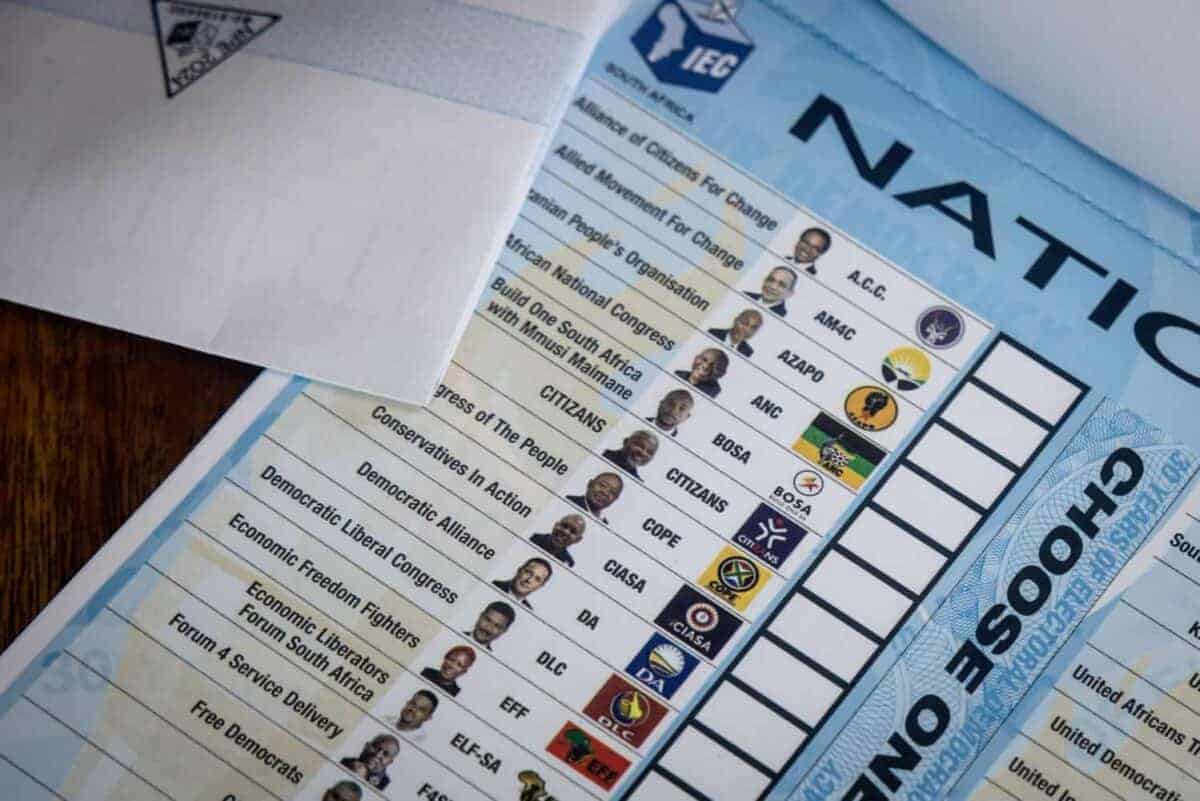
Candidate registrations are expected to soar past 2021 levels, prompting concerns over long ballots and the risk of voter mistakes.
Picture: Chris McGrath/Getty Images


The Electoral Commission of SA (IEC) expects to far surpass the 100 000 mark achieved in the 2021 polls in prospective candidates to contest the upcoming local government elections.
IEC chief electoral officer Sy Mamabolo, speaking at the media launch of the IEC 2026 local government election logo in Midrand yesterday, said candidate nominations are likely to close at the end of July.
LIVE interactive map, latest news, multimedia and more!
View MapCandidate registrations expected to soar past 2021 levels
“Given the projected number of candidates, we encourage all prospective independent candidates and political parties to prepare the nomination documents and other requirements timeously,” Mamabolo said.
IEC deputy chief electoral officer: electoral matters, Masego Sheburi, said the increase is in line with the regular trend where candidates registering to contest tend to rise in every election.
“In the 2021 local government elections, just over 100 000 people were nominated, of which 95 000 met the requirements and were confirmed as candidates.
“The number of seats that were available on that election were 10 400, so 85 000 were unsuccessful in the elections.
“Judging from that, we are readying ourselves for an increase so that we are not caught unprepared should the number of contestants increase,” Sheburi said.
“We do not take issue with the number of contestants, however, our concern is that the ballot paper in the hands of the voter must continue to mean something because the ballot paper is the only tool available to the voter to make their mark and for us to translate that mark into representation in a municipal council,” he said.
Longer and more complicated ballot papers
Where there were more candidates contested, that would lead to longer and more complicated ballot papers, which may increase the risk of voters miscasting their votes because they could not identify their candidates or party of choice.
ALSO READ: ‘Worrying trends’: Support for democracy declines sharply ahead of local elections
Also, in the process, they may end up making more marks on the ballot paper than they are supposed to because the ballot paper is configured in a way they are not accustomed to, Sheburi added.
According to Mamabolo, those contesting the polls are expected to pay a deposit, which the IEC proposed and for which it has invited public comments.
The electoral body proposed deposits of R1 800 for a ward, R2 800 for a local municipality, R4 700 for a metropolitan, and R1 800 for a district council.
Political parties and independent candidates who secure 10% of the votes in the ward election would be reimbursed for their deposits.
Those who failed to reach the set threshold would forfeit their deposits, which would be transferred to the national revenue fund.
IEC logo
The IEC logo unveiled yesterday, with the slogan, “Get Up. Show Up. Vote” is a tagline for the upcoming local elections, which the IEC estimated to take place at the end of the year or early next year. But the exact date remains unknown and is usually announced by the president.
IEC chair Mosotho Moepya said the three-part call to action invites people to be part of something bigger than themselves.
“This logo represents inclusive civic activism, shared patriotism, and national pride. It evokes a strong emotional resonance and inspires a collective sense of South African optimism.
“Anchored in this optimism, the logo will come to life during the local government elections as a shared national asset belonging to all South Africans,” Moepya said.
NOW READ: ANC’s Swarts says sorry for ‘one family, one loaf’ bread campaign controversy
Support Local Journalism
Add The Citizen as a Preferred Source on Google and follow us on Google News to see more of our trusted reporting in Google News and Top Stories.

