
Government launches project to turn tech trash into opportunity
What if your old electronics could help create jobs, address pollution, and stimulate the local economy? The government’s e-waste recycling pilot project, launched in Marlboro, aims to do just that, turning old electronics into opportunity.
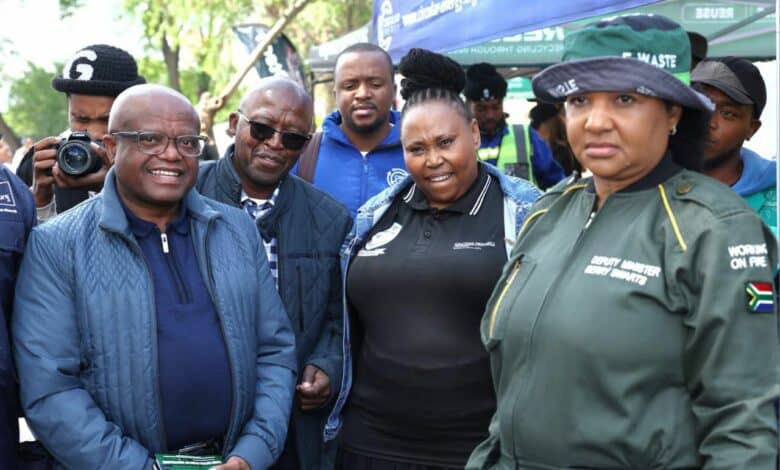
The digital era has brought a surge in demand for electronics, such as cell phones, laptops, and televisions, but with this rapid growth comes the pressing challenge of the escalating volume of electronic waste (e-waste).
This concern was highlighted by both Head of Department of e-Government Masabata Mutlaneng and Department of Forestry, Fisheries, and the Environment (DFFE) Deputy Minister Bernice Swarts during the launch of an e-waste recycling pilot project at Marlboro Community Hall on Tuesday.
Read more: Gautrain and councillor bring free eye care to Alexandra residents
The launch, led by the DFFE, in collaboration with the City of Johannesburg and Gauteng Department of Environment, was intended to establish a sustainable system for recycling e-waste, while actively promoting responsible and environmentally conscious e-waste management throughout the city.
The initiative marked a significant step in mobilising community participation toward the responsible and sustainable management of e-waste, especially since improper disposal has become a serious environmental and public health concern.
“The increasing number of electronic devices being used without a proper system for disposal has led to the accumulation of waste, which harms our environment and contaminates water and soil,” Swarts said.
In her address, Mutlaneng echoed the same sentiments, warning that the rising volume of e-waste could pose environmental risks. She, however, also pointed to its potential economic value.
“If unmanaged, this waste poses serious risks to both our environment and public health. If addressed responsibly, it presents enormous opportunities for innovation, job creation, and sustainability.”
Mutlaneng emphasised the importance of including all communities in the management of e-waste. She said communities in townships, informal settlements, and hostels should be empowered with skills and opportunities that enable them to contribute meaningfully to the technology ecosystem.
Also read: Cancer awareness event delivers vital health services to Alex families
“Our communities can be included in the value chain through recycling, processing, and reselling of e-waste.” She stressed the need for government and municipalities to create an enabling environment for safe disposal and processing of e-waste.
This, according to the MEC for Environment in Gauteng, Ewan Botha, means growing the e-waste initiative into every ward.
“Wards cannot accommodate buy-back centres. Let us establish transfer centres, and for those that can, let us empower them with one or two buy-back centres to put that power back into the hands of the community.”
He emphasised that waste should be seen as an untapped economic opportunity.
“We are starting to reclaim an economic opportunity within the municipality and within Gauteng.”
Follow us on our WhatsApp channel, Facebook, X, Instagram, and TikTok for the latest updates!