
FOLLOW-UP: Insects hop to it in fight against hyacinth
The surface of Middle Lake appears iridescent, with the water shimmering in the sunlight, looking almost devoid of the invasive hyacinth. Through the commitment of three local businesses, they are systematically restoring the renowned water body to its former glory, and their approach is eco-friendly, to boot. Inspecting the Benoni Lake Golf Club’s greens, course …
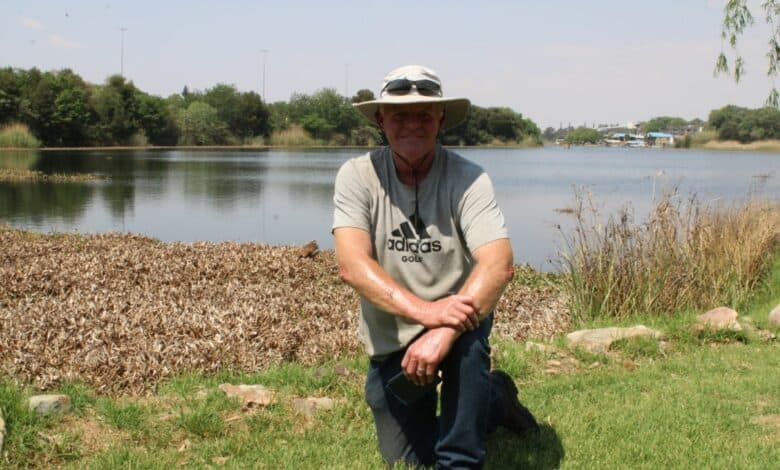
The surface of Middle Lake appears iridescent, with the water shimmering in the sunlight, looking almost devoid of the invasive hyacinth.
Through the commitment of three local businesses, they are systematically restoring the renowned water body to its former glory, and their approach is eco-friendly, to boot.
Inspecting the Benoni Lake Golf Club’s greens, course supervisor Wesley Louth became increasingly disheartened, with the unabated growth of hyacinth consuming every corner of the dam.
Investigating sustainable solutions to a problem which has plagued the city’s water bodies for decades, he drafted a plan based on the biological use of plant hoppers (megamelus sculellaris), an approach spearheaded by the Centre for Biological Control of Rhodes University.
Presenting the plan to the club’s management and members, Louth further rallied the support of the ANEW Hotel and Convention Centre OR Tambo Johannesburg (formerly The Lakes Hotel and Conference Centre) and Benoni Ski-World to raise money to erect breeding tunnels to house colonies for these “plant-killers”.
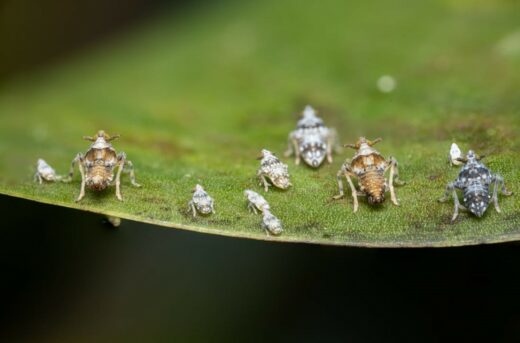
are being bred at the Benoni Lake Golf
Club and will soon be released on the
invasive hyacinth in Middle Lake.
“Many efforts were made in the past to rid the dam of the hyacinth, most of which relied heavily on manual removal, costly equipment and pesticides, but to date, these have not been successful,” he said.
“The implementation of plant hoppers at the Hartebeespoort Dam has proven incredibly successful, with an estimated 80% of the dam’s surface rehabilitated. These statistics prove this intervention method is cost-effective, sustainable and gentler on the environment.”
Breeding facility
At the end of last year, two breeding tunnels were erected along the greens and between 2 000 and 3 000 insects were introduced to 24 breeding stations shortly afterwards.
“Ideally, the water temperature needs to be 20℃ and above for them to survive. Once the conditions improve, we should be able to release about 2 000 bugs into the dam a week,” said Louth.
In preparation for the release, Louth said there was large-scale physical preparation to ensure optimum efficacy.
“Using boats supplied by Ski-World, vast quantities of hyacinth were corralled and moored at the western end of the dam,” he said.
“Studies have shown that the plant’s growth is stunted when its space is limited. The insects will be released in this designated area.”
Explaining the insect’s biology, Louth said it naturally targets the seed bulbs of the plant.
“These are filled with air to ensure they remain buoyant. The insects feed on these, causing them to fill with water and sink to the bottom of the dam, subsequently killing the seeds and, ultimately, the plants, too,” Louth said.
The City of Ekurhuleni (CoE) has committed that teams will be stationed at the dam wall, bordering Bunyan Street,
where dead plants will be transported by boat for removal.
Speaking of the project, Louth says he has immersed himself in the subject, sharpening his knowledge about the plants and the elements contributing to their growth.
“It is no secret that hyacinth thrives in sewage-polluted water, so regularly collecting water samples is imperative to identify pollutants,” he said.
“These are undertaken by Rhodes University and the CoE’s Environmental Resource and Waste Management Department.
“To date, the samples have yielded satisfactory results, and merely looking at the exposed water and the flourishing fish and bird life, it is evident the small rehabilitative measures we have thus far put in place are bearing fruit,” he said.
“This process will take time, and we are learning as we go along, but we are committed to restoring Middle Lake to its former glory for all to enjoy.”
Metro’s approach
CoE spokesperson Zweli Dlamini said they are pleased with the inroads made to rehabilitate the lake and applaud the efforts of all involved.
He said mechanical removal of hyacinth on this lake resumed last July and by January 95% was cleared.
“To date, the removal costs have been R2.3m,” said Dlamini.
“Unfortunately, the dam is again completely overgrown. The city will continue its integrated approach, which includes mechanical removal, chemical control and biological agents.
“Benoni’s lakes have been infested with the hyacinth for some years, so undertakings will, ultimately, only control the growth and not necessarily get rid of the plant.”
ALSO READ: Hyacinth again in CoE’s firing line
ALSO READ: Hooray for Homestead’s hyacinth heroes