The mining giant previously said it would support employees affected by the suspension of operations at the Venetia mine.
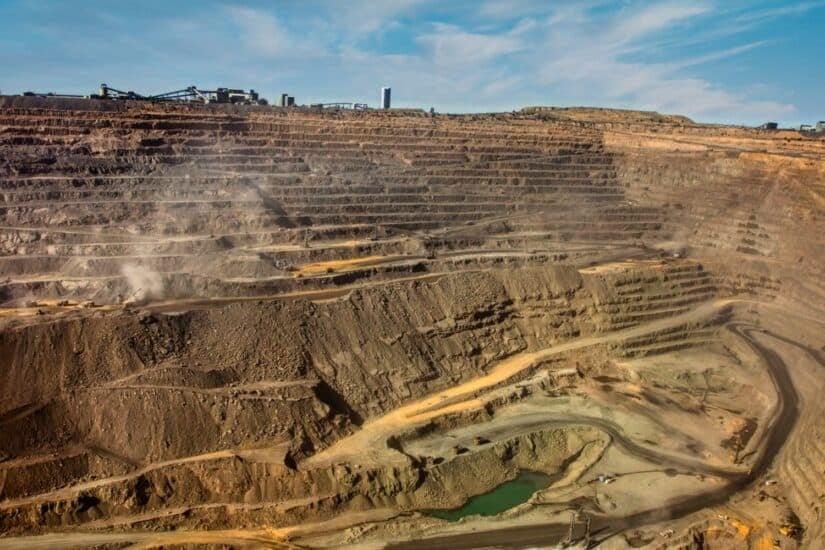
For illustrative purposes. Picture: iStock


Trade unions have rallied behind De Beers employees at Venetia mine in Limpopo as the mining giant issues Section 189A notices threatening at least 1 200 jobs. This follows the company’s announcement that it will support employees impacted by the latest production pause.
A section 189A notice is a formal written notice given by larger employers when planning large-scale retrenchments based on operational requirements. It triggers a regulated consultation process involving strict timelines and potential Commission for Conciliation, Mediation and Arbitration (CCMA) facilitation.
This follows De Beers’ announcement that it will pause production at the largest diamond mine in South Africa for two years.
De Beers promises to ‘support’ affected employees
The mining giant did not specify what will happen to employees while production is on hold; instead, the company said it will support the staff.
“De Beers is engaging with stakeholders in accordance with relevant requirements and the company’s values as it moves through this process, and will both support impacted employees and continue to invest in its community and Social and Labour Plan commitments,” said the company when announcing the suspension of operations.
The Citizen has reached out to De Beers for a comment on the notices. Section 189A notices do not always end in retrenchments – sometimes there are voluntary options, such as voluntary severance packages or early retirement.
Affected parties might agree to salary freezes, reduced working hours or employees being moved to other roles or departments within the same company.
Trade unions unhappy with De Beers
According to several trade unions, De Beers has issued Section 189A notices to some employees.
UASA trade union spokesperson, Abigail Moyo, said it is concerning that the mining giant has decided to halt production for 2 years, as this could lead to retrenchments.
De Beers is halting production as a response to a significant drop in rough diamond prices. Moyo noted that Venetia Mine accounts for 40% of the country’s diamond output. While the mine employs more than 3 500 contract workers.
“The decision to halt production not only affects workers who are directly employed by the company, but also many other parties, including diamond cutters, boards, and contractors. Additionally, the heavy impact will fall on the high unemployment rate that our country is facing,” she said.
Suspension of operations to hurt the economy
The mining industry currently presents a mixed picture: high revenues from a strong commodity cycle in gold and platinum group metals (PGMs) have boosted sales, but overall production has softened due to persistent rail bottlenecks, shifting global prices, and structural pressures in coal and diamond sectors.
Moyo said the decision to halt production will hurt the mining industry and the economy as a whole.
“The suspension of operations at Venetia Mine will result in a crippling effect on the broader diamond industry value chain, affecting both upstream suppliers and downstream operations such as cutting and polishing.
“UASA is calling for urgent government intervention to safeguard the natural diamond industry and for more stringent regulation of lab-grown diamonds.”
‘Workers cannot be treated as disposable tools’
According to the National Union of Mineworkers (NUM), 1 134 permanent employees at Venetia Mine and a further 80 employees at De Beers Sightholder Sales South Africa are facing retrenchments.
The union said it is disturbed by how management has communicated this decision, attempting to portray it as a sudden and unavoidable crisis when the company has long been aware of the challenges facing the diamond industry.
NUM National Health and Safety Secretary and NUM Diamond Sector Chief Negotiator, Masibulele Naki, said: “Workers cannot be treated as disposable tools that are discarded whenever companies face economic pressures.
“De Beers has known about the challenges confronting the diamond market for a long time. It is therefore disingenuous to present this announcement as a sudden crisis. Workers and their trade union should have been engaged honestly and transparently long before a Section 189A notice was issued.”
Alternatives must be explored
Naki added that De Beers has a responsibility to exhaust all possible alternatives before contemplating retrenchments.
“The salaries of workers are not the cause of the current difficulties facing the company. Therefore, workers’ wages, jobs, and livelihoods cannot become the first target whenever management seeks to reduce costs. Workers cannot compromise on salary cuts, nor can they be expected to carry the burden of protecting profits while executives continue to enjoy substantial benefits.”
The union requests the mining giant to look at alternatives like:
- Retraining and upskilling programmes
- Temporary job preservation measures
- A reduction in non-essential expenditure
- A comprehensive review of executive and management costs
“Retrenchments cannot become an easy escape route whenever companies face operational challenges. The company must find other means of reducing costs instead of targeting workers. Every alternative that can save jobs must be explored before a single worker is retrenched,” said Naki.