


But will allow it to borrow R4bn for backlog maintenance related to the Gauteng Freeway Improvement Project.
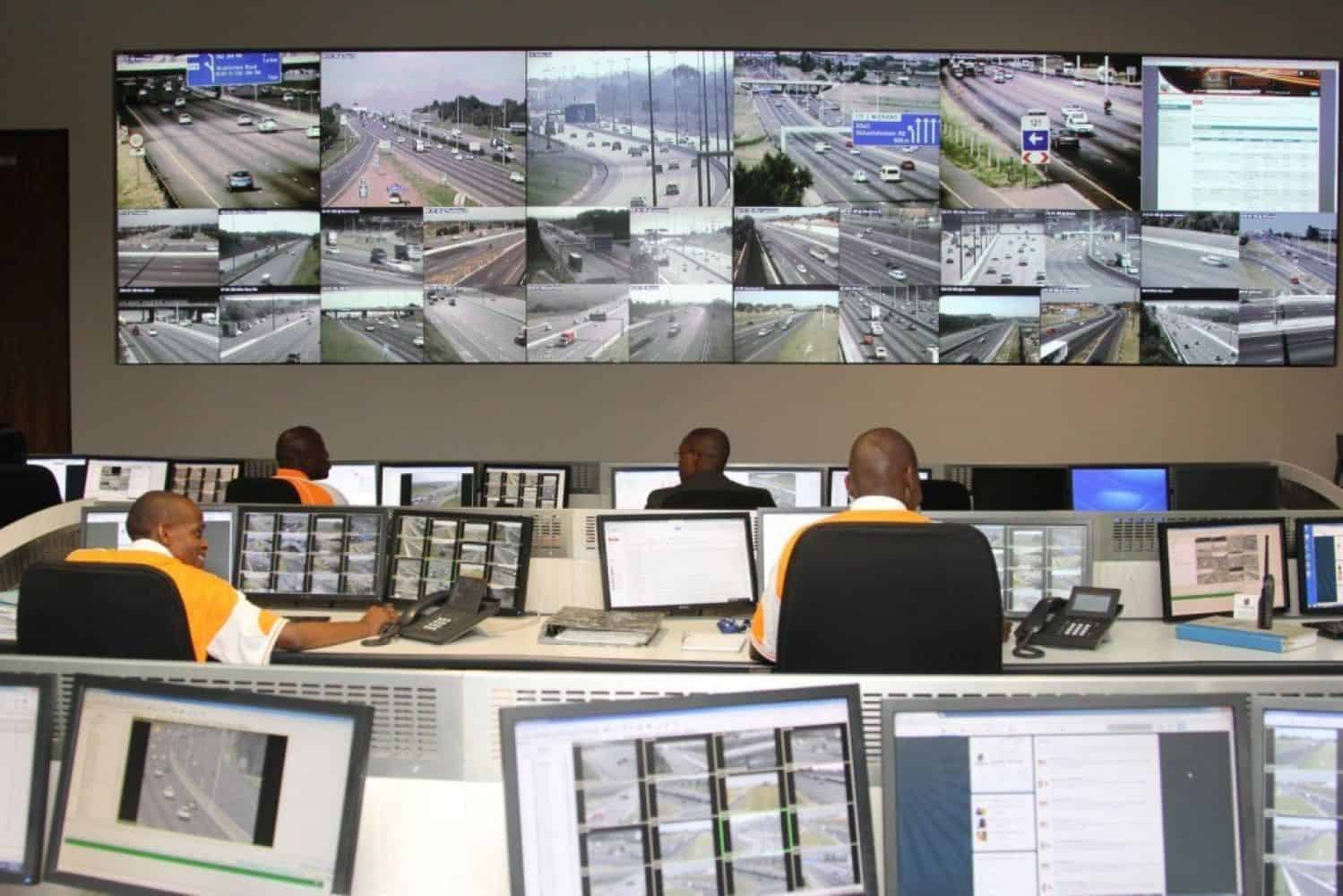
When the controversial system was scrapped in April last year, Sanral’s total e-toll-related debt stood at R47bn. Picture: Moneyweb


National Treasury has rejected a request by the Gauteng Provincial Government for a waiver of the R3.3 billion interest payment on the province’s 30% contribution towards the South African National Roads Agency (Sanral) Gauteng Freeway Improvement Project (GFIP) e-toll debt.
However, it approved a request for the province to borrow R4.1 billion for road maintenance related to this e-toll debt.
Treasury confirmed this week that the province requested a waiver of interest on its 30% contribution but “this was not supported” as national government “is already funding 70% of the loan”.
The province also sought approval to borrow R4.1 billion for road maintenance related to the debt, and the loan coordinating committee “considered and supported this request on 10 June 2025” and “borrowing authority was subsequently gazetted on 8 September 2025”.
Treasury further confirmed the Gauteng government requested that it consider extending the loan repayment term, and said it indicated “that this request will be considered as part of the current budget process”.
ALSO READ: Sanral still wants to collect your GFIP e-toll debt
The 30/70 debt split
Moneyweb’s query to Treasury follows Gauteng MEC of Finance and Economic Development Lebogang Maile confirming on 29 June 2025 that the province was in discussions with Treasury about the payment terms of its R15.9 billion e-toll debt.
Maile said then that the province was committed to sticking to the memorandum of agreement (MoA) – signed in 2022 with National Treasury and the Department of Transport – as it did not have any agreement with Minister of Finance Enoch Godongwana about any changes to the terms.
The MoA saw the province agree to pay 30% of Sanral’s e-toll debt amounting to R12.9 billion, plus interest of R3.3 billion. National Treasury agreed to pay the remaining 70%.
The Gauteng government also made a commitment to contribute a total of R4.1 billion towards backlog maintenance on the GFIP.
Sanral’s total e-toll-related debt amounted to R47 billion when the controversial system was scrapped and the GFIP gantries were disconnected effective from 11 April 2024.
ALSO READ: Gauteng can’t pay its e-toll debt — turns to treasury, cap in hand
Payment terms
Treasury said this week the Gauteng government wrote to it on 17 October 2024 and again on 19 February 2025 regarding the payment terms of the R15.9 billion.
It said engagements commenced thereafter and that discussions were held between national and provincial treasury officials to “consider the matters raised and explore possible options”.
Treasury said it will consider amendments to the MoA only if compelling reasons are provided to justify such changes, adding that it should “be noted that Sanral is not a signatory to the MoA”.
ALSO READ: Gauteng pays R5.44 billion e-toll debt amid budget constraints
Province under pressure
Maile said in June that Gauteng was having discussions with National Treasury on the payment terms to alleviate financial pressure on the province “and to give us some additional resources that we can use immediately to deal with immediate social challenges”.
He said Gauteng will over the next few years have to allocate a substantial amount of funds each year to service its e-tolls repayment obligations – and that this will be happening in a constrained fiscal environment, details of which the province expressed in its initial budget speech and reiterated when it retabled its budget for 2025/2026.
“The reality of the situation is that the funding envelope is stretched by existing allocations, particularly in terms of keeping critical social programmes in health and education funded,” he said.
“Nevertheless, we reaffirm our commitment to the residents of Gauteng that the servicing of the e-toll debt will not compromise our priorities, particularly in relation to social services such as health and education.”
Maile delivered the province’s medium-term budget policy statement on Tuesday and said the adjustments budget is focused on addressing frontline services as a means of equipping the Gauteng government to continue responding to the provincial imperatives underpinning the 2024/2029 Medium-Term Development Plan and the 13 priorities identified by Gauteng Premier Panyaza Lesufi in February aimed at addressing the province’s most pressing challenges.
These include infrastructure, water, electricity, gender-based violence, potholes and sinkholes.
Maile said the total adjustment is R3.3 billion, which includes the rollovers as well as national and provincial funding.
He said that as part of this it is allocating an additional R2.2 billion to provincial departments.
This article was republished from Moneyweb. Read the original here.
Support Local Journalism
Add The Citizen as a Preferred Source on Google and follow us on Google News to see more of our trusted reporting in Google News and Top Stories.

