It is a fact that South Africa is one of the most unequal countries in the world, but will a wealth tax really change this?

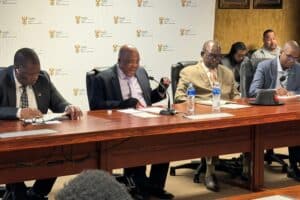
Minister of Finance Enoch Godongwana. Picture: X/GovernmentZA


There have long been rumours that become even more common around budget time that the minister of finance will institute a wealth tax to increase government revenue, with many detractors of this move explaining how it will drive the people who pay the most tax out of the country. Well, we can all relax, because there will be no wealth tax.
This good news comes from the minister of finance, Enoch Godongwana himself, when he answered a question from uMkhonto weSizwe party MP Brian Molefe in parliament recently.
Molefe said the Medium Term Budget Policy Statement (MTBPS) claims to prioritise low-income households while simultaneously increasing reliance on regressive taxes such as the fuel levy, overdependence on personal income tax, and refusal to introduce wealth taxes that could reduce inequality.
He wanted to know what rationale Godongwana then had to provide for a tax policy framework that disproportionately burdens the poor and working class while shielding the wealthiest 1% who control more than half of the economy of the Republic.
Godongwana pointed out in his reply that South Africa has a progressive income tax system, in which tax rates rise as taxable income increases. “Taxpayers earning above R750 000 pay over 60% of all personal income tax, while making up only 12% of the tax base.”
These are the people who can also afford to leave the country when they believe they are paying too much tax.
ALSO READ: Budget 2025: Is wealth tax coming for South Africa’s rich?
Wealth tax: wealthy already extensively taxed, minister says
In addition, he said, South Africa also taxes wealth extensively through estate duty, transfer duty, donations tax and securities transfer tax. “The percentage contribution of these taxes to gross domestic product (GDP) is larger than the Organisation for Economic Co-operation and Development (OECD) average.
“Only four countries currently levy an annual wealth tax, and they do not contribute more revenue as a percentage of GDP than the existing taxes targeting wealth in South Africa. Most countries abandoned annual wealth taxes since they are costly, difficult to administer and generate limited revenue.
“International experience has shown that a comprehensive income tax system such as South Africa’s, which also taxes capital gains, is far more effective at raising revenue than taxes specifically targeting wealth.”
Godongwana said it is important to consider the impact of the overall spending and tax proposals contained in the budget, which are progressive and not necessarily a single instrument in isolation. “The more effective tools to help achieve distributional objectives are personal income taxes, which are highly progressive and spending programmes, while other tax instruments focus on achieving efficiency and revenue goals.
ALSO READ: Minister of finance says no to wealth tax
What about the fuel levy that affects everyone instead of a wealth tax?
Turning to the fuel levy, Godongwana said its objective is to raise revenue to fund government’s general expenditure programmes, contribute to government’s environmental goals and advance the progressivity of the fiscal system through targeted expenditures, including the construction and maintenance of roads and support for public transport. Revenue is also shared with metropolitan municipalities.
“The 2025 [National] Budget proposed a package of tax measures to raise R18 billion in 2025-26 and provide R1 billion in tax relief in 2026-27. This included no adjustment to personal income tax brackets and rebates, an inflationary increase in the general fuel levy, above-inflation increases in excise duties on alcohol and tobacco products and diesel refund relief for primary sectors.
“The fuel levy was not adjusted (even for inflation) for the previous three years, providing tax relief of about R11.5 billion over that period.”
ALSO READ: Will South Africa’s rich pay wealth tax or find ways to avoid it?
Fuel levy relief for another year would affect government’s planned expenditure
The minister pointed out that the positive revenue impact of removing this relief is estimated at R3.5 billion. “If the fuel levy relief were granted for another year, the shortfall would have to be recovered from government’s planned overall expenditure.
“An inflationary adjustment of the fuel levy seeks to maintain the real value of the levy. Additional tax relief is provided through the diesel refund scheme for key primary industries, such as agriculture and mining.
“This was introduced to preserve the international competitiveness of these industries and ensure that the effective fuel levy rate is lower. Additional diesel refund relief of about R1 billion was provided to primary industries in the 2025 [National] Budget,” Godongwana said.