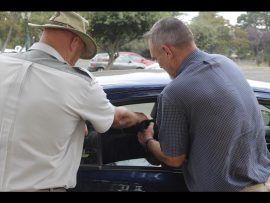
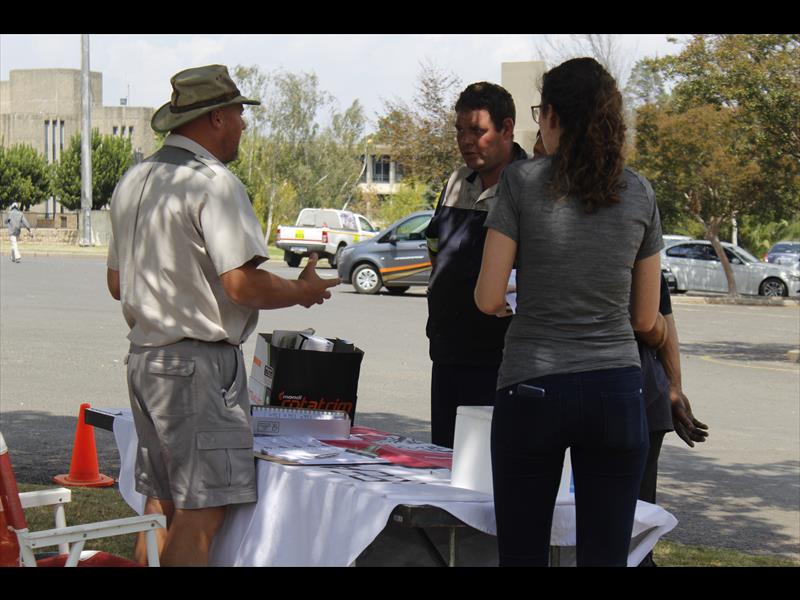
The Ermelo State Veterinarian’s office held their annual rabies vaccination at the Ermelo Civic Centre on 13 and 14 March and residents from Wesselton can bring their cats and dogs towards the end of the month to different venues.
Free vaccinations will be done in Wesselton from 12.30pm till 6pm on Monday, 26 March at Wesselton Park, Mkhomo’s Tavern and Mangethe’s Complex, Tuesday, 27 March at Wesselton Primary School (Thusi), Thembisa Complex (Ezitoro) and KaShodo Nkosi (KaBasi) and Wednesday, 28 March at Tubelihle Daycare, Nathi Tuckshop and Thulandlela Complex (Madamini).
“In South Africa the law requires that all dogs be vaccinated annually against rabies.” said Mr Theo Schönfeldt from the veterinarian’s office.
According to Mr Schönfeldt, rabies is a viral disease that cause acute inflammation of the brain in warm-blooded animals and is most commonly transmitted through a bite from an infected animal.
The virus is almost invariably fatal if post-exposure treatment is not administered prior to the onset of severe symptoms.
In Mpumalanga the main sources of this virus are dogs and yellow mongoose.
Behavioural change is mainly seen in all animals affected.
Domestic animals can become wild and aggressive, while wild animals become tame.
He said that in dogs and cats, the first signs are changes such as aggression, howling, attacking without warning, biting at imaginary flies, fixed-state stare, aimless wandering, paralysis of the lower jaw, difficulty in swallowing, eating soil and sticks, chocking, vomiting and paralysis.
Rabies in a person normally takes from two to 10 weeks after exposure and rabies could develop quicker after bites to the head and body than bites to the limbs.
It is possible for people to be infected by contamination of cuts through the saliva of an infected animal.
Early symptoms can include fever, headache, sore throat, fatigue, loss of appetite, nausea and vomiting.
An early indication can be tingling or pain and intense itchiness at the area of the animal bite, even when the wound has already healed.
A person may also be anxious and have difficulty sleeping.
Humans dying from rabies are usually after exposure to infected dogs and cats.
The vaccine is harmless and will not make the animals sick.
For more information, contact Mr Schönfeldt at 017 811 5812 during office hours.