
Experts dispute claim linking spider bite to Lyme disease
Arachnid specialists and microbiologists disputed statements made by MP Juliet Basson regarding Lyme disease and spider bites.

ERMELO – A Facebook post by Member of Parliament Juliet Basson has sparked debate online after she claimed a black button spider bite caused “Lyme disease”, a statement experts say is scientifically incorrect.
The post quickly spread across social media and was later shared in arachnid-focused groups, where it generated widespread discussion among specialists and members of the public.
The original post received approximately 3 500 reactions and 395 shares, with further engagement generated through subsequent shared posts and discussions online.
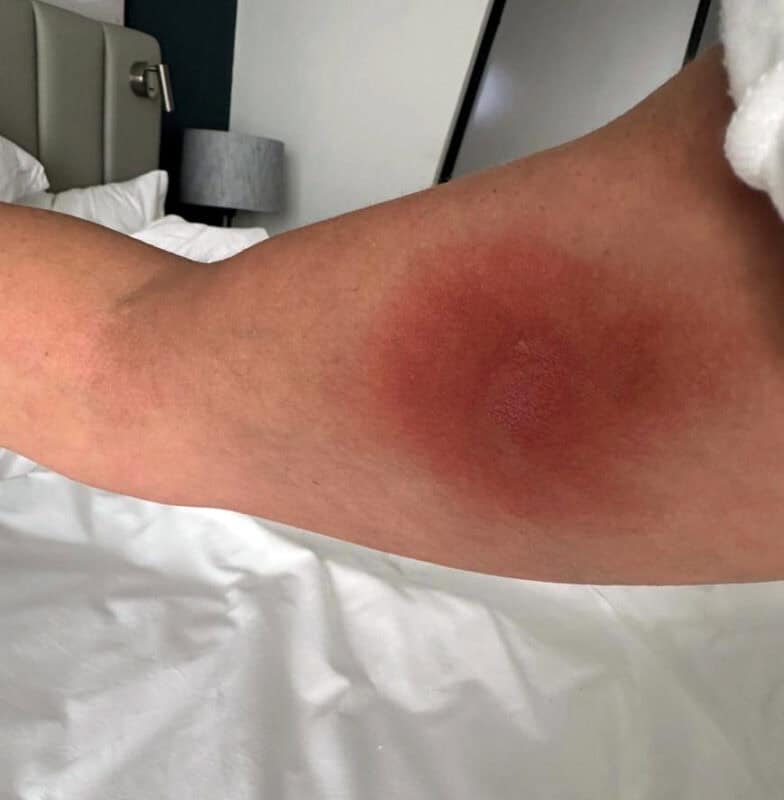
Public criticism erupted after Basson initially posted a highly-specific claim regarding her condition, stating verbatim: “Ek het Lyme disease van die spinnekop byt gekry en dit het my ingewande aangetas en n aaklige bakterieë veroorsaak wat my inwendig laat bloei en maagsere veroorsaak, dit het ook my spiere aangetas wat veroorsaak dat my spiere die hele tyd in spasma ingaan veral in my nek en rugstring, en ergere hoofpyne veroorsaak...”
(I contracted Lyme disease from a spider bite, and it affected my intestines. It caused a severe bacterial infection that led to internal bleeding and stomach ulcers. It also affected my muscles, causing them to go into spasms constantly, especially in my neck and spine, and it results in severe headaches.)

Following immediate pushback from the scientific community, the post was edited to modify the language to “Lyme-like disease” that matches her medical documentation.
This shift further fueled the online debate, as the initial point of contention was about her text explicitly attributing her medical condition to a spider bite resulting in Lyme disease.
Experts reject claim linking spider bite to Lyme disease
In a post shared by Rudolph Steenkamp, identified as the chairman of the Spider Club of Southern Africa, an administrator and arachnid expert, the claim was described as incorrect and biologically implausible.
“Another FALSE post doing the rounds. Spiders CANNOT cause Lyme disease. Lyme disease is a tick-bite fever caused by ticks, not spiders. Also, the deer ticks that spread the Borrelia burgdorferi bacterium do not occur in South Africa,” Steenkamp said in a public response.
He further stated that the symptoms described in the original post did not appear to be consistent with any spider, suggesting the illness was more consistent with tick-borne conditions.
Steenkamp added that suspected causes would more likely relate to African tick-bite fever or other rickettsial infections, and referenced broader concerns about misdiagnosis of spider bites contributing to unnecessary fear and harm toward spiders.
A spider specialist familiar with arachnids in the region, who requested anonymity, also disputed the claim, confirming that button spiders are not known to transmit bacterial diseases and cannot act as disease vectors.
Specialists highlight contradictions involving spider species and symptoms
The expert additionally highlighted a significant geographical contradiction regarding the reference image attached to the post.
While noting that Basson might have simply used the image as a visual reference for the type of spider she believed bit her – as the post openly displayed credit to Johan Marais of the African Snakebite Institute – the expert pointed out that the photo features Latrodectus indistinctus (the West Coast black button spider).
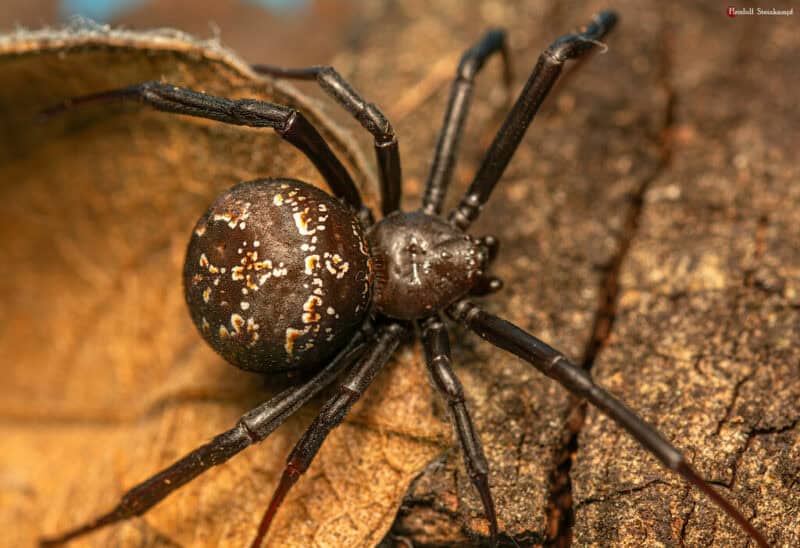
This specific species is restricted to the arid western and central regions of South Africa and does not occur anywhere near the humid KwaZulu-Natal coastal climate where she notes the incident took place.
The expert added that symptoms typically associated with button spider bites are linked to venom effects, such as muscle pain and cramping, rather than bacterial infection or systemic inflammatory disease.
The Spider Club of Southern Africa statement also warned that misinformation of this nature can lead to unnecessary fear, panic and the killing of spiders, despite their ecological importance and limited risk to humans when left undisturbed.
The original post on The Spider Club of Southern Africa page concluded with a note stating, “Regardless, we wish this woman a speedy recovery, and hopefully she’ll learn something from this experience.”
Following Highvelder’ request for comment, Basson firmly defended her posts and maintained that her condition and diagnosis were managed by medical professionals involved in her treatment.
She emphasised that she faced a genuine, terrifying medical crisis that caused her to fear for her life and resulted in hundreds of thousands of rands in medical bills before being successfully treated.
In responses shared online, she rejected suggestions that the account was self-diagnosed or medically inaccurate, and stated that critics should direct queries to the treating specialists.
Medical records reference diagnosis, but no spider bite source
To substantiate her case, Basson provided this publication with written consent to publish her official medical documentation alongside a photograph of the lesion attributed to a spider bite.
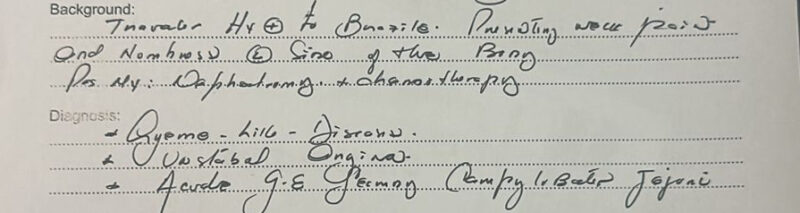
The clinical notes confirm her final diagnoses included the descriptive term ‘Lyme-like disease’ alongside separate diagnoses for a cardiac condition and a food-related bacterial infection, with her background notes explicitly highlighting a recent traveler history to Brazil.
Crucially, the treating doctor’s documentation makes no reference to a spider bite or any arthropod as the source of her illness.
An independent clinical microbiologist told Highvelder, from an infectious disease standpoint, the claim is entirely unscientific.
“Spiders are not disease vectors for systemic bacterial illnesses like Lyme disease,” the microbiologist explained. “True Lyme disease (Borrelia burgdorferi) is exclusively transmitted by specific tick species that are non-endemic to South Africa.”
Official South African health networks back this medical position
The National Institute for Communicable Diseases (NICD) excludes Lyme disease from its official national directories of endemic communicable diseases, with the official NICD Laboratory Handbook explicitly noting that its standard diagnostic panels for local Borrelia infections “do not include testing for Lyme disease.”
Furthermore, patient guidance from Mediclinic Southern Africa explicitly warns that Lyme disease – prevalent in North America and Europe – is not to be confused with local South African tick-bite fever.
Both health directives warn against diagnosing geographical anomalies or misattributing insect and spider reactions without precise laboratory verification.
Fast facts on South African spiders
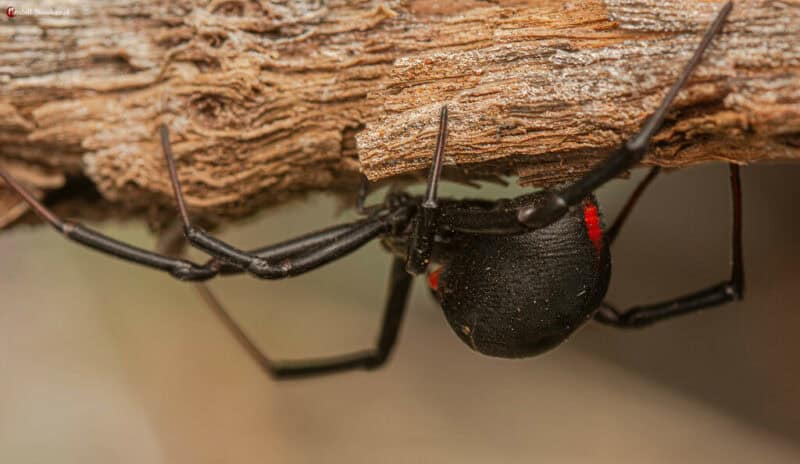
A South African spider expert with extensive knowledge of regional arachnids and insects breaks down the myths, realities and environmental truths surrounding local species.
Medically important species
South Africa is home to thousands of spider species, the vast majority of which are completely harmless to humans. Only five groups are considered medically important, and serious incidents involving them are uncommon:
- Black button spider (Latrodectus species): Possesses neurotoxic venom affecting the nervous system, causing severe pain, muscle cramps and sweating. Fatalities are exceptionally rare with modern medical care.
- Brown button spider (Latrodectus species): Closely related to the black button spider but generally possesses less potent venom and milder symptoms.
- Violin spider (Loxosceles species): Possesses cytotoxic (tissue-damaging) venom that can lead to localised tissue destruction. Confirmed bites are relatively uncommon due to their reclusive nature.
- Sac spider (Cheiracanthium species): Widespread and likely responsible for more confirmed bites than other medically important species. Venom is cytotoxic, resulting in localized inflammation and painful lesions, but is rarely life-threatening.
- Six-eyed sand spider (Hexophthalma species): Laboratory studies show highly cytotoxic venom, but there are no confirmed, documented bite cases in Southern Africa. They inhabit remote, arid environments.
Bite realities and symptoms
How bites occur: Spiders actively avoid human contact. Most recorded bites happen purely by accident when a spider is trapped directly against the skin in clothing, bedding or shoes.
Common misconceptions
The diagnosis trap: Diagnosing a spider bite without physically capturing and identifying the specimen is highly unreliable. A vast range of separate skin conditions, bacterial infections, allergic reactions and insect bites are routinely and mistakenly blamed on spiders.
Seasonality: While encounters slightly increase during the warmer months from spring through autumn when spiders are active, they can be encountered year-round.