Xenophobic attacks – what is the cost to South Africans?
A UKZN academic says the fundamental point of these marches is the desire to punish, to humiliate and destroy the lives of vulnerable groups.
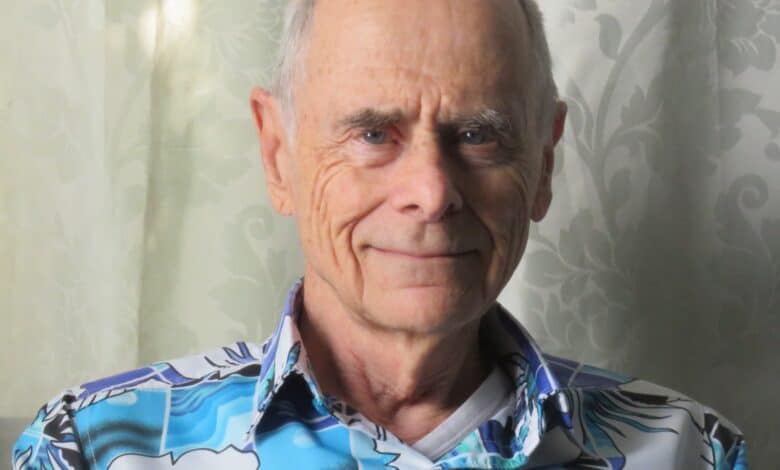
THE tolerance and promotion “of power against vulnerable foreigners” amounts to “planting seeds of ongoing destruction”, according to a UKZN academic who argues that ongoing xenophobic attacks reflect broader patterns of domination and abuse.
Dr Crispin Hemson, head of the university’s short course programme in the Graduate School of Business and Leadership, said that questions that arise as incidents of xenophobic attacks occur amid calls for urgent State intervention on illegal immigration, are what is the cost of it all, and in what ways do these attacks undermine and threaten South Africans?
Hemson said he was saddened when he watched news reports on the displaced foreign nationals who recently spent days outside the Diakonia Centre in Durban.
“And then I noticed the onlookers who seemed to delight in the humiliation and I began to wonder about the costs to them.
“A fundamental point is this – at the core of these marches is the desire to punish, to humiliate and destroy the lives of vulnerable groups. Instead of a value of Ubuntu, there is a value of domination and power over others.
“For example, gender-based violence is primarily about the use of power against those more vulnerable than you. So is violence against children, or the disabled. And, similarly racism is typically the exercise of power over others.
“Is this what we want to teach our children – lessons of domination?
“If you tolerate or promote the use of power against vulnerable foreigners, displacing them, attacking them, threatening and humiliating them, you are planting seeds of ongoing destruction. We cannot allow this to be the pattern for our future,” said Hemson, the former Director of the International Centre of Non-violence at DUT.
The xenophobic attacks come on the back of widespread anti-immigrant demonstrations staged by the March and March movement, which Hemson said has gained traction, in part, due to “the unresolved trauma from many years of mistreatment that lead to people in some way wanting to re-enact that trauma, this time as perpetrators”.
Factors such as poor service delivery, inequality and “groups seeking to get political mileage by exploiting popular resentment, in turn building up that resentment and providing a completely false explanation for what goes wrong” have also contributed to the movement finding a foothold.
Also read: Capsules recovered at March and March protest were empty
Hemson highlighted that “it is not xenophobic to raise” the “many legitimate concerns” on migration, which include porous borders and corruption. He pointed out, however, that when migrants are targeted because of their nationality, that is when xenophobia becomes evident.
“The other indication of xenophobia is its extreme inconsistency. No-one in these groupings are attacking South Africans who go overseas to work or to live. If it is wrong for migrants to come here, how is it acceptable for South Africans to migrate somewhere else?
“The issue is not about legality and illegality: legal migrants are mistreated generally as much as those without documentation.”
Hemson said while internal and external migration does “stress” services such as healthcare, of greater concern was the looting in the billions of the country’s health services by “well-connected elites”.
He said he does not know of any evidence indicating that foreign nationals, regardless of their documentation status, were largely to blame for high crime rates.
“The only way to claim that foreigners are more involved than South Africans in crime is to carefully ignore the reality.”
Hemson said government’s response has been “mainly inadequate”, while warning against attempts to scapegoat foreigners for governance failures. He pointed to the predictions of Frantz Fanon, who warned that elites would fail to provide good governance and then whip up feelings against foreigners to scapegoat them.
“We need to remember the imagery used in Rwanda at the time the genocidal attacks on Tutsi started – ‘cockroaches’. These are ways of dehumanising people.
“The recourse to threats and the promises and reality of violent action do damage to South Africa’s reputation. Such actions deter investment, which we need greatly. The idea that vigilante groups set the agenda and apply their own ‘rules’ makes all of us insecure.”
For more from the Highway Mail, follow us on Facebook , X and Instagram. You can also check out our videos on our YouTube channel or follow us on TikTok.
Click to subscribe to our newsletter here