
CCTV training aims to ensure effective use
Security trainer Denver F. Wright advises homeowners that CCTV is no longer a luxury but an essential part of modern security.
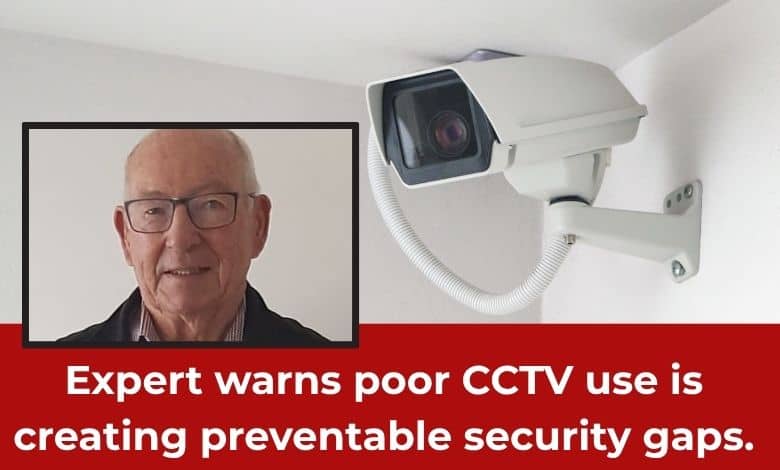
A GROWING number of businesses and homeowners are investing in CCTV systems, yet many are failing to use these tools to their full capacity.
According to security trainer Denver F. Wright, the gap lies not in the technology itself, but in the lack of operator knowledge and outdated training.
Wright has spent years training security personnel and CCTV operators at King Shaka International Airport’s cargo facility.
After assessing control rooms across the Upper Highway area and beyond, he found that in many cases sophisticated systems were being under-utilised and operators lacked the necessary skills to interpret footage and respond effectively.
Also read: Kloof Conservation Trust turns 25
“CCTV has become essential to the effectiveness of any security operation. But when operators are poorly trained, the system becomes worthless,” said Wright.
To address this, Wright developed structured CCTV training programmes, which are mainly designed for control room operators, but the course has expanded to include non-PSIRA registered operators, jobseekers, and employees who work around surveillance systems.
A shorter two-day version teaches general CCTV literacy, while a three-day option equips learners with more technical control room responsibilities.
The myths surrounding CCTV
Wright said people often hold misconceptions that distort expectations. These include that CCTV invades privacy, when it is in fact designed for monitoring and safety; and the assumption that cameras guarantee security automatically.
“Cameras deter crime, but they do not prevent it,” said Wright.
Another misconception, added Wright, is the perception that CCTV is very expensive, when in reality, buyers often purchase more equipment than they require.
He said a well-positioned 180-degree camera may be enough for certain environments.
Choosing the right system
According to Wright, one of the key decisions buyers face is whether to choose analogue or digital systems.
He said analogue cameras provide low-resolution images suited to basic monitoring, whilst digital cameras produce high-resolution footage that allows operators to zoom in without losing clarity, which is useful for identifying number plates or gathering evidence for law enforcement.
“Analogue systems require cabling and a digital video recorder, while digital systems send footage wirelessly to smartphones or computers,” said Wright.
He added that digital systems offer better long-term value for both homeowners and businesses.
Correct camera placement matters
Wright said the placement of CCTV cameras is critical and he recommended positioning cameras to eliminate blind spots, including at entrance gates, garage doors, front and back entrances, and in indoor areas where valuables are stored.
He added that external cameras should be mounted under eaves or on 3m poles.
The benefits and challenges
Wright said the advantages of well-designed CCTV systems include crime deterrence, evidence collection, remote monitoring via smartphones, and reduced reliance on security guards.
He said CCTV can also improve workplace productivity and help resolve disputes.
However, he added, challenges such as poor placement, technical configuration, inadequate storage, power outages, hacking risks, and privacy compliance are among common issues.
“A false sense of security is another risk if monitoring and response procedures are not in place,” said Wright.
Legal requirements
According to Wright, South African laws, including POPIA and RICA, regulate how CCTV may be used.
He said notices must be posted where surveillance occurs, and cameras are prohibited in private areas such as toilets, changing rooms, and staff locker facilities. He added that sound recordings are not allowed.
Footage from CCTV is admissible in court under the Criminal Procedure Act, said Wright, provided it does not violate constitutional rights or jeopardise the fairness of a trial.
What it costs
According to Wright, CCTV installations vary widely:
- Basic set-up (2–4 cameras): R3000 – R6500
- Mid-range (4–8 higher-resolution cameras): R7000 – R12 000
- Complex commercial installations (8+ cameras, cabling, analytics): R13 000 and higher
Wright advised homeowners to design a security plan and install systems in stages.
“Start with intrusion prevention, then develop the rest. CCTV is no longer a luxury. It is an essential part of modern security,” said Wright.
For more from the Highway Mail, follow us on Facebook , X and Instagram. You can also check out our videos on our YouTube channel or follow us on TikTok.
Click to subscribe to our newsletter here