The pioneer behind Sterkfontein’s discovery
Echoes of Krugersdorp explores the extraordinary life of Guglielmo Martinaglia, whose determination, entrepreneurship and chance discovery left a lasting mark on the world.
Guglielmo ‘Willie’ Martinaglia – the pioneering hotelier, prospector and entrepreneur who accidentally discovered the Sterkfontein Caves – helped change our understanding of human history.
In the 29th edition of Echoes of Krugersdorp, produced in partnership with the Krugersdorp Heritage Association (KHA), Jaco Mattheyse, co-founder of the KHA, said few individuals have left such an enduring mark on the history of the Krugersdorp district as Martinaglia.
“Although he is often remembered as the owner of the historic Witpoortjie Hotel, his greatest legacy lay beneath the dolomite hills west of Krugersdorp, where his search for limestone unexpectedly uncovered what would become one of the world’s most important archaeological and palaeoanthropological sites – the Sterkfontein Caves,” Mattheyse said.
From Italy to the Transvaal
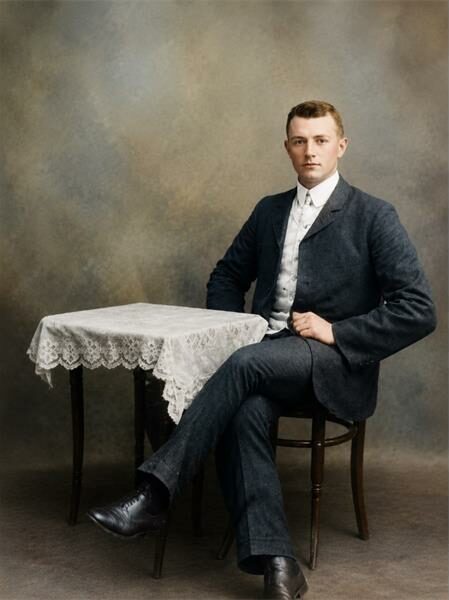
Guglielmo Martinaglia was born on September 6, 1857, in the small mountain village of Issiglio in the Piedmont region of northern Italy. Mattheyse said he was the eldest of eight children of Giovanni Martinaglia, who worked on major engineering projects and introduced his son to the practical skills of mining and mineral engineering from an early age. After completing his military service with the Brigata Alpina, the young Guglielmo joined thousands of fellow Italians seeking opportunities abroad.
“His first destination was the island of Réunion, where he worked between 1877 and 1882 on the construction of the island’s first railway. The project gave him valuable experience in engineering and blasting, skills that would later prove invaluable in South Africa.”
Mattheyse said that from Réunion he travelled to Durban in 1879, during the Anglo-Zulu War, before making his way to Kimberley, where he earned a reputation for locating underground water sources for diamond miners.
“He eventually settled on the western Witwatersrand, where he successfully pegged several gold claims near Roodepoort and sold them at a profit,” he explained.
Mattheyse said it was during the celebrations surrounding the Paardekraal Festival that Martinaglia met Maria Magdalena du Plooy, a young woman from one of the district’s pioneering families. They were married by Krugersdorp’s first Special Landdrost, Christiaan von Brandis, in 1887 and began building their life together in the rapidly developing goldfields.
• Also read: Krugersdorp’s pioneering physician remembered
The Witpoortjie Hotel
He explained that, during the early years of the Witwatersrand gold rush, travel was slow and arduous. Wagons, coaches and riders moving between Pretoria, Johannesburg and the western diggings required reliable places to rest.
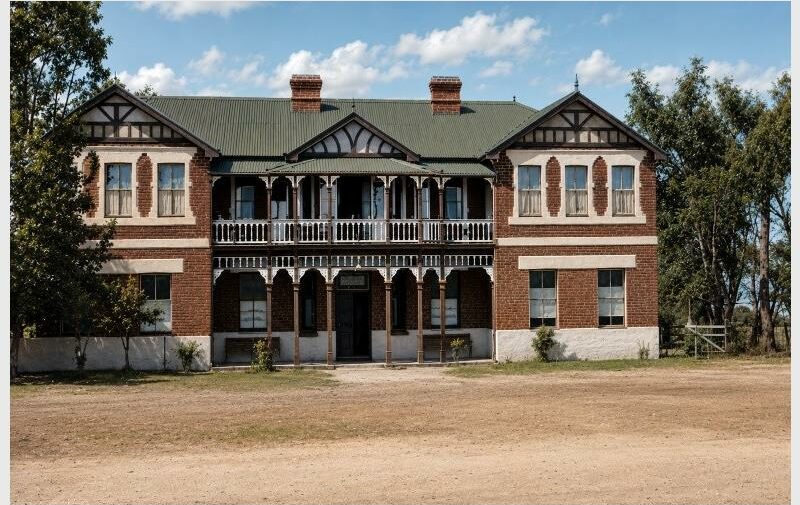
Recognising this need, Mattheyse explained that Martinaglia built the Witpoortjie Hotel (originally the Witpoortjie Inn) on the main Gold Reef Road during the early 1890s. Constructed largely through his own efforts, the establishment quickly earned a reputation as a comfortable overnight stop, and its proximity to the Witpoortjie Falls (Now in the Walter Sisulu National Botanical Garden) made it a very popular getaway and picnic spot.
The hotel flourished during the early years of the Witwatersrand Gold Rush, Mattheyse mentioned.
“Travellers, prospectors, transport riders and government officials all passed through its doors. Distinguished guests reportedly included President Paul Kruger, the British officer Ian Hamilton, and other notable visitors travelling between Johannesburg and the western Transvaal. The Witpoortjie Hotel soon became one of the best-known stopping places on the western Rand,” he said.
“Although Martinaglia eventually sold the hotel in 1893 to pursue other ventures, the building remained one of the district’s early landmarks and reflected the optimism and entrepreneurial spirit that characterised the pioneering years of Krugersdorp,” he added.
• Also read: Echoes of Krugersdorp: The powerful legacy behind the Paardekraal Monument
Personal tragedy and new beginnings
Behind Martinaglia’s remarkable achievements lay a story of profound personal loss. Mattheyse explained that his beloved wife, Maria Magdalena, died in 1895 while still a young woman, leaving him to care for their small son, Giovanni, affectionately known as Jannie.
The hardships that followed the Anglo-Boer War left Martinaglia destitute, and with few options available, young Jannie was placed in the Langlaagte (Abraham Kriel) Orphanage while his father searched for work. Despite these difficult beginnings, Jannie would go on to achieve extraordinary success. Awarded a scholarship, he studied veterinary science in Canada and the United States before returning to South Africa with a doctorate. He joined the staff of the Onderstepoort Veterinary Institute and later became recognised for his pioneering research into tuberculosis, making significant contributions to veterinary and medical science.
“His achievements reflected the resilience and determination that had characterised his father’s own remarkable life.”
A search for limestone
Following personal tragedy – including the death of his wife and one of their other young children – Martinaglia turned his attention to limestone prospecting. In 1896, he secured a lease on land at the farm Zwartkrans, not far from Krugersdorp.
His objective was not archaeology but commerce.
Mattheyse said high-grade limestone and calcite were in demand by the rapidly expanding mining industry, which used them in metallurgical and industrial processes. Believing valuable deposits existed beneath the dolomite hills, Martinaglia began blasting with dynamite.
“One explosion changed history forever. Instead of merely exposing limestone, the blast opened the entrance to an enormous underground cave system that local people soon called the Wondergat – today known worldwide as the Sterkfontein Caves.”
The discovery that changed science
“Martinaglia had no way of knowing that his accidental discovery would revolutionise our understanding of human evolution,” he noted.
Mining continued for decades as lime was extracted from the cave system. He said during this process, countless fossil-bearing breccia blocks were discarded as waste. Fortunately, enough survived for scientists to recognise their extraordinary significance.
In 1936, palaeontologist Dr Robert Broom acted on reports from students who had found fossil baboon skulls and visited Sterkfontein. Quarry workers handed him an adult australopithecine fossil – the first of many remarkable discoveries. Further excavations eventually yielded famous finds including Mrs Ples, Little Foot, hundreds of hominin fossils and thousands of stone tools.
“Today Sterkfontein forms the heart of the Cradle of Humankind Unesco World Heritage Site, recognised internationally as one of the richest sources of evidence for early human evolution. More than 3.6 million years of history are preserved within its cave deposits, making it one of the most scientifically important archaeological sites on Earth,” he continued.
A soldier of the Krugersdorp commando
Mattheyse said, the outbreak of the Anglo-Boer War in October 1899 dramatically altered Martinaglia’s life. Although Italian by birth, he had made the Zuid-Afrikaansche Republiek his home and volunteered to fight alongside the Boers. He served with the Krugersdorp Commando, one of the most respected commandos of the war, whose members fought under leaders such as Generals Ben Viljoen, Jan Kemp and Sarel Oosthuizen in some of the fiercest engagements of the conflict.
“Like so many who survived the war, Martinaglia returned to a country devastated by conflict. Businesses had disappeared, employment was scarce, and many families had lost everything. His own fortunes had changed dramatically. The prosperity he had enjoyed before the war had vanished, forcing him to seek work elsewhere, including a period in Rhodesia, before eventually returning to the Rand.”
• Also read: Echoes of Krugersdorp: Inside the town’s infamous first prison
A legacy beyond his lifetime
Martinaglia never lived to see the scientific importance of the caves he had uncovered. He died in Krugersdorp on January 5, 1929, seven years before Robert Broom’s groundbreaking fossil discoveries brought international attention to Sterkfontein and was buried in the Roman Catholic cemetery at Burgershoop, only a few kilometres from the caves that would one day make his name known around the world.
He said that, only seven years later, Dr Robert Broom’s discoveries at Sterkfontein transformed the site into one of the world’s greatest palaeoanthropological treasures. In 1996, exactly one hundred years after Martinaglia’s accidental discovery, scientists from around the world gathered at Sterkfontein to honour his contribution.
“During the centenary celebrations, a commemorative plaque was unveiled by Professor Robert Charlton, then Vice-Chancellor of the University of the Witwatersrand, recognising the man whose search for limestone had revealed one of humanity’s greatest windows into the past.”
Two places, one remarkable man
The story of Guglielmo Martinaglia links two very different chapters in the history of the Krugersdorp district. The Witpoortjie Hotel represents the optimism and enterprise of the gold rush – a time when travellers, miners and pioneers built communities across the western Witwatersrand.
“The Sterkfontein Caves remind us that beneath those same hills lies a history measured not in decades, but in millions of years. One site reflects the determination of nineteenth-century settlers striving to build new lives. The other reveals the origins of humanity itself.
“Instead, he opened a doorway into mankind’s distant past. More than a century later, his remarkable life continues to remind us that some of history’s greatest discoveries begin with ordinary people pursuing ordinary ambitions. In Krugersdorp, few lives illustrate this better than that of Guglielmo ‘Willie’ Martinaglia,” he concluded.