
Where the Mulders lived: The forgotten story behind Muldersdrift
Before bridges, tarred roads and bustling venues, one flooded river crossing and a travelling family gave Muldersdrift its enduring name.
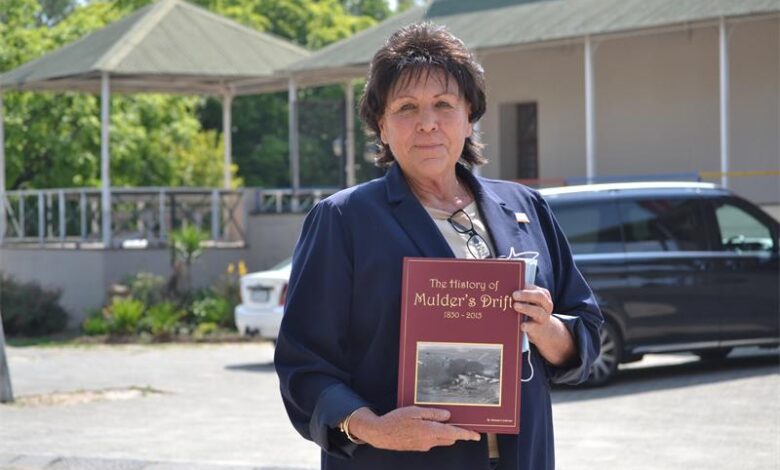
In the 31st edition of Echoes of Krugersdorp, produced in partnership with the Krugersdorp Heritage Association (KHA), we dive into a suburb older than Krugersdorp and how it developed into the Muldersdrift we know today.
Co-founder of the KHA, Jaco Mattheyse explained that every place name has a story. Some commemorate statesmen, soldiers or landowners. Others describe the landscape. A few preserve the memory of an event so ordinary that, had the name not survived, the event itself would almost certainly have been forgotten. Muldersdrift is one of these.
Today the name identifies a broad area east and north-east of Krugersdorp, where the countryside of the West Rand meets the expanding edge of Johannesburg. Modern roads carry thousands of vehicles through the district. Hotels, restaurants, wedding venues, smallholdings and businesses occupy land where generations of farmers once worked.
“Yet the name takes us back to a very different landscape. It takes us to a river, an ox wagon and a crossing through the water. It takes us back to the drift where the Mulders lived,” he said.
• Also read: Echoes of Krugersdorp: The impact that paved the way for SA’s gold rush
An ancient landscape
“The history of Muldersdrift did not begin with the arrival of the first European farming families.”
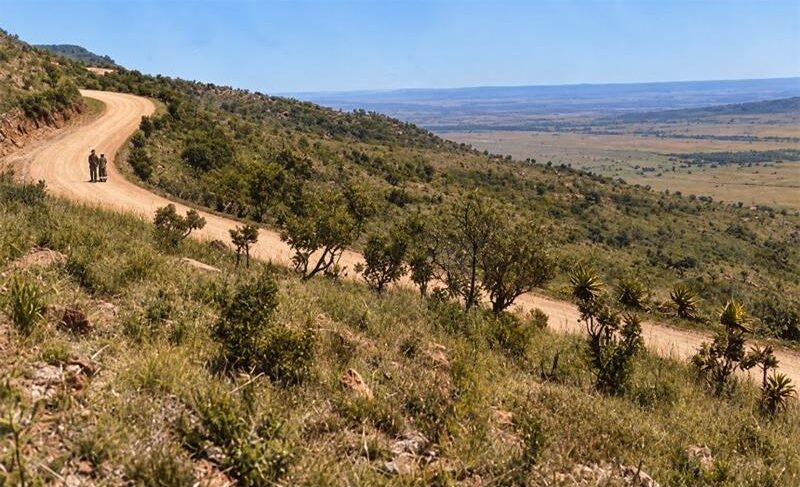
The Crocodile River valley forms part of a much older human landscape. He said that to the west lies the area now internationally known as the Cradle of Humankind, where the limestone caves of the region have produced some of the world’s most important evidence concerning early human ancestry.
Long before farms were surveyed and registered, African communities lived, hunted, herded, cultivated and travelled through the wider region.
This broader history is important when telling the story of Muldersdrift. The arrival of nineteenth-century farming families marks the beginning of one chapter in the district’s recorded history, rather than the beginning of human occupation itself. What subsequently made Muldersdrift particularly important was geography. The Crocodile River had to be crossed. And in the nineteenth century, there were no convenient bridges,” he explained.
The drift
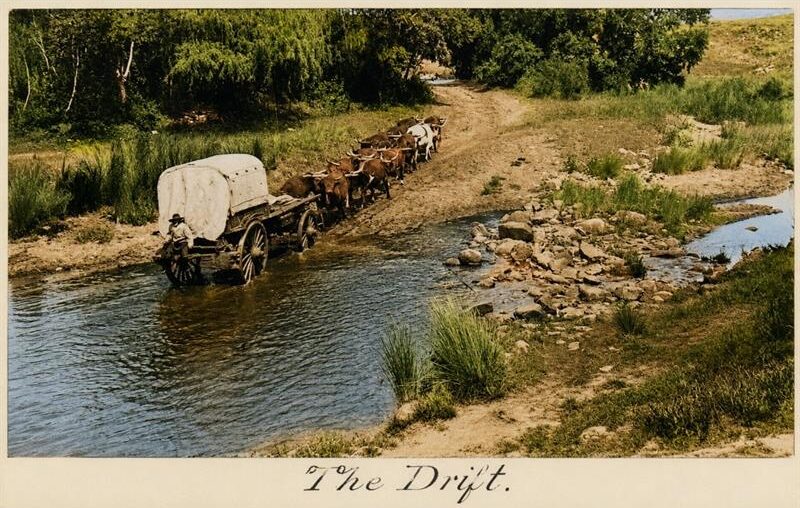
A drift was a ford – a place where a road crossed a river at a point sufficiently shallow or firm for wagons, horses and livestock to pass through the water. Such crossings were essential features of South Africa’s early transport network.
Matthyese stated that the Muldersdrift crossing offered comparatively level ground on either side of the Crocodile River and became associated with the wagon routes linking Pretoria with Potchefstroom and other parts of the western Transvaal. As settlement increased, and later as Krugersdorp developed, the crossing became increasingly familiar to travellers.
“But crossing a river was never without danger. During periods of low water, a wagon might pass through without great difficulty. After heavy rain upstream, however, the peaceful river could change rapidly. A wagon driver arriving at the bank might find the crossing impassable. There was then only one sensible course of action. Wait. The oxen would be unyoked. A fire would be lit. The travellers would make camp and wait for the river to fall. Sometimes they waited for hours. Sometimes for days. And, according to the tradition associated with the naming of Muldersdrift, one family waited considerably longer.”
The first farming families
Farms in the district were being registered from the 1840s. Matthyese pointed out that among the earliest European settlers associated with the area was Christoffel Gerhardus Snyman, later remembered by the nickname ‘Ou Buffel’.
• Also read: Echoes of Krugersdorp: The early mining days of Krugersdorp
Local historian Shenan Cochrane, whose extensive research was published in The History of Mulder’s Drift 1850–2015, records that the young Snyman came to the district in about 1847 and settled on the farm Rietvallei. He and his wife, Catherina Frederika Sophia, became associated with one of the early farming families of the district.
“The Snymans were not alone. Other families settled farms across the surrounding countryside, creating the scattered rural community characteristic of the nineteenth-century Transvaal. There was no town in the modern sense. There were farms, tracks, rivers and occasional stopping places. And there was the drift,” Matthyese mentioned.
The Mulder family and name
He noted that the year 1866 occupies a special place in the traditional history of Muldersdrift.
“According to the story preserved by generations of residents, the Mulder family arrived in the district while travelling north. When they reached the Crocodile River, floodwater prevented them from crossing. The family therefore camped near the drift. Precisely how long they remained there varies in the retelling, but the important part of the tradition is what happened afterwards,” he said.
“Travellers began identifying the crossing by reference to the family living nearby. As Shenan Cochrane explained when recounting the story: People would speak of going to the drift where the Mulders lived. The description was simple, practical and unmistakable. In time it was shortened,” he added.
Mulder’s Drift
“Eventually the name no longer described merely the river crossing. It came to identify the surrounding farming district. Modern usage has generally joined the words together as Muldersdrift, but the older form – Mulder’s Drift – tells the story more clearly. A family. A river. A drift. And a place name that has survived for more than a century and a half.”
A place ‘ontspan’
Mattheyse believes the importance of Mulder’s Drift increased because travellers naturally stopped there. Ox-wagon travel required patience. An ox could not simply be driven indefinitely. The animals required grazing, water and rest. Wheels and axles needed attention. Harness and equipment broke. Horses tired. Travellers needed food.
“The banks of a river provided an obvious place to relax [ontspan in Afrikaans]. As more people used the route, the drift became not merely an obstacle to be crossed but a recognised stopping place. One can imagine the scene. Wagons stood beneath the Highveld sky. Oxen grazed nearby. Cooking fires burned as evening approached. Horses were watered at the river. Travellers exchanged information. In an age before radio, telephone and motor transport, news travelled with people. A traveller arriving from Pretoria brought news from Pretoria. A wagon from Potchefstroom carried information from the south-western Transvaal,” he explained.
“Later, travellers from the newly developing mining settlements brought news of gold. The drift became a small but important point of contact between otherwise widely scattered communities. Commerce inevitably followed,” he added.
• Also read: Through the lens of history: Krugersdorp’s story unveiled
Arthur Ballantine Edgson
Mattheyse said, one of the names associated with the early commercial history of Muldersdrift is Arthur Ballantine Edgson.
According to Cochrane’s history, Edgson approached the Snyman family about acquiring a small portion of land near the drift. His choice of location was a good one.
He established a general store near the top of the drift, providing supplies to local farmers and passing travellers. Food and drink were available to those who had spent long hours on the road. Edgson was also associated with the extraordinary growth of early Johannesburg. Contemporary histories of Johannesburg identify him with a canteen, store and hotel in the early mining settlement.
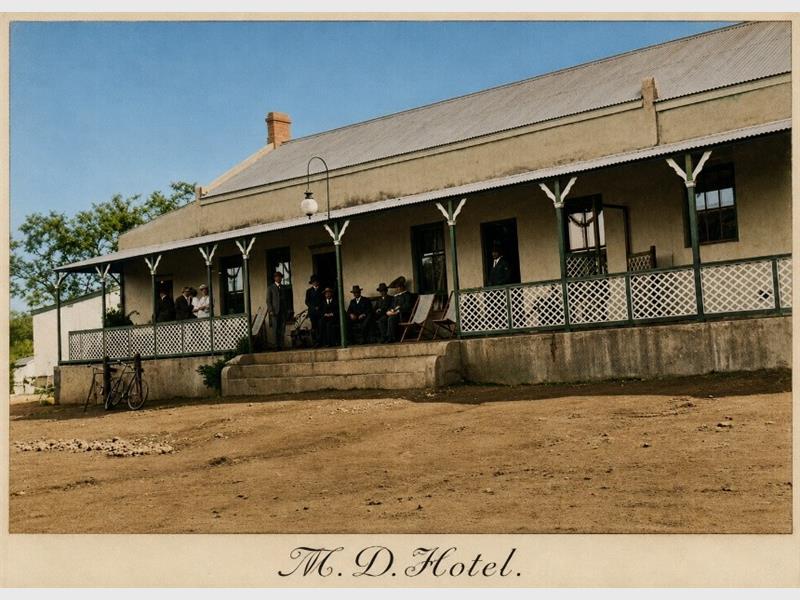
After the South African War, Edgson built a hotel at Muldersdrift. The Muldersdrift Hotel and store subsequently became familiar landmarks.
He believes their existence illustrates an important stage in the development of the district. The temporary ‘ontspan’ had become a permanent stopping place. The stopping place had attracted a store. And the store had been joined by a hotel. Muldersdrift was becoming a community.
Gold changes everything
Mattheyse stated that the world around Muldersdrift changed dramatically. During the 1880s, the discovery and exploitation of the Witwatersrand goldfields triggered one of the greatest population and economic transformations in Southern African history.
He mentioned that Johannesburg emerged with astonishing speed. To the west, the mining settlement associated with Paardekraal developed into Krugersdorp. The quiet wagon roads of the district suddenly became routes supplying an industrialising region. Equipment had to be moved. Food had to be supplied. Animals had to be transported. People arrived in increasing numbers.
“For farmers around Muldersdrift, the growth of Johannesburg and Krugersdorp created new markets. Agricultural produce could be sold to expanding urban and mining populations. The district’s position between developing centres gave it increasing importance. Even when no mine stood on a particular farm, gold had changed the value and meaning of the landscape.”
Muldersdrift and the South African War
The outbreak of the South African War in October 1899 again transformed the lives of communities across the Transvaal. He explained that Muldersdrift lay close to important routes between Johannesburg, Krugersdorp and the western districts. Local men eligible for commando service left their farms. Military traffic moved through the countryside. Horses, wagons, cattle and provisions became vital resources.
“As the conventional phase of the war gave way to guerrilla warfare, rural communities across the former Zuid-Afrikaansche Republiek experienced increasing disruption. Farmsteads, crops and livestock became caught up in the British counter-guerrilla campaign, while large numbers of civilians were removed from farms and accommodated in concentration camps. The war therefore needs to be remembered not only through battles and generals, but through the experiences of ordinary farming families whose lives were interrupted and, in many cases, devastated. Muldersdrift emerged from the war into a changed political and economic world. It also entered a new age of transport,” he said.
The arrival of the motor car
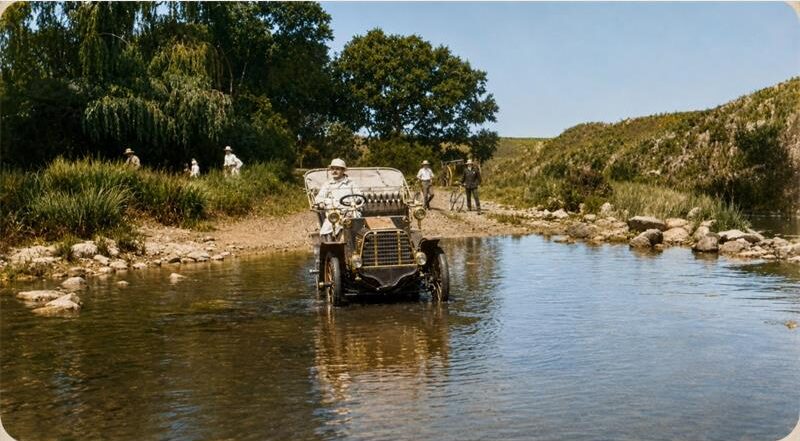
For centuries, the pace of travel had been determined by the horse and the ox. Then came the motorcar. The first motorists discovered that roads created for wagons were not necessarily suited to their new machines.
An extraordinary photograph reproduced in Cochrane’s history records early motorists attempting the crossing at Mulder’s Drift at about 1905. Cars that became stuck in the river sometimes required the assistance of residents – and their oxen or donkeys – to reach dry ground.
“Technology may have changed. The river had not. The eventual construction of a bridge therefore represented an important improvement. Another remarkable historic photograph shows the Koekemoer family’s ox wagon crossing the first bridge at Mulder’s Drift at about 1910. It is an image that captures a moment of transition beautifully. An ox wagon – one of the great symbols of 19th-century inland transport – is crossing a structure belonging to the new century. Below it lies the water through which generations of wagons had once struggled. The old and the new met at the Crocodile River,” he commented.
The Old Road
Mattheyse explained roads continued to shape the district. The old route towards Muldersdrift remained so important that the road extending westwards from Johannesburg was for many years simply associated with its destination – the Muldersdrift Road.
Parts of that route eventually became the major urban artery later known as DF Malan Drive and today as Beyers Naudé Drive.
“It is an intriguing survival of the old geography. A modern commuter travelling west from Johannesburg along Beyers Naudé Drive is, in broad terms, following a route towards the same Crocodile River crossing that drew wagon travellers more than a century ago. Road surfaces changed. Vehicles changed. The city expanded. But the direction of travel remained.”
Asbestos mining
He noted agriculture was not the district’s only industry. In 1932, two recognised asbestos operations began working in the Muldersdrift area: West Rand Asbestos and Scott’s Mine. The mines employed hundreds of people and added an industrial component to the district’s rural economy.
“At the time, asbestos was widely regarded as a valuable industrial material. Its fibres were incorporated into numerous building and manufactured products. Only later did the devastating health consequences associated with asbestos exposure become widely recognised.”
“The history of the Muldersdrift asbestos mines is therefore part of both the industrial and social history of the district and deserves further research, particularly into the experiences of the men and families whose livelihoods were connected with the mines. Historic photographs of the workforce at West Rand Asbestos provide an important visual record of this lesser-known chapter of Muldersdrift’s past,” he added.
Schools, farms and families
Despite the changes taking place around it, Mattheyse said Muldersdrift retained a strongly rural character through much of the twentieth century. Family names remained associated with particular farms over generations. Children attended local schools. Church congregations formed important centres of social life.
He pointed out that neighbours depended upon neighbours. Agricultural activity ranged from livestock to crops and, later, the nurseries and smallholdings for which parts of the district became known. The history of a community such as Muldersdrift cannot therefore be told only through prominent individuals. Its history also belongs to the teachers, farm workers, miners, shopkeepers, domestic workers, labourers, farmers and families who lived there. Their experiences changed dramatically during the twentieth century as South Africa itself changed.
A district transformed
Johannesburg continued to expand westwards. Krugersdorp developed eastwards. He said the countryside separating urban areas gradually narrowed. Road improvements meant that Muldersdrift was no longer a distant rural destination. A journey that had once required hours by wagon could be completed in a fraction of the time by motorcar. Farms were subdivided. Smallholdings appeared. Businesses followed the roads. Urban development moved closer.
Municipal planning documents now describe Muldersdrift as an urban-rural transition zone – an appropriate description for a district where the modern city and historic countryside meet.
“Yet the same landscape that once attracted farmers and provided rest for wagon travellers acquired a new value. People began travelling to Muldersdrift not because they had to pass through it, but because they wanted to visit it.”
From relaxation to destination
He said Muldersdrift became increasingly associated with hospitality and tourism. The river valley and rural landscape offered an escape from Johannesburg and Pretoria. Hotels, guest houses, restaurants, conference centres, arts-and-crafts establishments and wedding venues became important features of the local economy.
Mattheyse continued, the district became part of the Crocodile Ramble, drawing visitors along the Crocodile River valley. Its proximity to the Cradle of Humankind added another dimension. The irony is delightful. More than a century ago, travellers stopped at Muldersdrift because their animals needed rest, because the river was in flood or because the wagon journey was long. Today people still leave the city and stop in Muldersdrift. But now they come for lunch, a wedding, a weekend away or simply to enjoy the countryside. Hospitality, it seems, has remained part of the character of the district.
150 Years of Muldersdrift
In 2016, the community commemorated 150 years since the traditional date associated with the naming of Muldersdrift. He said a ceremony was held at the Muldersdrift Bridge in October that year.
Descendants of early families attended, and a commemorative plaque was unveiled. The occasion provided an opportunity not merely to celebrate the past but to consider how dramatically the district had changed. The old drift had become a bridge. The wagon road had become a modern transport route. The farming district had become part of the economic orbit of one of Africa’s largest cities. Yet the name survived.
The Drift where the Mulders lived
“Heritage does not consist only of grand buildings and monuments. Sometimes it survives in a name. Thousands of motorists drive through Muldersdrift every week. Few need to stop at the Crocodile River. Fewer still have reason to wonder whether the water is low enough for their vehicle to cross. A bridge has made the old question irrelevant.”
But imagine the same place 160 years ago. There is no bridge. There is no tarred road. There is no Johannesburg skyline in the distance. An ox wagon approaches slowly through the dust. Ahead lies the Crocodile River. The driver studies the water. It is too high. The oxen are unyoked. The wagon stands beside the river. A fire is made. Perhaps tomorrow the water will have fallen. Perhaps not.
“Another traveller arrives and asks where he has reached. Someone answers: ‘The drift’. ‘Which drift? The drift where the Mulders are’.
“The phrase passes from traveller to traveller. Mulder’s Drift. Muldersdrift. More than a century and a half later, we still say it. The wagons have gone. The oxen have gone. The old river crossing has been replaced by bridges and modern roads. But beneath the noise of traffic, the old name continues to carry an echo of another age. And that is why the history of Muldersdrift deserves to be remembered,” he concluded.