
World Bank gives Komati a $497 million lifeline in transition to cleaner energy
Komati Power Station has received a $497 million repurposing boost, after the World Bank Group Board of Directors approved the windfall to repurpose Komati from a coal-fired power plant into a renewable and battery powered plant.
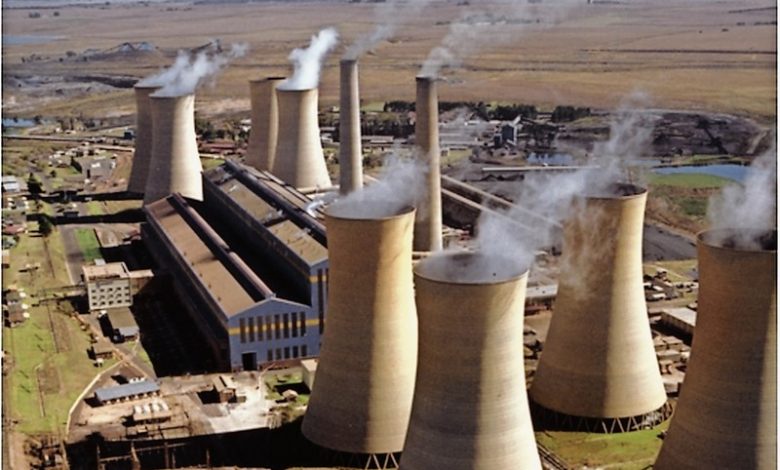
Representatives of the World Bank has been in and out of South Africa the past couple of months to finalize the deal, in line with South Africa’s efforts to transition toward a low carbon development path with reliable, affordable and sustainable energy.
The World Bank approved the nine digit jackpot in support of a just transition towards lower greenhouse gas emissions.
The Komati Just Energy Transition Project is financed jointly through a $439.5 million World Bank loan, a $47.5 million concessional loan from the Canadian Clean Energy and Forest Climate Facility (CCEFCF), and a $10 million grant from the Energy Sector Management Assistance Program (ESMAP).
A portion of project financing will be devoted to creating economic opportunities for local communities, which is expected to benefit approximately 15,000 people.
Community-driven projects, skills training, incubation support, and business development services for new and existing micro, small, and medium enterprises are expected to create jobs in agriculture, local manufacturing, and digital technology. Activities will be carried out in coordination with local government, civil society organizations, and the private sector.
In a release straight out of Washington, the World Bank says addressing energy poverty and transitioning toward lower carbon development requires a reliable power sector to underpin inclusive economic growth.
Under the Komati project, the workers will be supported through a comprehensive transition plan, elaborated jointly with inputs from staff and unions. Options for the affected workers will include transfers to other Eskom facilities, re-skilling, and upskilling for deployment to the renewable energy plants.
The Komati Project aims to help mitigate climate change, enhance energy security, and support economic opportunities in the Komati area.
The project is aligned with the country’s Just Transition Framework, which aims to minimize the socio-economic impacts of the climate transition, improve the livelihoods of those most vulnerable, and embrace the opportunities stemming from the transition.
The decommissioning and repurposing of the Komati coal-fired plant is a demonstration project that can serve as a reference on how to transition fossil-fuel assets for future projects in South Africa and around the world.
The project will provide learning experiences through a cycle of piloting, monitoring, assessing, documenting, and information sharing.
“Reducing greenhouse gas emissions is a difficult challenge worldwide, and particularly in South Africa given the high carbon intensity of the energy sector,” said World Bank Group President David Malpass.
“Closing the Komati plant this week is a good first step toward low carbon development. We are cognizant of the social challenges of the transition, and we are partnering with the government, civil society, and unions to create economic opportunities for affected workers and communities.”
The decommissioning of the Komati coal-fired plant will result in reduced carbon emissions and improvement of ambient air quality in the vicinity of the plant.
The power sector is a major contributor to greenhouse gas emissions in South Africa, accounting for 41 percent of its CO2 emissions.
This is due mainly to Eskom’s fleet composition. Its 15 coal-fired power plants, with an average age of 41 years, provide 38.7 GW of the country’s 52.5 GW installed capacity.
“This project is critical to our understanding of the sustainability of decommissioning, repurposing, and mitigating the socio-economic impacts for workers and communities before we scale up the move of the power sector into a low-carbon path,” added Minister of Public Enterprises, Pravin Gordhan.
“It is part of implementing the country’s Integrated Resource Plan 2019 to gradually retire 12 GW of our old and inefficient coal-fired power fleet by 2030 and to scale up private sector-led renewables of 18 GW during the same period.”
The repurposing of the plant will enhance energy security in South Africa with the installation of a combination of 220 MW renewable energy solutions (including 150 MW solar PV solar and 70 MW wind) and 150 MW batteries, which together will help to improve the quality of electricity supply and grid stability.