Loskop Dam water hyacinth removal projects prove successful
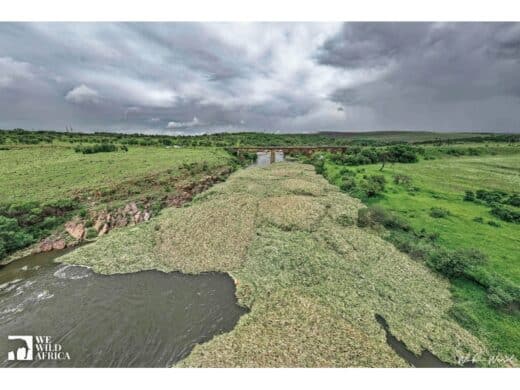
Rivers, streams, and dams around South Africa are literally having the life choked out of them by an insidious invader that is wreaking havoc on aquatic ecosystems – the water hyacinth.
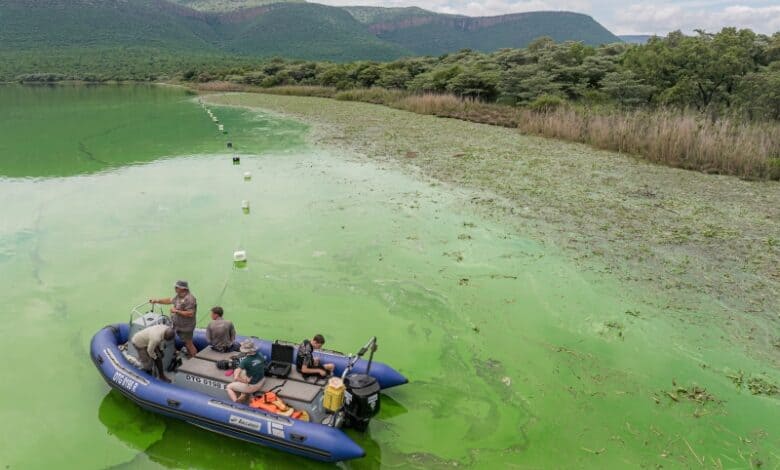
Water hyacinths have proliferated in Loskop Dam due to nutrient-rich waters flowing from the Olifants River.
Dense mats of the plant block sunlight and deplete oxygen, destabilising aquatic ecosystems and threatening native species.
Starting on Friday, January 10, key players of the Mpumalanga community came together to tackle the ecological and economic devastation posed by the invasive water pest.
Often referred to as South Africa’s worst invasive plant, water hyacinths threaten Loskop Dam and the country’s second-largest agriculture and irrigation scheme, the Loskop Irrigation Board.
Without sustained intervention, Loskop Dam could face a crisis similar to that of Hartbeespoort Dam.
The Loskop Irrigation Board oversees the management of the Loskop Dam and downstream areas, while the Department of Environmental Affairs and Nature Conservation is responsible for upstream oversight, ensuring protection against potential pollution-causing activities that could impact ecosystems like the Olifants and Wilge rivers.
The dam is also a key node in the R1.67 billion Loskop Regional Bulk Water Supply Project, which will supply water to over 130 000 people in Mpumalanga and Limpopo.
The Loskop Irrigation Board, WeWild Africa, and several volunteers went beyond their standard operating jurisdiction, using their own funds and resources in multiple capacities.
On Tuesday, January 7, the Loskop Irrigation Council and WeWild Africa visited landowner André Booyens near the old bridge to Witbank to assess the extent of the hyacinth problem. By Thursday, January 9, approximately 120 tons of hyacinths were removed from the area at Presidentsrus, Olifants River Lodge.
Efforts intensified on January 10, when a 200-metre cable was installed across the upper part of the dam where the Olifants River flows in, designed to catch water hyacinths before they could spread further.
Additional cables were laid 1.5km and 3km upstream from the dam’s inflow on the following days to further contain the spread. Trucks and TLBs were also deployed to physically remove tons of dead hyacinths, which if left to sink to the bottom of the dam, deplete oxygen levels and can lead to fish deaths.
Over this weekend, despite cloudy skies and rainstorms, community involvement peaked as over 50 volunteers worked tirelessly, waist-deep in water, to manually remove the plants.
Efforts continued into Sunday when a 40×40 metre area filled with hyacinths was cleared, thanks to the rising water levels from generous rainfall and the opening of locks at nearby Witbank Dam and Middelburg Dam.
On January 28, targeted chemical intervention was carried out at Loskop Dam by Joop Smit, one of his employees, and Juan Swart.
This operation focused on restricted areas heavily afflicted by the plant.
The herbicide application, guided by recommendations from Mr Johan Lindique—the representative from the manufacturing company of Kilomax 700—was methodically executed in areas displaying dense growths along the shoreline and in gullies.
The operation began in the first gully on the right-hand side, extending over the first cable into the Kerkplaas loop on the northern shoreline.
The team ensured extreme care to prevent herbicide drift and overspray during the application.
After treating the northern shoreline, the team crossed over and continued spraying past Imbambala up to the cable installed by WeWild/Loskop Irrigation Board.
On the southern shore, visible but sparse hyacinth plants were noted; these were deemed manageable through manual removal.
However, one gully on the southern shore just before the main cable received chemical treatment.
Additionally, hyacinths within a rope cage inside the dam, an area the team had previously contained, were also sprayed.
There are also some plants on the northern shore at Bus Circle, which are targeted for manual removal.
On February 5, an additional follow-up analysis and chemical spray was conducted.
According to local reports from early February, the presence of water hyacinths in Loskop has decreased to just 1% of its previous extent.
However, concerns persist due to the presence of hyacinths outside the reserve in upstream areas like Cilliers, Kings, and as far as Witbank, which are prone to flushing hyacinths down to Loskop during heavy rains.
The Board and WeWild Africa have implemented both immediate and long-term plans to address the water hyacinth issue.
In the short term, cables, TLBs, and chemical spraying have been actively deployed to take out the invasive plants for the last month.
For the long term, the team is exploring biological control methods, such as a plant-hopper breeding programme aimed at biologically controlling and eradicating hyacinths.
Lessons from Hartbeespoort Dam will be used to address the need for sustainable and diversified funding measures to support all facets of the water clean-up project.
Over the last month, WeWild Africa has collaborated on the combined strategy of immediate action, long-term biological control strategy, and legal pressure across governmental, private, and NGO sectors, which positions 2025 as a pivotal year for the international rewilding and expansion programme at Loskop Dam, which in turn will rehabilitate one of South Africa’s largest freshwater bodies.
A meeting scheduled for March 5 will convene governmental, local, and private stakeholders to discuss revitalising the Olifants River Forum and strategising the future actions for the Loskop Dam Water Clean-Up for decades to come.
The Loskop Rewilding and Expansion Initiative:
The clean-up forms part of the larger Loskop Rewilding and Expansion Project, spearheaded by WeWild Africa in partnership with the Mpumalanga Tourism and Parks Agency. This project aims to restore over 100 000 hectares of wilderness, reintroducing the Big Five, and address systemic threats to the dam and its surrounding areas.
Representing WeWild Africa, Wiki West attended the clean-up to document the efforts, aiming to raise awareness among government authorities and the broader community about the need to address the water hyacinth issue.
What else can you do?
• If you see water hyacinths: Remove them. Even five minutes of effort can prevent exponential growth.
• Report sightings: Notify local authorities.
• Every action matters: The seeds of water hyacinths remain viable for over 20 years, making early intervention critical.