
Rescued baboon ‘Kees’ finds freedom after months of care
From wandering Middelburg’s streets to roaming free in the wild, Kees’ journey highlights both the dangers of human interference and the power of ethical rehabilitation.
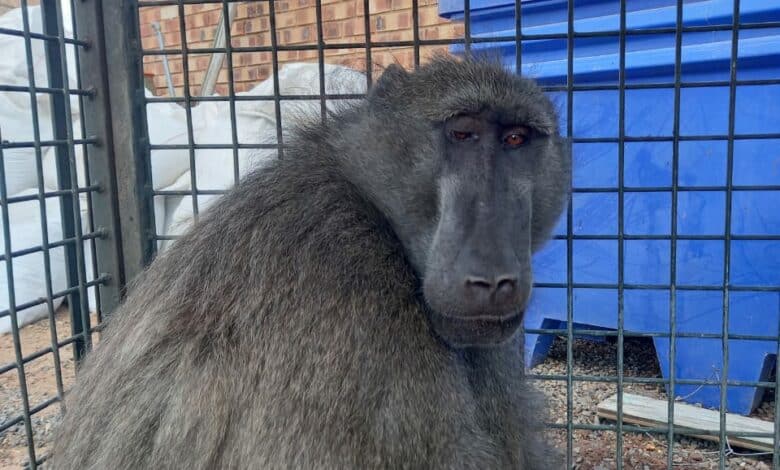
The lone male baboon, once spotted searching for food in Aerorand, Middelburg, has finally found freedom after a carefully monitored rehabilitation process.
Kees, as he became fondly known, was captured on July 27 in Middelburg and taken to the Wildlife Paws SOS Rehabilitation Centre in Dullstroom in collaboration with the Dullstroom Bird of Prey Centre.
He had been living an isolated and unnatural life, believed to have been hand-reared and later irresponsibly released into the wild. Without the protection and teaching of a troop, Kees grew increasingly dependent on human areas for survival; an unusual and stressful existence for such a highly social species.
According to centre founder Frith Douglas, the decision to release him onto a secure no-shoot-policy farm was not taken lightly, “The baboon was depressed, stressed, and harming himself while desperately trying to escape. Our mission is always to ensure the well-being of every animal in our care, and sometimes the kindest choice is to let them be free.”
After careful monitoring and consultation with the Mpumalanga Tourism and Parks Agency and primatology experts, a decision was made to release him onto a secure, no-shoot-policy farm, far from people and towns.
Since his release, Kees has been spotted from time to time, easily identifiable by his stunted tail. Spotters have confirmed that he is healthy, safe, and thriving in his new environment.
Kees’ case is a powerful reminder of the long-term consequences of raising wild animals in captivity without proper planning for reintegration. But thanks to the combined efforts of wildlife experts, Middelburg CPF members, the Middelburg Stock Theft and Endangered Species Unit, and Deon Cornelius from uBhetyan O’Africa Wildlife Rescue Services, Kees now has the chance to live out his days as nature intended.
“Sometimes, the greatest act of care is simply to let the wild be wild,” said Frith.