
INVESTIGATION: Bloody fight over slaughtering and stench
Rural residents’ long-standing struggle for peace continues, while abattoir snubs complaints.
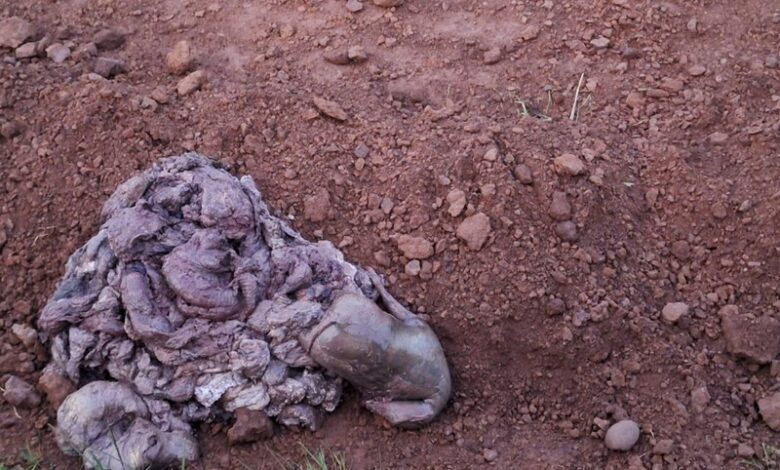
When studying correspondence from the Rondebosch residents’ struggle, you can’t help but feel sorry for them.
What should have been an idyllic place to stay with a breathtaking view to the east has turned into a long-standing struggle.
A struggle for peace that they have not been granted.
Peace that does not exist, with an abattoir on their doorstep.
For the past 12 years, they have faced closed doors when they have called on the authorities for help.
Out of desperation, they have now approached the Middelburg Observer.
“You are our last resort”
There have been letters and appeals to every conceivable department.
Already on January 3, 2013, six residents, L. H. Sutton, H. Bernitz, S. Bates, G. Becker, J. Pieters, and J. Potgieter (according to the attendance list) sent a petition to the Steve Tshwete Local Municipality.
The petition read, “On premises disposal and treatment of slaughterhouse, attracting flies, polluting air, and underground water resources.”
The Sutton couple, Len and Elise, held a meeting with the municipality the same year about the air quality, fly infestation, and quality of the drinking water.
However, they had already complained about problems with the abattoir in 2008, but were informed by Susan Wannenburg (VPH Practitioner, Mpumalanga, Nkangala) that the owner, Bilaal Suliman, had taken steps to rectify this.
When complaints were later made about the stench, Wannenburg wrote, “Due to the nature of the dams, it will be evident that a smell may occur. Standing just beside the first dam, a bad smell was evident, but walking two metres away, I could detect no smell.”
This was followed by several letters from residents, pleading, “The stench of decay that plagues us in our homes is not acceptable.”
Seven years ago, a letter was also sent to Angie Masia, who was identified as the chief of health for the Steve Tshwete Local Municipality, “The trenches at Medina Abattoir that were prematurely dug up in December 2017 have been left as such during this period. The trenches are full of contaminated water as they are dug into the aquifer, and the stench has been unbearable. I have serious concerns about health issues and especially contamination of borehole drinking water.”
Now it’s 2025.
On Monday, October 20, another complaint was sent to Medina owner Bilaal Suliman by Mr Sutton, “The earthwork you are busy with currently across the road from my house. Cups, windows, and glass windows are rattling when you are compacting the ground with that huge compacting machine. The house’s walls are next to be damaged.”
The big question is how the abattoir could have been approved in the first place next to multi-million rand smallholdings.
Who gave the permission?
Why were residents not consulted?
The blood will still flow to get to the truth.