
Life Midmed Hospital is celebrating WAAW
Life Midmed Hospital has joined the global health community for World Antimicrobial Awareness Week 2025, warning that antimicrobial resistance is accelerating worldwide and placing millions of lives at risk.
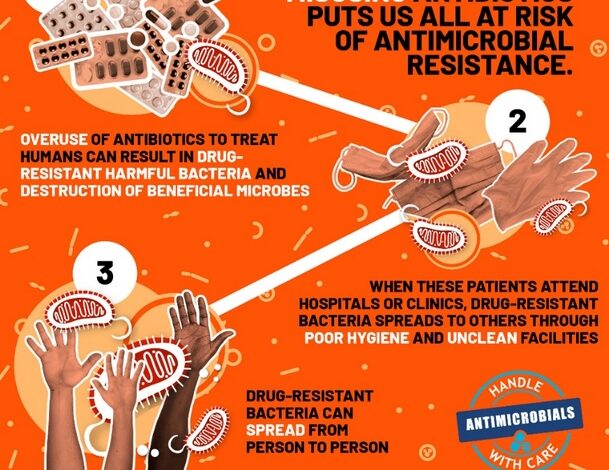
From November 18, to November 24, Life Midmed Hospital, together with other healthcare professionals and global policy makers, will unite for World Antimicrobial Awareness Week (WAAW) 2025.
The campaign, led by the World Health Organisation (WHO) and its partners, sounds a clear and urgent alarm with its theme: ‘Act Now: Protect Our Present, Secure Our Future.”
What is AMR?
Antimicrobial resistance (AMR) occurs when bacteria, viruses, fungi, and parasites evolve into ‘superbugs’ to defy the medication designed to kill them, making once-treatable infections difficult or impossible to manage. This crisis isn’t a distant threat; it is here today, impacting health systems, economies, food security, and the environment (WHO: 2025).
A mounting crisis is upon us!
The statistics reveal a harsh reality. According to the WHO, AMR was solely responsible for an estimated 1.27 million deaths in 2019 alone. And also contributed to a total of nearly five million deaths globally. This makes drug-resistant infections a more lethal threat than many individual diseases. The rise of these ‘superbugs’ puts decades of medical progress at risk, significantly increasing the risk to routine procedures, such as minor surgeries, chemotherapy, and even caesarean sections.
The primary drivers of this resistance are the misuse and overuse of antimicrobials across human, animal, and plant health sectors. When these vital medicines are used inappropriately, microorganisms adapt and develop resistance, rendering the drugs ineffective for future use.
Act Now!
The WHO stresses that investment in AMR prevention plans is essential for a safer and healthier future, urging everyone to play their part in preserving the effectiveness of these critical medicines for generations to come.
What our experts on the front lines are saying
Dr Swart (Paediatrician): “Antibiotics aren’t always the answer – but protecting our future is.”
Dr Du Plessis (Casualty Doctor): “A fever does not always mean you need an antibiotic, most fevers are caused by a viral infection, and antibiotics do not work against viruses.”
Dr Buthelezi (Microbiologist): “Not all bugs need antibiotics. Only use antibiotics when there is an indication.”
Dr Smith (Specialist Physician): “When antibiotics fail, even simple infections will have high mortality.”
Dr Wilson (Casualty Doctor): “We live in a society where patients are demanding antibiotics. This had led to major resistance in most of our antibiotic brands. The public needs to understand that antibiotics have a time and place and should not be used for every infection.”
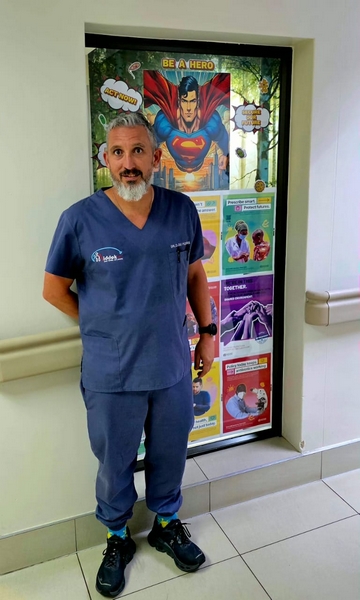


How myths about antibiotics are fuelling a worldwide health crisis
Myth 1: Antibiotics are the cure for the common cold and flu
Fact: Antibiotics only work against bacterial infections. Because colds and flu are caused by viruses, antibiotics are ineffective against them and will only promote resistance.
Myth 2: It’s our bodies that become resistant to antibiotics.
Fact: It is the bacteria, not the human body, that becomes resistant to the antibiotic.
Myth 3: I can stop taking my antibiotics when I feel better.
Fact: Never stop your antibiotic course if you feel better before you have completed the full, prescribed course. If you stop too early, some bacteria may survive and develop resistance. Completing the full course ensures that all bacteria are killed.
Myth 4: I can take leftover antibiotics or those from family or friends.
Fact: Never use leftover antibiotics or those prescribed for someone else. The medication might not be the correct type or dose for your specific infection, which can lead to treatment failure and increased resistance.
Myth 5: Antibiotics won’t cause resistance if I take them correctly.
Fact: Although the risk is significantly higher with misuse, resistance can still occur through natural selection.
Myth 6: Resistance only happens from repeated courses of antibiotics.
Fact: Antibiotic resistance can occur any time antibiotics are used, even after taking a single course.
Myth 7: The blame for resistance lies exclusively on healthcare professionals.
Fact: While the medical community plays a role, the public also bears responsibility. Patients pressuring prescribers into prescribing antibiotics is a significant contributing factor.