The country’s cyclists will go to the museum on January 31.
No, no, no, road bikes will not be kept on display forever.
Road bike races are being revived.
The Race@Ditsong race is being held at the Willem Prinsloo Museum, and there are distances of 90km and 57km.
Online entries, costing R420 – and R520 for the longer distance – are still open until Monday (January 26), at 23:50.
You can also enter on the morning of the race.
Where the past meets adventure
Lenie Smit of Lenick Promotions, who is known for her popular Rooiwal bike races, is the organiser and wants to invite cyclists with the following message: “Discover history and excitement at the Willem Prinsloo Agricultural Museum, where the past meets adventure with great food, lively entertainment, and a true taste of South Africa.”
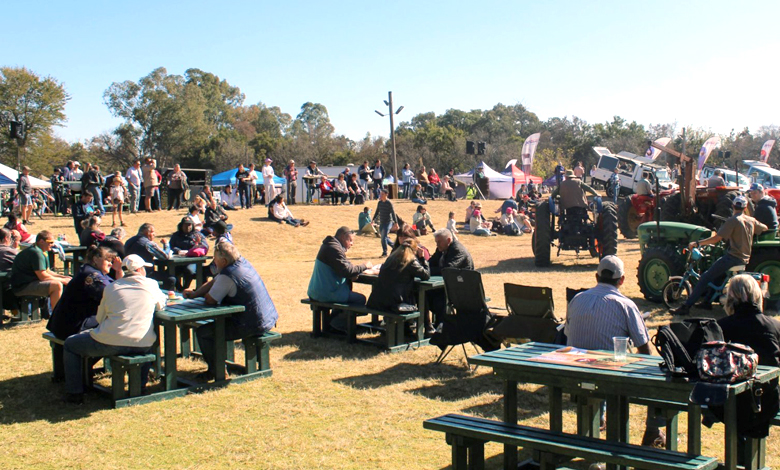
While the cyclists sweat, families can enjoy a lovely visit to the museum.
Willem Wragtag
• The Willem Prinsloo Agricultural Museum can be reached using the old Pretoria-Bronkhorstspruit road (R104), off the N4 on the Cullinan/Rayton (R515) turn-off. The farm belonged to Miertjie le Roux (née Prinsloo) and three generations of Prinsloo ancestors.
Miertjie’s great-grandfather, Willem Prinsloo (nicknamed Willem Wragtag), was a big game hunter and bartered skins, ivory, and horns for the farm Modderfontein on the Witwatersrand.
Lang Willem Prinsloo
Gold was discovered later at Modderfontein, and he sold the farm to a mining company. With the money, he purchased various Bushveld and Highveld farms, including the farm Elandsfontein, which his daughter later inherited. After the discovery of diamonds on Elandsfontein, the farm was sold to Thomas Cullinan, who founded the Premier Diamond Mining Company (1902).
Willem also bought the farm Kaalfontein in 1889, but never lived there. His son, Lang Willem Prinsloo, and his family lived on Kaalfontein.
16 Hectares donated
Miertjie inherited the farm Kaalfontein and lived in the 1880 dwelling on the old farmyard until 1976. When Miertjie’s brother died in 1976, she donated 16 hectares of the farm, including the 1880 dwelling and outbuildings, to the National Cultural History and Open-air Museum.
A few years later, the National Cultural History and Open-air Museum purchased a portion of the adjacent farm on which the 1913 and 1927 homesteads are.
Pleasant memories
The development of the museum started in 1976 with the construction of the main building and storage areas, and the museum officially opened on March 29, 1980.
Indoor exhibitions include a formal display on the history of the development of agriculture in South Africa and exhibits of vehicles of yesteryear, such as donkey and horse carts, carriages, coaches, and spider carriages. Various old agricultural implements will bring back pleasant memories to cyclists.