The Week in Middelburg’s History Heritage 1 June 2026
Union Formation in Middelburg 1910 and 1960
The Union of South Africa was established on May 31, 1910; an event commemorated in Middelburg and marked again 50 years later in 1960.
Leading up to the Union of South Africa
At 23:05 on Saturday, May 31, 1902, the Peace Agreement between the British High Command and the two Boer republics – the South African Republic and the Orange Free State – was signed at Melrose House in Pretoria. It ended the Anglo-Boer War and brought both republics under British rule as the Transvaal Colony and the Orange River Colony.
In 1907, colonial responsible government was granted to the two colonies. General Louis Botha, the Premier of the Transvaal Colony, with Lord Selborne as Governor General, visited Middelburg during this period.
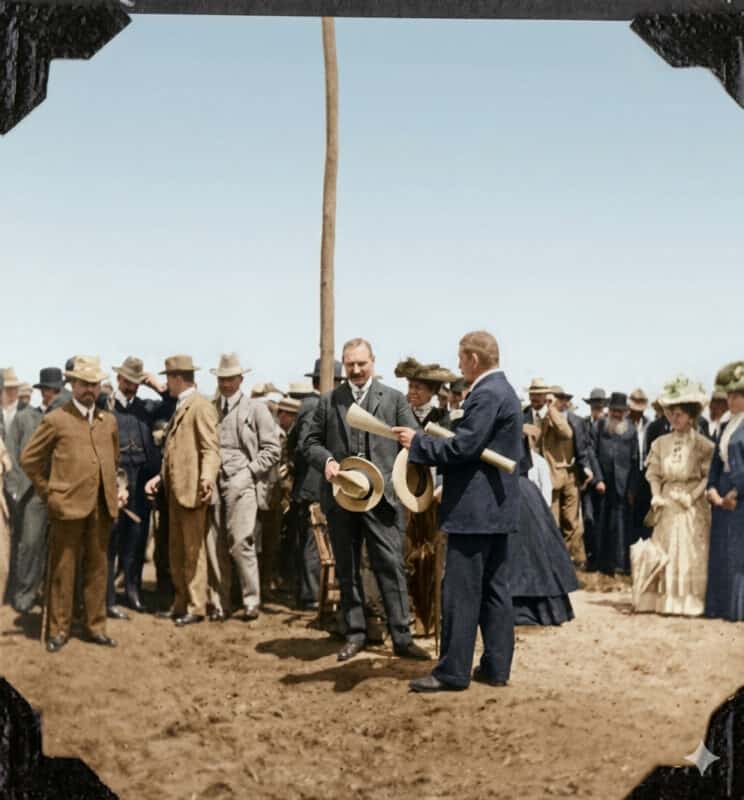
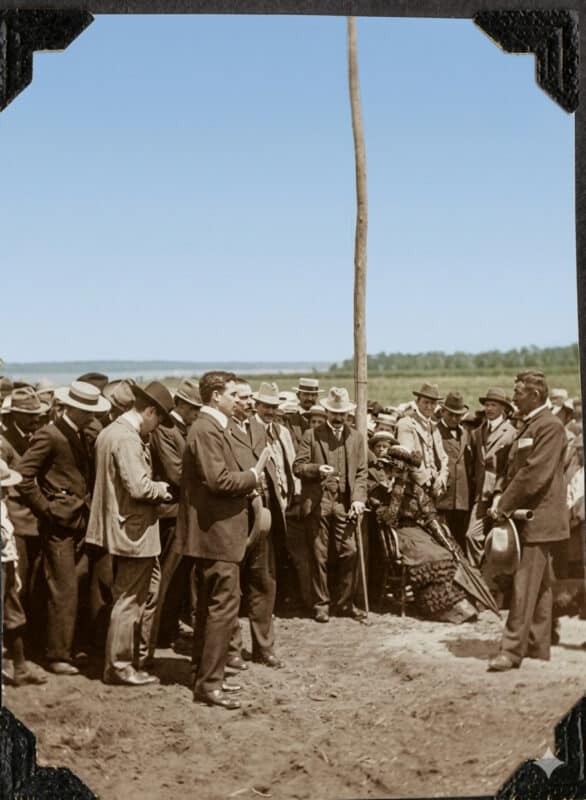
At the National Convention in Bloemfontein, from May 3–11, 1909, a draft constitution was approved, and on September 20, 1909, the South Africa Act was enacted by the Westminster Parliament. This led to the official establishment of the Union of South Africa on May 31, 1910.
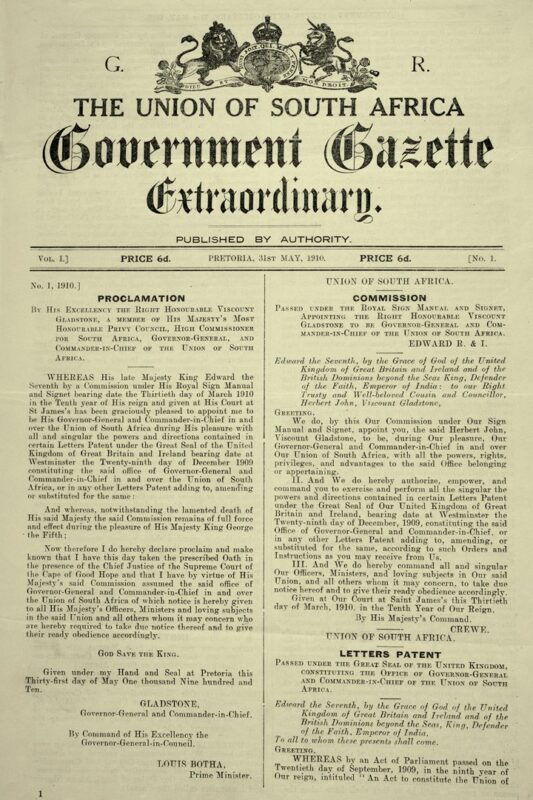
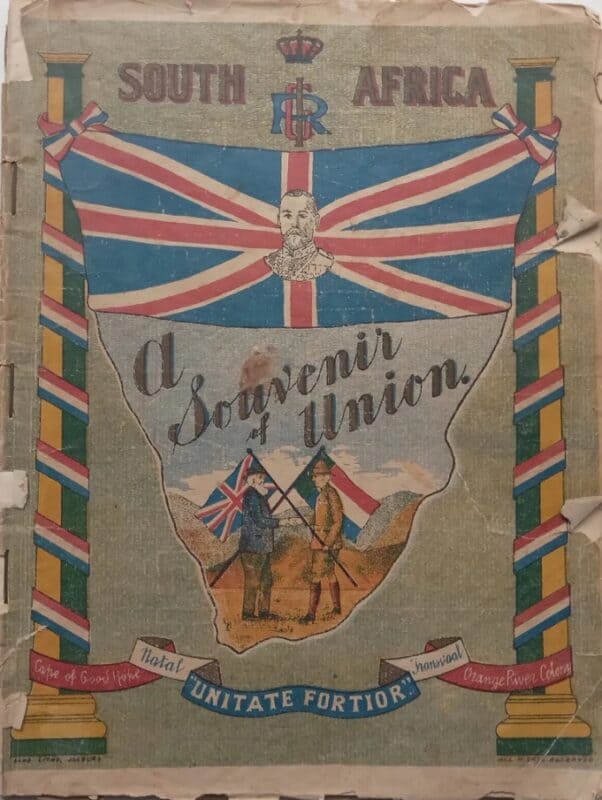
Union formation May 31, 1910
The planned Union celebrations were initially extremely limited due to the death of King Edward VII on May 6, 1910. It was only after the new King, George V, indicated his wish that the celebrations continue that planning was reactivated. This led to several delays in commemorations and planning.
The formal swearing-in of General Botha as the new Prime Minister of the Union took place at Tuynhuis in Cape Town. Further celebrations took place in Pretoria at Church Square.
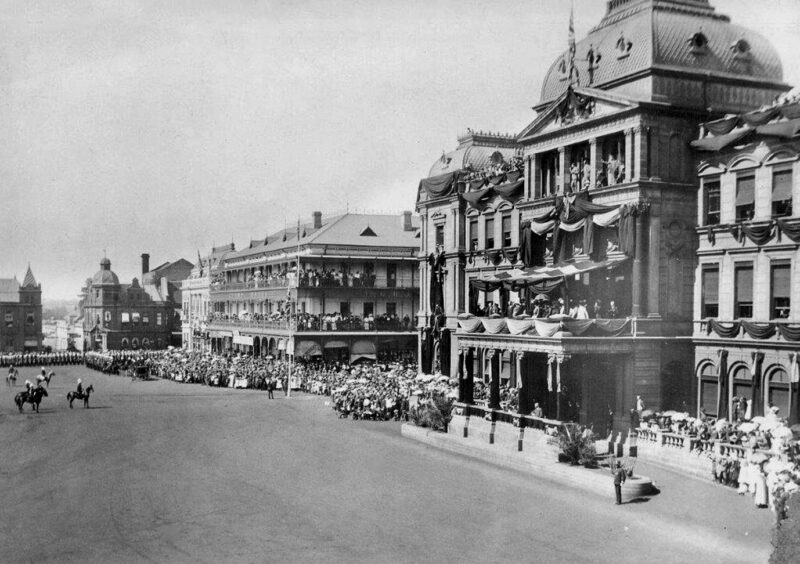
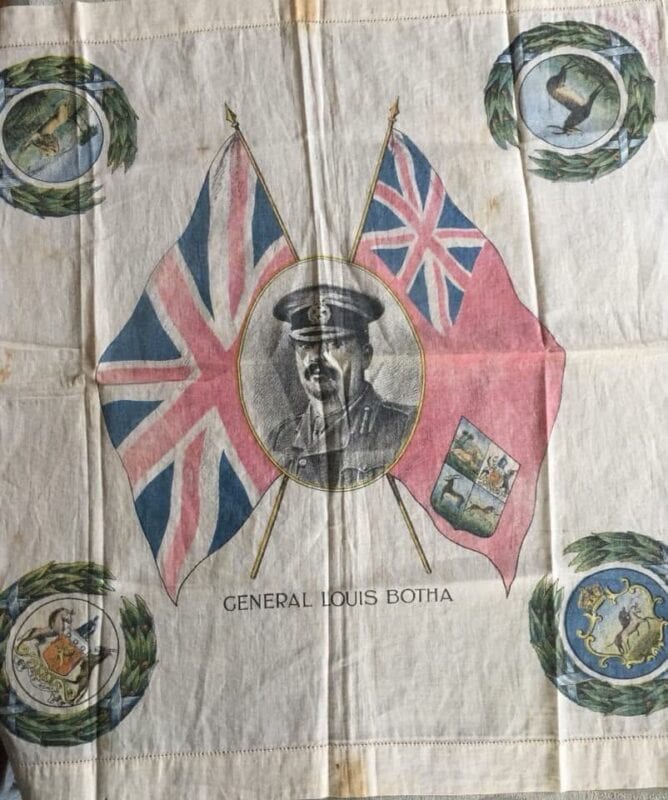
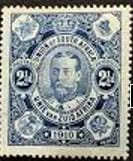
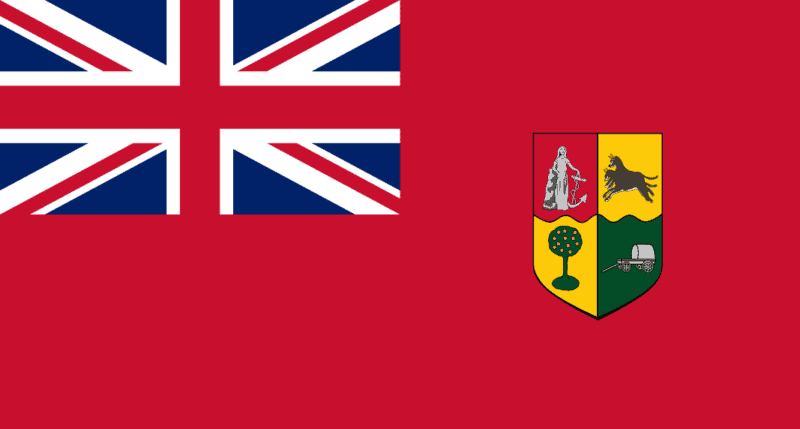
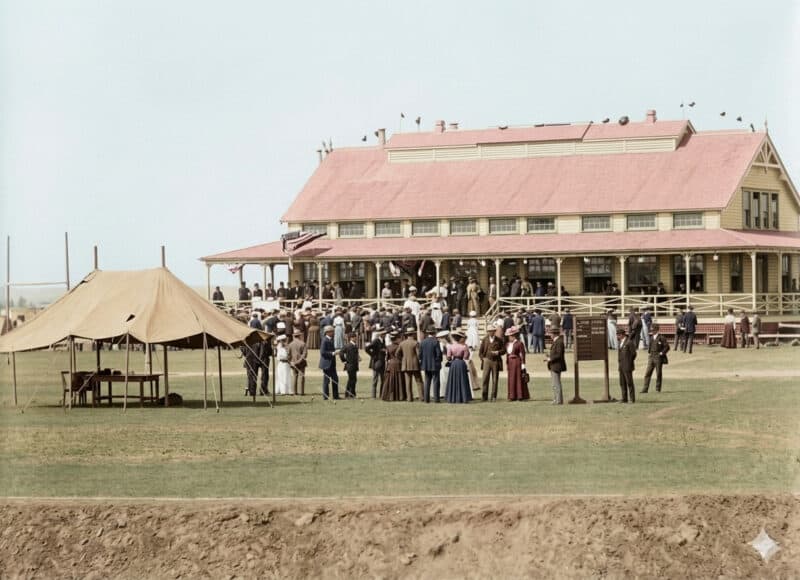
There is limited information about how the Union was celebrated in Middelburg. A committee was chaired by the mayor, Cllr WP Pistorius, with Cllrs Du Toit, Morkel, and Knobel, who organised it.
The main events took place on the Wanderers grounds, the town’s sports field just south of the Middelburg High School. The children of the town were treated to buns and cake, and various sporting activities were offered. These sporting events included athletics and cycling.
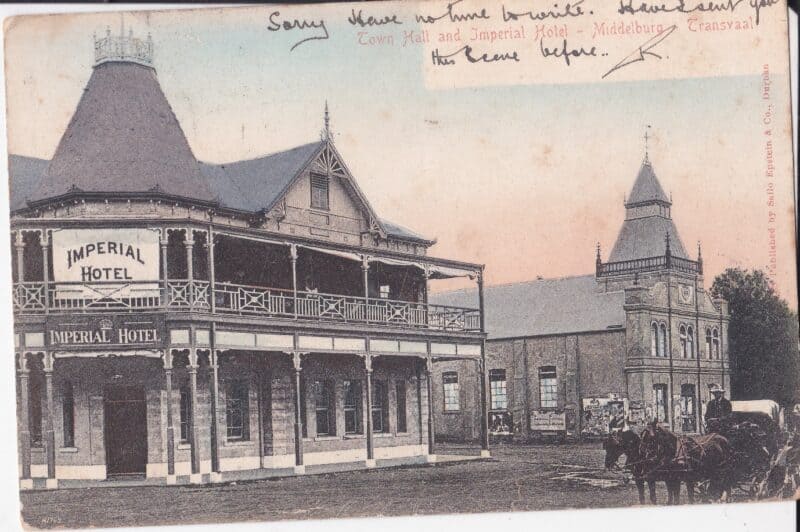
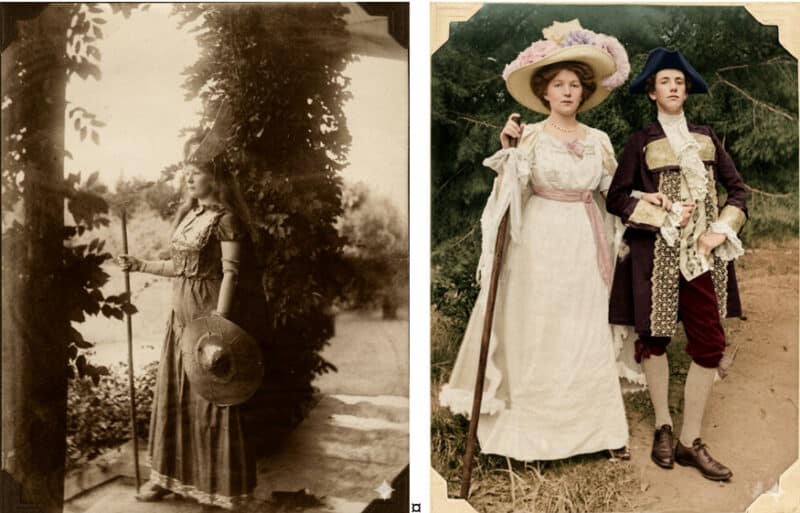
S. Cooper, the owner of the Imperial Hotel, installed a new roller skating rink in the adjacent old town hall building, and residents could roller skate on the high-standard rink for 1 shilling (10 cents), skate hire was 6 pence (5 cents) extra. The roller skating rink was opened by the mayor, the Honourable WP Pistorius, and inaugurated with a costume roller skating carnival, photographs of which have fortunately survived.
In the evening, a fireworks display was presented by James Pain & Sons.
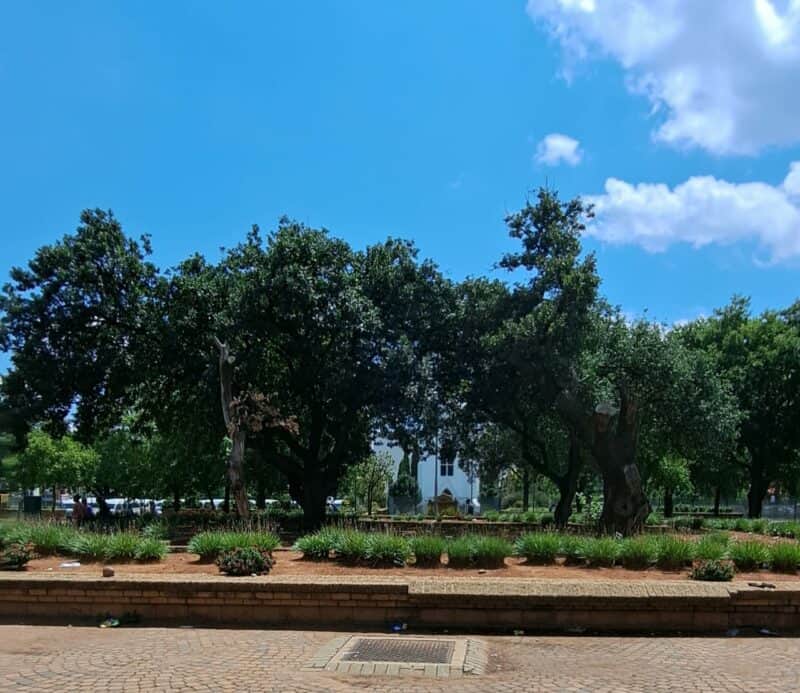
During the Union Festival, four oak trees – each representing a colony – were planted by four ladies during a ceremony in the middle of Rooth Plein (later Van Blerk Plein). The trees were planted by GJW du Toit (the former magistrate’s second wife), PA Morkel (wife of the councillor), JH Herold, and Krogh. The south-western tree was struck by lightning in 1950 and was replaced. The square was later developed around these four trees, and a fish pond was built in the middle between the trees. In later years, the square was redesigned again, and the fish pond was removed. Unfortunately, no photographs from the period could be found. The four historic trees still stand, but are unfortunately dying and will require urgent intervention if they are to be preserved.
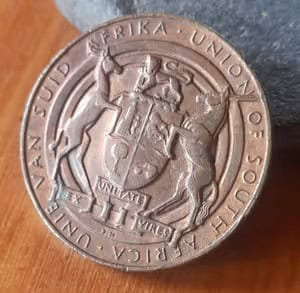
Unfortunately, the City Council sometimes slept a little late at the time. They decided, like other towns, to present the children with a commemorative medal and ordered 600 medals. However, the order was too late, probably due to the death of King Edward VII, who had put all festive events on hold.
The medals only arrived in town much later. It is not certain whether Middelburg, like many other towns, had a unique medal with the town name on it, or whether the general medal was distributed.
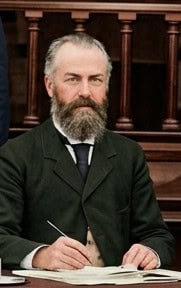
On September 15, 1910, GJW du Toit, the last magistrate of Middelburg before the Anglo-Boer War, was elected unopposed as the first Member of
Parliament for Middelburg in the Union Parliament.
Union Festival, May 31, 1910
Fifty years later, the establishment of the Union was celebrated with a national Union Festival. The main proceedings took place in Bloemfontein on May 31, 1960. Middelburg was represented by 12 folk dancers (volkspelers) who participated in the display, and 38 boys from the Middelburg Technical High School who participated in the procession through the streets of Bloemfontein. Gladys Laver, with several Girl Guides from Middelburg, also participated in the proceedings.
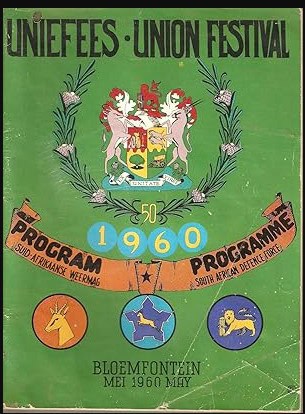
A flag run was held with flags carried by relay teams of runners from all corners of the country to Bloemfontein, arriving there on May 31. The flag reached Middelburg on May 6, 1960, and a procession of floats and the cadet bands of the Technical High School and Middelburg High School accompanied the flag bearers.
They received the flag from Belfast at the railway crossing where Jan van Riebeeck Street once crossed the railway line (present-day Eastdene area), and they handed the flag to the mayor, Cllr PP van Blerk, on the steps of the city hall. Salutes were fired by the cadets.
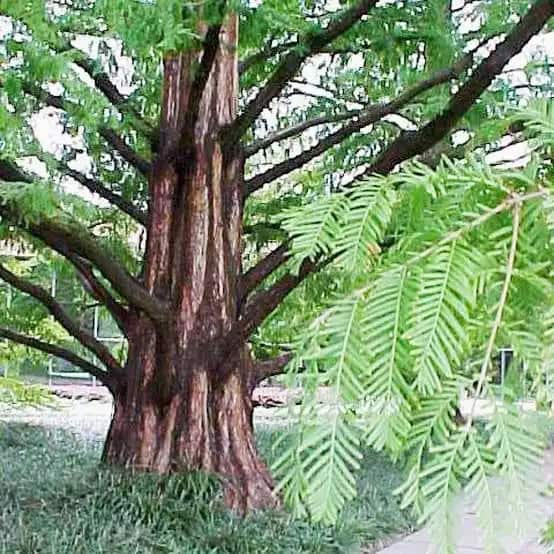
On Van Blerk Square, two ‘Fossil Trees’ (Metasequoia glyptostroboides, the dawn redwood trees) were planted to commemorate the Union Festival. The trees were believed to be extinct before, but were rediscovered in China at the time and then planted (it seems as if the trees did not survive).
A hobby and book exhibition was held in the city hall’s side hall, featuring antiques, model trains, model aeroplanes, and books.
The evening featured a tableau of key moments in South Africa’s history on the high school grounds, organised by Patsy Naudé. The boys of HTS performed an impressive torchlight demonstration by forming the outlines of the Union with burning torches. The festival concluded with a joint church service in the town hall.
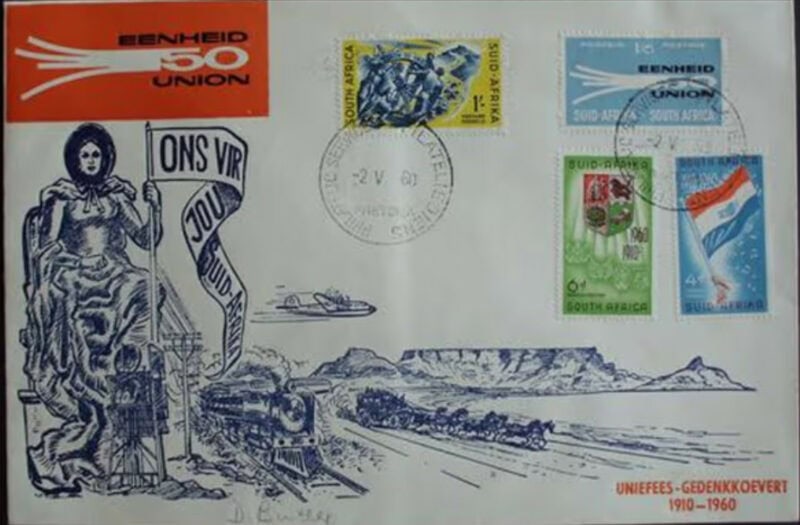
Union formation took place on an interesting historical day in the country’s history, namely May 31, when several historic events took place.
On May 31, 1891, Voortrekker leader Andries Pretorius was reburied in the Heroes’ Field in Pretoria, after General Piet J Joubert requested that all Boer leaders be buried there. The Union took place on the same day that the Boer Republics lost their independence in 1902 after the Anglo-Boer War.
In 1960, the half-centenary of the Union was celebrated. As a result of the Sharpeville incident of March 21, 1960, the Union Festival was mostly boycotted by the black population. One year later, the next big event also followed on May 31, 1961, with the Republication of the Republic of South Africa and the Republic festival.