Sports Minister Gayton McKenzie urged to act as athletes fight for funding
From national hockey teams to young cyclists, South African sports stars are turning to fundraising campaigns to represent their country overseas.
South African athletes face an increasing struggle to fund international competition, with individual costs ranging from R30 000 to R70 000 or more to wear Protea colours.
Meanwhile, questions have been raised after an estimated R31m in taxpayers’ money was spent on an official delegation to the soccer event in America.
Critics have pointed to Sports Minister Gayton McKenzie following disclosures regarding the expenditure.
The expenditure has drawn attention to young athletes who are forced to work and raise funds to represent their country.
Parents have resorted to selling hot dogs and launching BackaBuddy campaigns to cover costs for their children.
Hockey teams receive emergency funding
McKenzie approved R3m in financial aid for South Africa’s national men’s and women’s hockey teams to cover a shortfall for the 2026 FIH Hockey World Cup, preventing players from paying their own way following a public outcry.
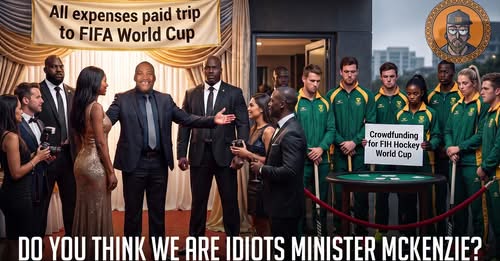
The South African Hockey Association faced a R3m budget gap, with players facing individual costs close to R70 000 for the trip.
Olympian Onthatile Zulu was among the players who publicly criticised the department over the funding gap.
Cyclists raise funds for international events
However, many South African athletes still face significant financial obstacles to compete internationally.
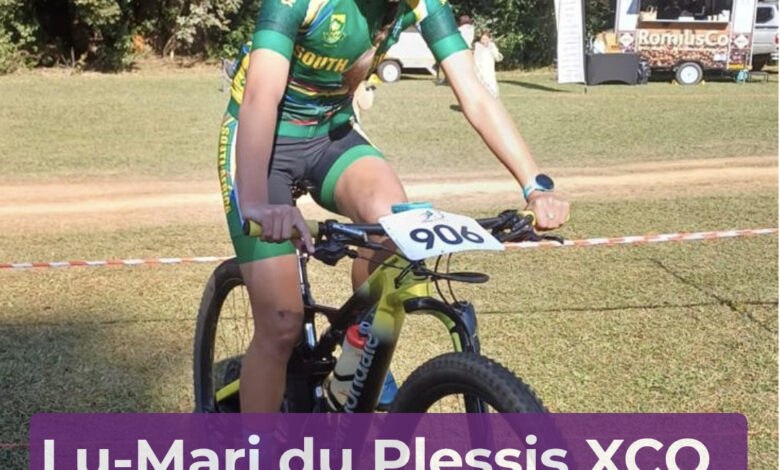
Among them is Lu-Mari du Plessis (Secunda), who needs R70 000 to represent South Africa at the UCI Cycling World Championships in Italy from August 26 to 30, where she will race in the Junior Women’s (U18) XCO event in Val de Sole on August 27.
Du Plessis earned the opportunity after winning the SA Championships in the Junior Women’s category in 2025 and 2026 in Bloemfontein, and finishing second in the African Championships in 2025.
All funds raised will cover flights, accommodation, travel, visa, food, and incidental costs.
Her parents started a BackaBuddy funding campaign and have already raised R44 516.
The Mpumalanga Cycling Association contributed R10 000 towards her expenses and R10 000 for another cyclist, Jemma Barnard (Nelspruit), who will compete in the UCI Junior Track Cycling World Championships from August 19 to 23 in Heusden-Zolder, Belgium.
Cyclists who represented South Africa at the UCI Road World Championships in Kigali, Rwanda, last year had to fork out R70 000.
Following the South African Duathlon Championships in Hoekwil, top-performing local athletes from Middelburg qualified to represent South Africa at the
World Triathlon Multisport Championships scheduled for November 13 to 22 in Abu Dhabi.
It will cost each of them about R30 000 to R40 000 to represent South Africa.
Boxers left behind over budget constraints
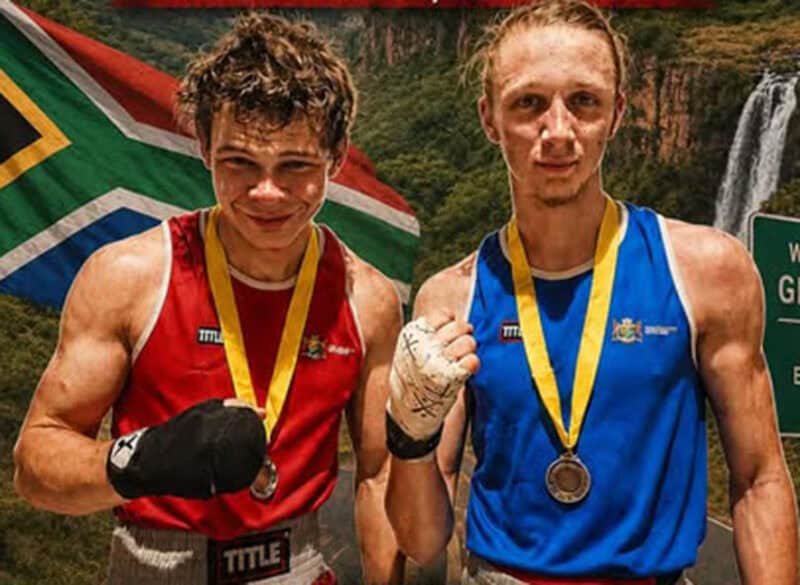
One of the saddest examples of athletes’ struggles in South Africa involves the Highlands Boxing Club.
Lance Gibson from Highlands said: “While 29 of Mpumalanga’s finest boxers were shattered and left behind at home in early July due to so-called ‘budgetary constraints’, an astonishing R31m of taxpayers’ money was somehow found to fund a massive entourage of 19 officials and 56 delegates to the Fifa World Cup!”
“How is it justifiable to rob our hard-working athletes of their national championship dreams under the guise of no funds, while officials enjoy luxury trips abroad?”
Gibson was so dissatisfied with the Mpumalanga Sports Confederation (MSCF) that he wrote a letter to the sports minister.
He wrote: “When we escalated the funding crisis to Linda Zwane, president of the MSCF, pleading for urgent intervention, we were met with silence. It is disheartening to note that while our athletes were facing an administrative wall, Zwane was reportedly too busy fraternising with his entourage at the Fifa World Cup to step in and assist.”
Calls for audit of sports federations
An anonymous sports official said his heart bleeds when he thinks of athletes who are unable to participate overseas because sports federations or the Department of Sport, Arts and Culture do not cover their costs.
One aspect the sports minister is right about is that some sports federations collect millions of rands from their members but do not use the money to promote those members’ interests.
The Comrades Association, which has decided to go its own way and no longer rely on its provincial or national road running federation, could be a watershed for sport.
Perhaps it is time to stop feeding the national federations, only to see how membership fees are abused and wasted.
There are fat cats in luxury offices who drive expensive cars and use credit cards with membership fees.
In some federations, members receive monthly ‘salaries’ of up to R60 000 while also having another career.
They are often a clique that will do anything to protect their kingdom and threaten anyone who dares to come near their honeypot with lawyers or court cases.
McKenzie said: “Sports federations must stop running to government for funding, while they are not even making any efforts to raise money.”
If the minister wants to do South Africa a favour, he should conduct a full audit of these sports federations.
Read Lance Gibson’s letter to McKenzie on this website.