
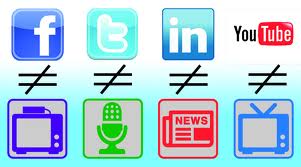
South African companies are beginning to see importance of social media as a viable and effective for communication and marketing tool.
The banking sector has gradually realized that social media enables them to communicate effective with their clients and other potential customers.
More people are increasingly becoming addicted to smart phones and social media apps like Facebook, Mxit and Twitter. This tells us that people are no longer glued to TV/Radio like they used to, instead they rely on social media for news updates and other latest trends.
Here are some advantages of social media over traditional media
1. Cost: There are almost no hurdles to entry in creating or distributing social media content. Or put another way, beyond your time and production costs, it’s almost free. However more has to be done to make internet connectivity more accessible and cheaper.
2. Intimacy: Traditional media imposes broadcasting to thousands or millions of people at once. This robs it of the specificity and dialogue that can be achieved through social media.
It allows businesses to communicate with their clients on a personal basis without them leaving their places of work or homes.
3. Target: A key advantage of social media is that it can be far more specific in terms of isolating exactly who that brand or product wants to talk to.
Furthermore consumers share the load by constantly sourcing information and products of interest and distributing them to others.
4. Dynamism: One of the unique advantages of social media is that it allows brands to adapt to consumers buying and sharing habits almost instantly.
Traditional media necessitates sizable (and often prohibitive) investments by corporations who then can’t react as quickly as the market requires.
5. Measurement: Traditional media has to rely on long-term measurement tools to gauge the effectiveness of brand messaging.
With social media that measurement can be almost instantaneous as the customers respond to brands and to each other across networks, platforms and apps. When that response is negative, a brand has the chance to its course quickly thereby minimizing damage to the brand.
6. Timeliness: Consumer preoccupation with whatever is new is hardly unique to social media. Yet as a function of its ability to constantly evolve in response to consumer demands, social media retains the sheen of “new” re-engaging consumer attention.
With traditional media content can change but the format of distribution changes little and slowly.
7. Exponentiality: As difficult as it is for a brand or product to thread the viral indicator, the potential for exponential growth is almost unlimited and repeatable at a low cost.
8. Participation: As soon as the barriers to content creation approached zero, consumers quickly stepped into the vacuum and began participating in the commercial dialogue.
It’s as if the longstanding presumption of traditional advertising that brands and consumers were in dialogue has finally come true thanks to real-time communication tools.
9. Proximity: Time and distance have virtually disappeared as a barrier between consumers around the globe. As such, social media has created a global, connected community like never before.
That opens up enormous potential for success or failure depending on how well brands understand the new dynamics in play.
10. Future: Just as advertisers have followed consumer eyeballs online; they will shortly follow consumer adoption of mobile community (enabled by smart phones) as the new defining social media dynamic.
While new rules of engagement will appear and consumers will increasingly be defined by where they are (hello, Foursquare and Facebook Check-in), much can be presumed about how to prepare for the future from current social media practices.