
Multiple husbands on the cards for SA women?
The legalisation of polyandry is one of several changes being proposed to SA’s marriage laws in a bid to make them more equal. With the country currently celebrating Women’s Month, the polyandry proposal highlights how far women’s rights have come since the anti-pass march of August 9, 1956.
What do South African women, honeybees, and blue milkweed beetles have in common? For now, not much.
But lawmakers are seeking to ensure that, like their insect counterparts, South African women will soon be able to take their relationships with multiple men to the next level.
While men have legally been allowed to have multiple wives (polygamy), the current law does not allow a woman to practise polyandry (when a woman has more than one husband). Legal scholars believe that the planned changes to the country’s marriage laws will make them more equal and, therefore, Constitutionally justifiable.
Legalising polyandry was one of a host of legislatives changes put forward in the recent Green Paper on Marriages in South Africa, published by the Department of Home Affairs. Other proposed amendments will end forced marriages and prevent minors from being wed.
A green paper is a government policy discussion paper that details specific issues, and then points out possible courses of action in terms of policy and legislation. It articulates possible solutions that could be adopted by government.
But how will the proposed legal acknowledgement of polyandry affect existing laws?
Legal practicalities
In a recent blog on Mondaq, Steven Steyn, an attorney with Schoeman Law, explains that three new marriage regimes are proposed in the green paper:
- An inclusive customary and religious marriage regime.
- A religion and culture-neutral marriage regime.
- A gender-neutral marriage regime.
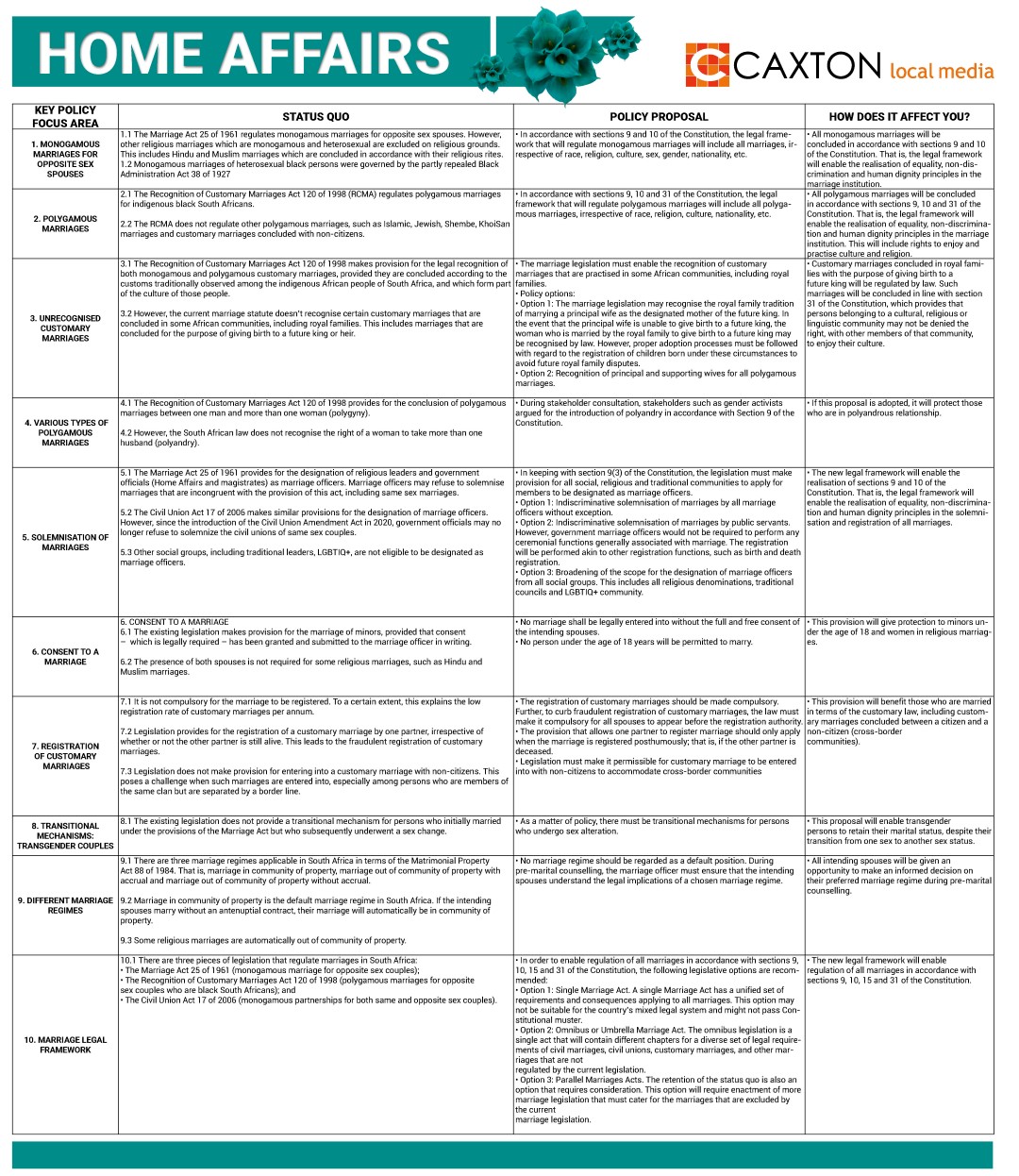
The Department of Home Affairs issued the below summary of its discussions on the topic. It indicates which laws could be changed, and how they could be changed:
Also see: Further thoughts on Polygamy
What do religious leaders and legal experts say?
In a 2010 edition of his blog, Constitutionally Speaking, Professor Pierre de Vos expressed his support of the idea that multi-partner marriages between one woman and many men should be legally recognised.
This, he said, should happen ‘regardless of the customary law or common law traditions which might apply to the individuals involved’.
In his Mondaq.com blog post, Steyn described the proposed changes as ‘an indication of a changing and adapting society’. He added that men and women have equal rights and that a change in legislation is necessary.
When the Green Paper on Marriages was published for public consultation in April, Bishop Marothi Mashashane, the president of the South African National Christian Forum, went public, saying that he considered the proposal to be ‘a disgrace and mockery’ of both African cultures and the Christian religion. African Christian Democratic Party leader Kenneth Meshoe also opposed the idea.
AV Mohamed, chairperson of the Juma Masjid Trust, expressed his concern that polyandry could destroy family structures.
Ganief Hendricks, party leader of Al Jama-ah, which supports Muslim interests, also expressed his opposition to the green paper’s contents and indicated that it could complicate the administration of estates.
Public comments closed on June 30.
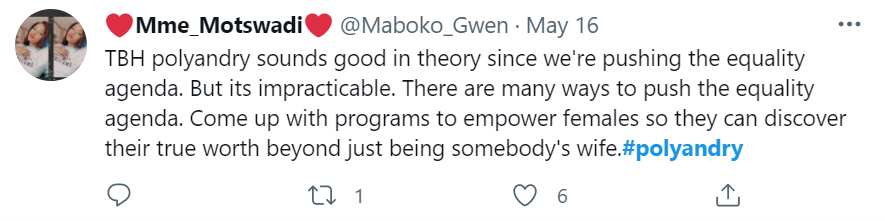
South Africa’s women as seen on Twitter


Read original story on rekord.co.za

