
Tshwane looking to overhaul costly, crime-infested free internet
The Tshwane metro wants to convert its Wi-Fi network to more secure, cost-effective free internet sites, targeting more townships and peri-urban areas.
With free Wi-Fi spots costing around R180 000 each, theft and vandalism at these sites are bleeding the Tshwane metro’s coffers dry.
This has led to the metro rethinking cost-efficient strategies.
Now, the metro wants to establish fibre connectivity at 1 660 free internet zones (FIZes) around seven regions without them falling prey to vandals and criminals.
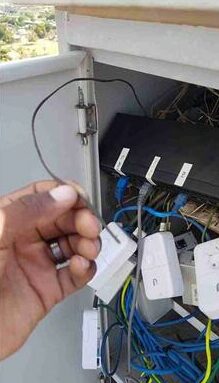
The metro tried different solutions to mitigate vandalism by using tamperproof boxes and CCTV cameras without much luck, according to metro spokesperson Lindela Mashigo.
Current plans are to deploy security guards at problem sites as well as response teams – all adding to the costs.
The metro is also looking at fibre connection sites, depending on budget allocations in the coming financial years.
Mashigo says some FIZes were operational while others weren’t because of vandalism at so-called high sites. The areas most affected by vandalism were Soshanguve, Mabopane, Mamelodi and Ekangala.
Tshwane’s free Wi-Fi service was launched in 2013. More than 30 high sites have been vandalised since its inception, with some facing repeat incidents.
“Moving to fibre will eliminate the need for connecting to high sites which are prone to vandalism,” he says.
Mashigo says the weather was also a problem with the current operational network because the performance of radio signals was influenced while equipment was damaged by lightning strikes.
“More reason why a different form of technology that is less prone to such disruptions is needed.”
He says vandalism and theft cases were increasing.
“With underground fibre, the infrastructure will be more secure and less costly over time.”
Mashigo says the metro was unsure of the implementation costs as it would depend on the location and distance to the FIZ and the nearest fibre network.
The metro is addressing the issue of internet connectivity in non-suburban areas by deploying FIZes to schools, public places, libraries, clinics and parks in townships and rural areas.
“We will deploy additional hotspots in the coming financial year and target areas in townships and peri-urban areas.”
He says the metro will be able to leverage the current fibre network used for the corporate network as well as in anticipation of the commencement of the broadband project.
Tshwane’s plans come as communications minister Khumbudzo Ntshavheni promised that 80% of South Africans would have access to the internet by 2024/25 using smart devices.
“We have committed ourselves to play our part in ensuring that no South African is left behind,” Ntshavheni told a Naspers/departmental summit on March 23 in Sandton.
Ntshavheni says the digital economy envisaged would be inclusive and bridge the rural-urban digital divide.
To achieve this, the implementation of phase 2 of the South Africa Connect programme, using a cabinet-approved revised model, will commence soon.
“This revised model connects 44 000 government institutions and over 33 000 community Wi-Fi hotspots through a partnership of government and private sector including small and medium enterprise participation.”
She says the digitisation will mean that 50% of the government’s services will be fully online.
All learners in public schools, from grades R to 12 and those in community colleges, will have an email address with applicable security features and digital signatures.
Other targets were to introduce and expand 5G networks and technologies in all major cities, secondary cities and key rural towns.
This will boost the municipal connect programme, which will be implemented with Co-operative Governance and Traditional Affairs (Cogta) and the South African Local Government Association (Salga).
“This will allow us to usher in real smart cities in South Africa. Several municipalities have approached us for partnership and support towards the implementing of their smart city plans.”
Read original story on rekord.co.za

