
Budget policy statement: The highs and lows of what’s to come
These are the most important takeaways from the Medium-Term Budget Policy Statement.
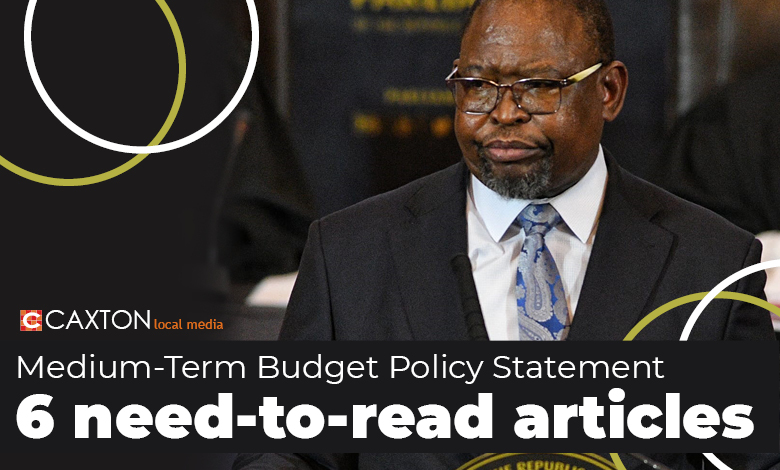
South Africa will increase borrowing, tighten spending and consider raising taxes, said Finance Minister Enoch Godongwana in his Medium-Term Budget Policy Statement (MTBPS) speech in Parliament earlier today.
Godongwana covered various topics as the country finds itself in an economic crunch.
He said rising annual budget deficits have reached an extent where ‘government will have to borrow an average of R553b per year over the medium term’.
The most effective way of funding government is through an efficient tax administration and by broadening the tax base, he said, indicating that new tax measures might be proposed to raise additional revenue.
Here is a recap of the minister’s speech and what you need to know:
Weaker growth, but there is ‘reason for hope’
The minister highlighted ‘load-shedding, the poor performance of the logistics sector, high inflation, rising borrowing costs and a weaker global environment’ as reasons why the country’s medium-term economic growth remains weak.
Despite National Treasury’s Gross Domestic Product (GDP) growth forecast of 0.8% in 2023, and 1.4% between 2024 and 2026, Godongwana echoed President Cyril Ramaphosa’s words: “There is hope.”
Reforms can enhance GDP
The minister said he is excited about the electricity sector’s ‘enormously positive transformation’ due to reforms. He explained how the MTBPS prioritises reforms aimed at enhancing the growth of the GDP.
Covid-19 social grant extended until 2025
The Covid-19 Social Relief of Distress Grant – which was introduced to support low-income individuals affected by the lockdowns as a result of the pandemic – has been extended until March 2025.
This is as the minister announced that Treasury will ‘consider social security policy reforms and a funding model’.
Fiscal consolidation needed to ensure good financial health
Godongwana stated that government will adopt a ‘prudent fiscal stance’. “Over the next three years, the fiscal framework supports strong control of the public-service wage bill, protecting crucial frontline services and implementing efficiency measures,” he explained.
SOE financial health remains ‘poor’
South Africa’s weak growth combined with arduous debt repayment obligations and other factors continue to affect the financial health of state-owned enterprises, according to the minister.
Godongwana explained how ‘weak economic growth has compounded the poor financial position of most state-owned companies’, and spoke about Denel, the Land Bank, Transnet and the South African National Roads Agency Limited.
Rising government debt servicing hinders social spending
Godongwana highlighted that the servicing of government’s rising debt is ‘crowding out’ social spending in the country.
“Our challenge is that rising debt service costs are crowding out important social spending, and our economy has not grown fast enough to support increasing expenditure or our current debt levels. Therefore, this policy statement sets out our strategy for avoiding a fiscal crisis and preventing the build-up of systemic risks to the economy,” he said.
Read the full speech here.
Read original story on www.citizen.co.za

