
Crumbling infrastructure, unemployment and the cost of living – does Ramaphosa have solutions?
All eyes will be on President Cyril Ramaphosa as he delivers the State of the Nation Address at 19:00 today.
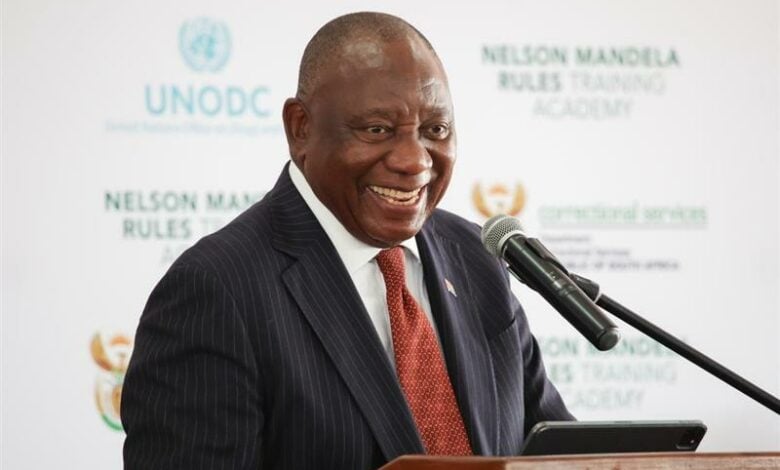
Poor governance in many areas leaves countless South Africans battling water and power outages, pothole-ridden roads and a daily struggle to make ends meet or find work.
When the nation tunes in at 19:00 today to hear President Cyril Ramaphosa’s State of the Nation Address (Sona), they will hope to hear that government has workable plans to address these and other issues that impact the quality of their lives.
Parliament is set to convene a joint sitting of the two Houses at the Cape Town City Hall – the same venue where former president Nelson Mandela first addressed South Africans on February 11, 1990, hours after his release from prison.
Government held to account
SAnews.gov.za reports that Sona remains a constitutional event called in terms of Section 42(5) of the Constitution. It is one of the rare occasions that brings together the executive, legislature and judiciary under one roof, affirming Parliament’s central role in holding government to account.
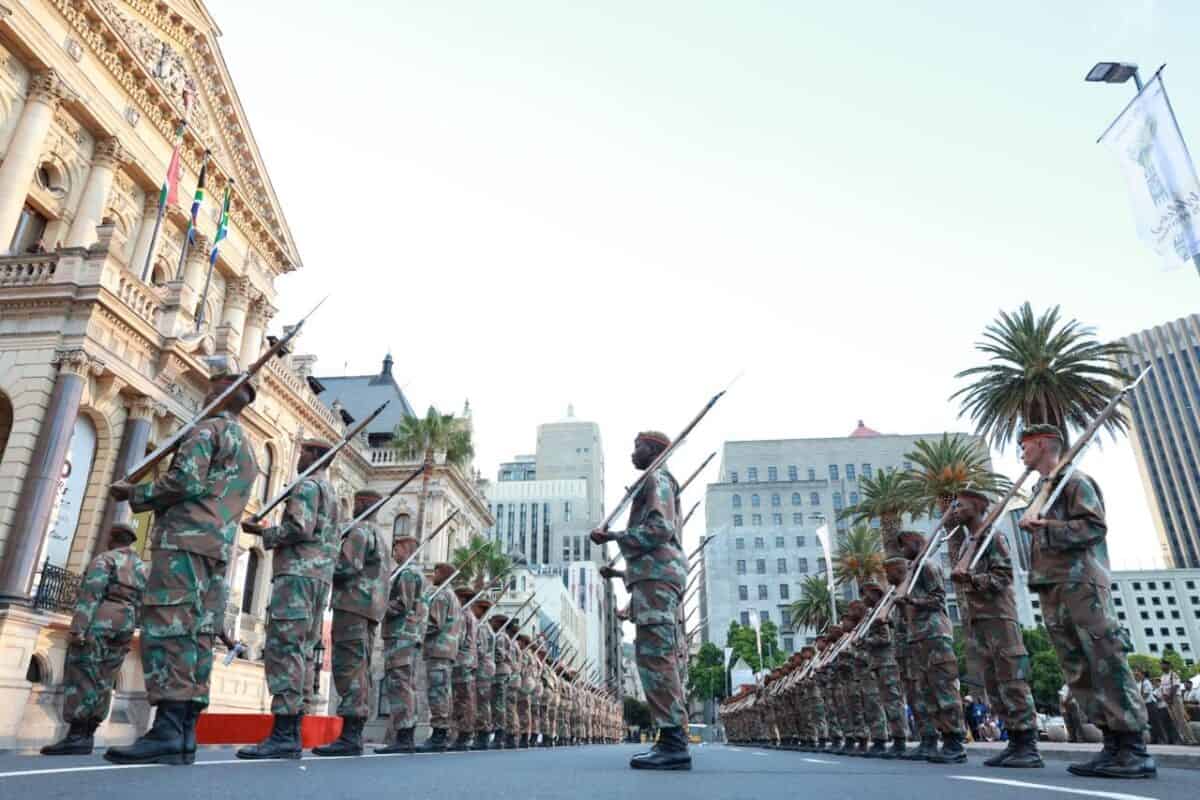
During the Sona, a full ceremonial parade of the South African National Defence Force consisting of the army, the navy and the air force, which showcases the military strength, traditions, drills and ethos, will take place.
Political parties’ expectations
While the IFP says that there has been measurable progress in many areas, it expects the president to ‘provide clear interventions to strengthen safety and security, including improved border management and decisive action against illegal immigration’. The party says it wants to hear about concrete steps that will be taken to address youth unemployment, poverty and the cost of living. “We expect firm commitments to expand water infrastructure – including pipelines, reservoirs and treatment facilities – alongside long-term drought mitigation strategies and climate resilience planning.”
The DA says it hopes the Sona delivers ‘reforms and actions, not plans and proposals. “The time for plans and proposals, and visions and hopes, has long passed.” It says it wants a review of BEE, saying that foreign investors do not invest in South Africa ‘when they have to give up part of their ownership’. The party touched on a need to address the country’s water crisis at a municipal level, where pipes and power lines are left to ‘fall into disrepair’.
The Institute for Economic Justice says: “The recent modest economic uptick provides an opening to pursue structural transformation. Ahead of the Sona, our advice to President Ramaphosa is simple: Use it or lose it… South Africa cannot afford to allow the narrative that South Africa has ‘turned the corner’ to generate complacency, or blind us to the urgency of addressing the multiple crises facing the country.” The institute says that the improved GDP outlook and better revenue collection ‘have not necessarily translated to improvements in employment, gender inequity, poverty and reduced hunger’.
Build One South Africa says that Ramaphosa’s Sona will reflect his choice to either ‘fund the political elite or prioritise South Africans’. “We cannot afford bloated government, excessive international missions and wasteful spending while failing to provide for the poor.”
Ramaphosa’s fine line
In an opinion piece today, Clive Ndou, the political editor of The Witness, wrote: “Ramaphosa is likely to use his Sona to signal to ANC supporters that the emergence of the GNU has introduced a new layer of complexity, one that demands accommodation, consultation, and compromise. Unlike previous Sonas, this address cannot be an exclusively ANC document.
“Probably, Ramaphosa’s Sona will reflect the interests and policy priorities of GNU partners, most notably the DA, whose participation lends the coalition both credibility and volatility. Yet therein lies the president’s dilemma.
“While Ramaphosa must project inclusivity and respect for coalition partners, he is simultaneously under intense pressure to reassure the ANC and its alliance partners that the party of liberation still holds substantial influence despite the 2024 electoral setback.”
What is the Sona?
Sona provides the president with an opportunity to reflect on the state of the nation across political, economic and social fronts – both domestically and within a shifting global context. It is also a moment of accountability, where the head of state reports to citizens on government’s performance and sets out the programme of action for the year ahead.
In the days following the address, members of parliament will debate Sona over two days, before Ramaphosa replies and closes the debate.
Measuring progress under the 7th administration
SAnews says that government’s own assessment of the Medium-Term Development Plan (MTDP) implementation paints a picture of cautious progress, mixed with persistent structural challenges.
Minister in the Presidency for Planning, Monitoring and Evaluation, Maropene Ramokgopa, said during a recent briefing that the MTDP provides a whole-of-government framework which aligns planning, budgeting, implementation, monitoring and evaluation across all spheres of government.
Its priorities are driving inclusive economic growth and job creation, reducing poverty and tackling the high cost of living and building a capable, ethical, and developmental state.
The report lists the following achievements:
On the economic front, South Africa recorded a 0.8% GDP growth in the second quarter of 2025 – the strongest quarterly performance since 2022.
Employment also showed signs of recovery, with 248 000 jobs added in the third quarter, lowering the official unemployment rate to 31.9%.
The most tangible gain has been in energy stability. More than 175 consecutive days without loadshedding were recorded during the review period, while the energy availability factor rose above 63%, reaching 70% on several days. These improvements have helped restore operational certainty for businesses and households.
The country’s exit from the Financial Action Task Force grey list further bolstered investor confidence, while the achievement of a primary budget surplus strengthened fiscal credibility.
However, youth unemployment stands at 58.5%, business confidence remains subdued and logistics constraints continue to weigh on growth.
These realities may feature prominently in Ramaphosa’s address, particularly as government seeks to accelerate structural reforms under Operation Vulindlela is an economic reform initiative by the Presidency and National Treasury. – SAnews.gov.za
Watch the Sona tonight at 19:00:
Breaking news at your fingertips… Follow Caxton Network News on Facebook and join our WhatsApp channel.
Nuus wat saakmaak. Volg Caxton Netwerk-nuus op Facebook en sluit aan by ons WhatsApp-kanaal.
Read original story on www.sanews.gov.za

