
Jehovah’s Witnesses change long-standing rules on blood
A long-standing religious teaching has shifted towards personal conscience, and the National Department of Health has welcomed the change.
She was just a child when her mother nearly died from blood loss four days after giving birth to her baby brother.
There was no time for philosophical arguments. Her mother needed medical treatment, including a blood transfusion.
But her father was a Jehovah’s Witness and his religion taught him that accepting blood was against God’s law.
“My grandmother had to sign the permission forms. My dad could not betray his religion and that was that,” said a former member who asked not to be named.
Her mother, who attended a Nederduitse Gereformeerde church, was too ill to make the decision herself.
She survived the transfusion.
“My parents never thought about religion and he never spoke about it again after she had her blood transfusion.”
Policy shift allows component use
Almost a lifetime later, the religious group has changed its position on blood.
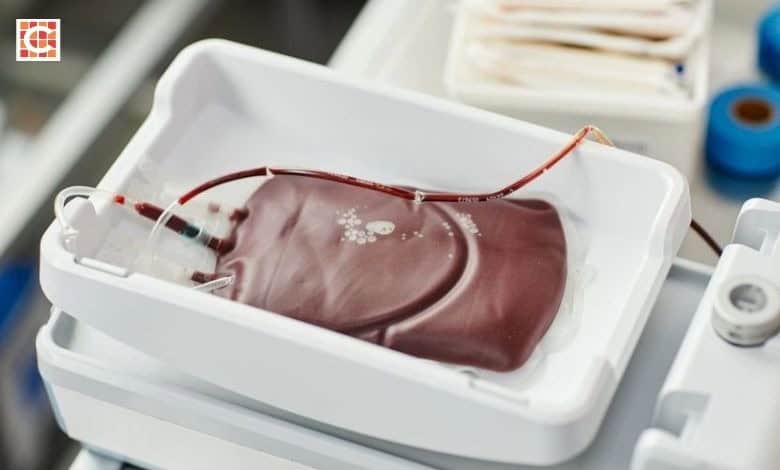
For the first time, individual Jehovah’s Witnesses can decide for themselves whether to accept or donate four major blood components – red cells, white cells, plasma and platelets.
However, whole blood remains prohibited.
The change, announced by The Governing Body of Jehovah’s Witnesses towards the end of September, affects how members make decisions about blood components but does not abandon the religion’s long-standing teaching that whole blood should not be accepted.
According to the organisation’s public information department, each Witness must now make a ‘personal, conscientious decision’ about whether to accept the four main components when they are derived from another person’s blood.
The same applies to donating blood specifically so its components or fractions can be used by another person.
Using a patient’s own blood during a medical procedure is also now regarded as a personal decision.
“This is a scriptural adjustment, not a reversal,” the organisation said.
Jehovah’s Witnesses say they continue to believe that blood is sacred and that the biblical instruction to ‘abstain from blood’ remains the foundation of their position.
The organisation said the Bible does not specifically discuss modern medical treatment involving blood components, leaving the decision to an individual’s conscience.
“Congregations do not involve themselves in personal decisions that rest with the individual conscience,” it added.
Memories of strict religious rules
For the former member, the announcement brings back memories of growing up with a very different understanding of blood.
“I was told that blood is unholy,” she said.
She remembers even being told that she could not eat Marmite because she was told it was made from blood.
As she grew older, she discovered that Marmite is made from yeast extract.
“Some of those beliefs are really not scientific,” she added.
Then there was the annual school visit from the South African National Blood Service.
“I was told that our blood can save people’s lives and that is why we have to donate, but our religion told us otherwise.
“My friends did not understand how a religion could prohibit saving a life. Until today, I cannot understand that either.”
A belief tested
The new position may be easier for some members to accept than others.
The former member said her father’s family who remain Jehovah’s Witnesses have been struggling with the change.
“Suddenly the most sacred part of their beliefs has been challenged. These are beliefs they hold dearly.”
The organisation said there is no requirement for members to accept the components.
Some may accept them. Others may refuse them. “Both decisions are respected and supported,” the public information department said.
That distinction could become particularly important when a patient is bleeding heavily and every minute counts.
Jehovah’s Witnesses say they have long used medical treatment designed to avoid blood transfusions, including patient blood management. This clinical strategy uses specialised techniques and medications to minimise blood loss and boost the patient’s own blood count.
But a Witness who previously would have rejected blood on religious grounds may now choose to accept red cells, white cells, plasma or platelets.
The decision belongs to the individual.
The difficult question comes when the individual cannot make the decision themselves. An unconscious patient cannot communicate what their conscience allows.
Jehovah’s Witnesses say South African law provides for bodily autonomy and that members will often have considered in advance how they want their wishes protected if they are unable to communicate.
Those wishes may be documented. Hospitals, however, also have their own protocols for dealing with patients who cannot communicate. The organisation’s hospital liaison committees can assist doctors and patients when requested.
Health department welcomes decision
The National Department of Health welcomed the change.
The department described it as a ‘historic and significant decision’, saying the previous religious prohibition created particular challenges for doctors dealing with emergencies and critical care.
Health Minister Dr Aaron Motsoaledi called it a ‘giant leap’ in a media statement.
He noted that whole blood is rarely used for ordinary transfusions.
“Doctors and hospitals, or any other health facility, have for decades discouraged the use of whole blood for ordinary transfusions,” he said.
But behind the medical terminology and legal questions lies something far more ordinary: People having to decide what they believe when their own life, or the life of someone they love, is hanging in the balance.
For the former member, that question started when she was a child, beside her bleeding mother.
Her mother lived. Her father kept his faith until the day he died.
And now, decades later, the religion that shaped that decision has placed some blood-related decisions back in the hands of the individual.
Breaking news at your fingertips… Follow Caxton Network News on Facebook and join our WhatsApp channel.
Nuus wat saakmaak. Volg Caxton Netwerk-nuus op Facebook en sluit aan by ons WhatsApp-kanaal.
Read original story on www.citizen.co.za

