
Groups call for transparency on sardine fishing after coastal die-off
Coastal communities and marine organisations urge fisheries authorities to freeze commercial quotas until a post-virus biomass survey determines remaining stock levels.
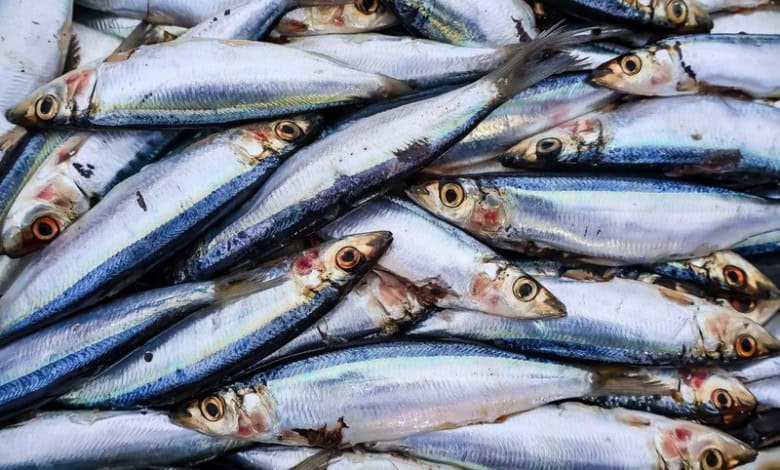
Four conservation groups are calling on the Department of Forestry, Fisheries and the Environment (DFFE) to disclose the decisions that have permitted commercial sardine fishing to continue following a mass die-off along roughly 2 600km of coastline.
In a letter to Minister David Maynier, The Green Connection, the Biodiversity Law Centre, Whale Coast Conservation and Dyer Island Conservation Trust called for directed sardine fishing to be suspended until a new biomass survey is completed and a revised total allowable catch (TAC) is published.
The die-off, which the department attributes to pilchard herpesvirus (PHV), began in late July across coastal waters.
In a statement, the groups explained that sardines are small forage fish on which a wide range of marine life depends.
They are also important to small-scale fishers who use sardines as bait and rely on snoek, yellowtail, geelbek and other predatory fish that feed on them.
“As much a part of our natural heritage as the sea itself, sardine are, by law, entrusted to government to protect and preserve for present and future generations,” the groups said.
Public interest
The groups therefore feel decisions relating to sardines are of public interest.
“After taking no action for over a month after the outbreak, the department limited directed sardine catches to 25% of each right holder’s remaining 2026 TAC from September 7 to October 2, and then to 33% from October 3 to October 30,” the groups explained.
They added that the TAC itself, 51 800 tonnes of sardine, was recommended in April based on a biomass survey conducted before the PHV outbreak.
“The department has said the full impact of the outbreak on South Africa’s sardine population will only be understood once its next biomass survey is done.”
The groups believe that because the tender for the survey vessel only closed on October 23, a survey is unlikely to happen by the end of the year, as suggested by the department, with the results still needing to be compiled and analysed.
They argue that allowing fishing to continue in these circumstances contravenes the precautionary approach required by South African law, which does not make action conditional on cost-effectiveness.
“It also fails to take account of the integrity of this ecosystem and the livelihoods that depend on it.”
Fishing halted pending management decision
The DFFE, however, said in a statement that no sardine fishing is currently permitted while it considers a recommendation by the Small Pelagic Scientific Working Group last Tuesday (October 27).
The department said the previous management measures expired on Saturday (October 31) and fishing may resume only once new measures have been approved and communicated.
It added that the department would provide an update once the decision process is complete.
The DFFE said planning continues for an end-of-year hydroacoustic survey, which is intended to provide the first fisheries-independent estimate of sardine biomass, distribution and size structure following the mortality event.
The department also said it had received no reports indicating a recurrence of the widespread sardine mortality event recorded between late July and early September.
“A small number of juvenile sardines washed up sparsely near Mossel Bay on October 23. Samples are being tested for PHV, although it is not yet known whether the wash-up is related to the earlier event,” it said.
Livelihoods at risk
The Green Connection outreach ambassador Neville van Rooy said the expiry of the previous catch limits raised concerns about the possibility of fishing resuming before the extent of the damage to the sardine population is known.
“For small-scale fishers, this is about far more than sardines. It is about livelihoods, food security and the future of coastal communities that depend on a healthy ocean. Sardines support the marine food web, including the snoek and other fish that small-scale fishers rely on,” he said.
Van Rooy added that when government allows fishing to continue without knowing how much of the sardine population remains, it is the fishers and their communities who could ultimately pay the price.
“The Green Connection believes that those whose lives and livelihoods depend on the ocean must not be left out of decisions that affect their future. Since government is the custodian of these resources, they need a precautionary approach, transparent decision-making and accountability to the communities that depend on these resources,” he said.
Small-scale fishers raise ecosystem concerns
Priscilla Abrahams from St Helena Bay said she used to find anchovy in the stomachs of snoek, but now it is mostly baby hake.
“This is why it is so important that we understand the state of our marine ecosystems before decisions are made that could put further pressure on vulnerable fish populations,” she said.
Walter Steenkamp, a small-scale fisher and member of Aukotowa Fisheries Primary Co-operative in Port Nolloth, Northern Cape, said there are far fewer snoek now than when he was young.
“The sea just isn’t the same and therefore we need to see a more precautionary approach from the department. These experiences must be taken seriously. As communities whose lives and livelihoods depend on the ocean, we cannot be left out of decisions that affect our future and the future opportunities for our children,” he added.
Steenkamp said coastal communities need transparent decision-making and accountability, as they are the ones who depend on these resources.
Groups call for precautionary approach
Tabitha Paine, a senior attorney in the Biodiversity Law Centre’s Oceans programme, said sardines had died along an extensive stretch of coastline, and no one, including the department, knows how many are left.
“The department has allowed fishing to continue under a TAC set before the die-off and in October it raised the catch limit. If fishing is paused and the stock turns out to be healthy, the fish are still there to be caught later.
“If fishing continues and the stock has collapsed, that harm cannot be undone – for the sardine, for the penguins and snoek that depend on them, and for the small-scale fishers who depend on the snoek.”
She said the law requires a risk-averse and cautious approach when the science is uncertain.
“Sardine are a part of our shared natural heritage, held in trust by government for present and future generations. Yet the public and the fishers whose livelihoods are at stake, have not even been told who made these decisions or on what basis,” added Paine.
The DFFE added that PHV is a fish virus and is not known to infect people.
“Commercial sardine products released through regulated channels remain safe. Members of the public should not collect or consume dead or dying sardines found on beaches or near the shore, feed them to animals or use them as bait.”
The department urged that any unusual fish mortality should be reported promptly to the relevant coastal authority or DFFE.
Breaking news at your fingertips… Follow Caxton Network News on Facebook and join our WhatsApp channel.
Nuus wat saakmaak. Volg Caxton Netwerk-nuus op Facebook en sluit aan by ons WhatsApp-kanaal.
Read original story on www.citizen.co.za

