
Disputed ballots, missing voting booklets and recounts cloud election results
ActionSA has questioned 215 ballots in Polokwane, while missing voting booklets in Potchefstroom, disputed counts in Mpumalanga and allegations of election irregularities elsewhere have put further pressure on the IEC.
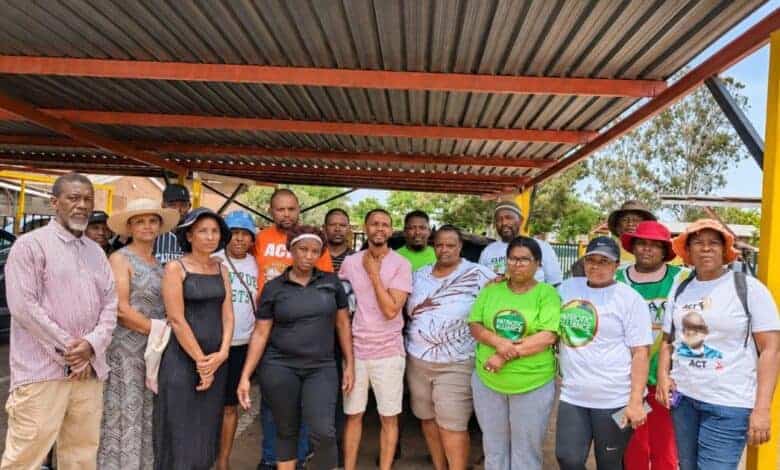
Disputes over ballot counts, missing election materials and alleged irregularities have emerged in several parts of South Africa following the local government elections, with political parties demanding investigations and recounts as the Electoral Commission of South Africa (IEC) works towards finalising the results.
Reports from Caxton’s local newsrooms have highlighted problems in Limpopo, Mpumalanga, KZN and Gauteng, including allegations of unauthorised special-vote registrations and disputes over ballot paper handling.
Transparency essential for credible elections
Even in well-administered elections, complaints and discrepancies often arise, such as ballot errors or irregularities in vote counting. As outlined in the International Institute for Democracy and Electoral Assistance’s framework on Electoral Dispute Resolution, the true test of electoral integrity is not the complete absence of grievances, but whether an independent and transparent system exists to receive, investigate and adjudicate them.
Under the Electoral Act 73 of 1998, the IEC must consider and decide all formal objections that could affect an election’s outcome before declaring the final results and pronouncing the election free and fair.
If it upholds an objection, the commission may order a recount or take other corrective measures before making its final declaration.
If a party is still dissatisfied with the IEC’s decision, they can appeal it to the Electoral Court.
Alleged discrepancies between numbers of votes in Potchefstroom
In Potchefstroom, tensions escalated in Ward 21 (Promosa) after ward candidates and community members questioned discrepancies between the number of votes counted and the original voters’ roll.
According to the Potchefstroom Herald, representatives of several political parties also reported that three voting booklets, each containing 100 ballot papers, were missing.
One booklet was reportedly found during the second count, but the other two remain unaccounted for.
Candidates said they had spent the night monitoring the counting process and were expected to remain present during the recount despite being exhausted after hours of uncertainty.
Tensions reportedly escalated when members of one political party withdrew their representatives from the counting hall in an attempt to stop the recount. The process nevertheless continued.
Action SA lodged formal
In Limpopo, ActionSA called for an election rerun at MP Malatjie Primary School in Polokwane after alleging that 215 additional ballots had been counted in Ward 24.
The party said its agents recorded 1 315 votes, while records indicated that only 1 100 ballot papers had been issued.
It lodged a formal complaint with the IEC and said a rerun should be considered if the investigation found that the election’s integrity had been compromised.
In Mpumalanga, the Middelburg Observer reported that the EFF disputed the counting process in Steve Tshwete, alleging that ballots had not been properly counted and that additional ballot papers had been found.
The party questioned figures on result slips in Wards 5, 23 and 25 in Mhluzi. The IEC confirmed that three recounts had taken place at the Ward 25 clinic in Extension 8. Counting was subsequently halted after party agents disputed the figures.
Further concerns were reported in KZN, where the ANC challenged the Ward 35 results in Sobantu, Pietermaritzburg. A recount began yesterday (November 6) following allegations of irregularities.
The Southlands Sun also reported a damaged ballot box at Montclair Senior Primary in Durban. The IEC confirmed receiving a complaint, while the DA lodged a formal objection.
In another eThekwini incident, unmarked ballot papers and an area-specific validation stamp were allegedly stolen from a voting station in Ward 2. The IEC opened a police case and relieved officials of their duties.
In Newcastle, three political parties also called for an investigation into alleged special-vote registrations without residents’ knowledge or consent.
Newcastle and District Residents Forum leader Matthew Shunmugam alleged that residents’ personal information had been collected during municipal programmes and used to register them for special votes without their permission.
The parties called for special votes and Election Day votes to be counted separately to establish the impact of the disputed registrations on the results.
In Johannesburg, three voting stations in Ward 72 reportedly ran out of ballot papers, while the Northcliff Melville Times documented power failures, voting delays and ballot-box concerns in Wards 87, 98 and 99.
The IEC reported that it had received just over 800 complaints from political contestants by Wednesday night (November 4), with approximately 106 still unresolved by Thursday (November 5). Most concerned allegations that voting station officials had prevented party agents from observing voting and counting procedures.
Although most of the ballots had been counted by this afternoon (November 6), the IEC was still processing the results. This involved capturing and verifying results, completing independent audits, and resolving objections before the IEC could declare the final election results.
Breaking news at your fingertips… Follow Caxton Network News on Facebook and join our WhatsApp channel.
Nuus wat saakmaak. Volg Caxton Netwerk-nuus op Facebook en sluit aan by ons WhatsApp-kanaal.

