
Debunked: False claims suggest English is being axed in schools
Recent social media posts led many to question the state of English in public schools. Africa Check investigated the claims and found them false.
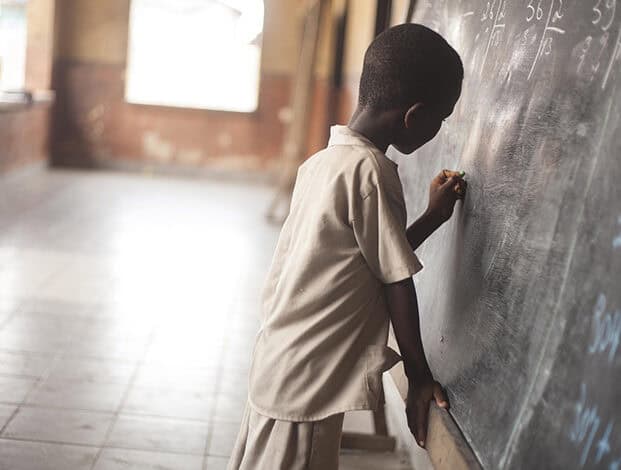
Since February, a series of popular posts on Facebook have been circulating versions of a claim, frequently phrased: “The government is removing English in all public schools!!! What a SHAME.”
One comment responding to a post theorised that the ‘government wants to make sure we remain stupid’. Another post suggested that ‘some schools from nelspruit started last year to do physics in siswati’.
Nelspruit is the previous name of Mbombela, a city in Mpumalanga province. SiSwati is one of South Africa’s 12 official languages.
But another comment cautioned: “The government’s actually trying to promote multilingualism, not remove English entirely.”
So, what exactly is happening with English in South Africa’s public schools, and should parents be concerned?
Current school language policies
South Africa is linguistically diverse, with 20 indigenous languages and 12 official languages. Before 1994, the apartheid government largely imposed English and Afrikaans as the main languages of instruction in schools, despite these being different to the mother tongue, or home language, of most students.
The democratic constitution adopted in 1996 sought to address apartheid-era language policies. It includes the right for South Africans to be taught in their official language(s) of choice, where practical, taking into account ‘the need to redress the results of past discriminatory laws and practices’.
Government policies for language in education promote bilingualism and multilingualism. The focus is on maintaining schoolchildren’s home languages while also helping them to become proficient in additional languages.
Despite this, most schoolkids in South Africa are only taught in their mother tongue for the first four years of school, from grades R to 3.
Because a small minority of schoolchildren speak English as a mother tongue, this system means most children are switched from being taught in an African language to English when they enter Grade 4.
According to Bua-lit, a collective of language and education experts, this sudden and early change means that children going into Grade 4 often do not know English well enough to learn all subjects in English.
The collective adds that children in this situation ‘do not have a chance to show what they know, or to feel confident to participate actively in their learning. Excluding children’s languages makes them feel unvalued’.
The education department links this switch with an achievement gap between students with English or Afrikaans as a mother tongue, who continue to learn in that language, and those with an African language as a mother tongue who change to English-only instruction in Grade 4.
This idea has support from South African and international research. The United Nations Educational, Scientific and Cultural Organization, or Unesco, recommends children receive ‘at least six years of mother tongue instruction’, noting that countries that implement bilingual programmes show improved academic performance and lower dropout rates.
Government efforts to promote multilingualism in schools
The Department of Basic Education first introduced a pilot version of the mother-tongue based bilingual education (MTBBE) initiative in 2012. This programme extends the use of African official languages as languages of learning and teaching in specific non-language subjects beyond Grade 3.
The department said the initiative was aimed at ‘restoring dignity to African languages, dismantling historical inequalities, and ensuring that our linguistic heritage becomes an asset in the knowledge economy’.
According to the education department’s MTBBE strategy, this initial phase of the programme covers two subjects: Mathematics and natural sciences and technology. In January, president Cyril Ramaphosa announced that by the end of 2025, ‘nearly 12 000 schools had access’ to MTBBE.
Following this phase, the programme is due to ‘continue annually by cohort until learners reach Grade 7’, over a five-year period. The initiative’s impact will then be assessed, with the aim of expanding the programme to include more subjects.
Crucially, the strategy does not involve removing English from public schools. English will still be used as a language of instruction. For most students, where English is not their home language, it will be introduced more gradually, alongside their home language. This aims to promote bi- or multilingualism, rather than switching from a single (home) language to another single language, usually English.
One way this would work in practice is that in Grade 4, 80% of a test would be in the home language, and 20% in English or Afrikaans. In Grade 5, English or Afrikaans would increase to 30%, and so on, until the split is 50% English or Afrikaans and 50% home language by Grade 7.
There are various ways multiple languages can be introduced in public schools, depending on many factors, including the current structure of schooling. But none of these involves removing English from South African public schools.
“This report was written by Africa Check, a non-partisan fact-checking organisation. View the original piece on their website.”
Read original story on www.citizen.co.za

