Volkswagen aims to make electric cars go further
A new electric prototype has travelled more than 1 200km on a single journey, highlighting how far battery powered motoring could go.
Remember the Volkswagen XL1? Unveiled in 2013 and limited to just 250 examples, it was billed as the most fuel-efficient production car ever built.
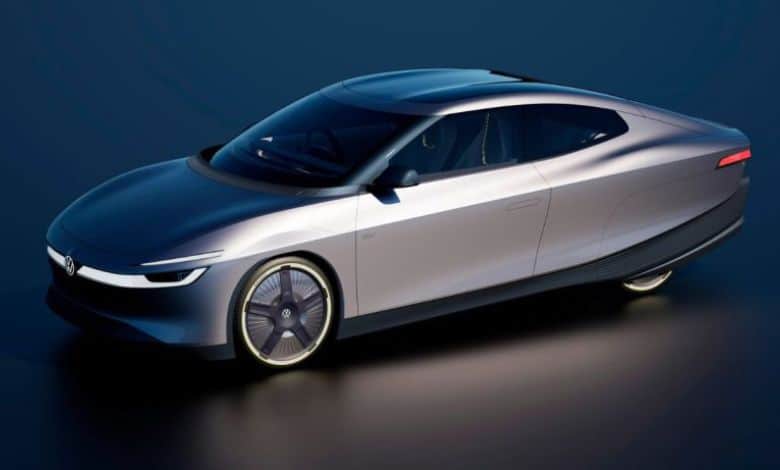
Now Volkswagen has revealed what it describes as the XL1’s spiritual successor, the Mission Efficiency, a near-production electric vehicle designed to maximise range while minimising energy consumption.
Like the ID. Polo and ID. Cross, the Mission Efficiency is based on Volkswagen’s MEB+ architecture.
Battery and efficiency claims
It uses a single front-mounted electric motor producing 99kW and 264Nm, paired with a 54.9kWh nickel-manganese-cobalt battery.
Volkswagen claims a range of 654km on a full charge, with the battery capable of accepting up to 105kW from a DC fast charger. Its official WLTP energy consumption figure is 8.4kWh/100km.
Under ideal test conditions, however, the Mission Efficiency managed 6.48kWh/100km. The test was conducted at a constant 68km/h, without inclines or air conditioning.
Real-world distance testing
More tellingly, the EV completed a 1 278.36km journey from Volkswagen’s Development Centre in Wolfsburg to Vienna, via Poznań in Poland and Olomouc in the Czech Republic, at an average energy consumption of 7.51kWh/100km.
The average speed on the journey was 67.72km/h, with a top speed of 138km/h. Volkswagen says the battery needed to be recharged only once, with 164km of range remaining.
The Mission Efficiency is not designed to be a performance car. It takes 9.0 seconds to accelerate from 0 to 100km/h and has a top speed of 160km/h.
Aerodynamics and dimensions
Aerodynamics play a major role in its efficiency. With a drag coefficient of just 0.158, Volkswagen says the Mission Efficiency has the lowest drag coefficient of any road-approved vehicle. That figure is 0.031 lower than the XL1’s.
The streamlined EV is 4 776mm long, 1 744mm wide and 1 392mm high, with a 2 700mm wheelbase. Its roofline is 72mm lower than that of the ID. Polo.
A photovoltaic system integrated into the glass roof and boot lid produces 370W to supply the vehicle’s electrical system. Depending on the season, region and weather, Volkswagen says the system can add up to 30km of range per day.
Browse thousands of new and used vehicles here with CARmag!
The post Volkswagen Mission Efficiency concept: XL1 successor unveiled as world’s most efficient EV appeared first on CAR Magazine.
Breaking news at your fingertips… Follow Caxton Network News on Facebook and join our WhatsApp channel.
Nuus wat saakmaak. Volg Caxton Netwerk-nuus op Facebook en sluit aan by ons WhatsApp-kanaal.