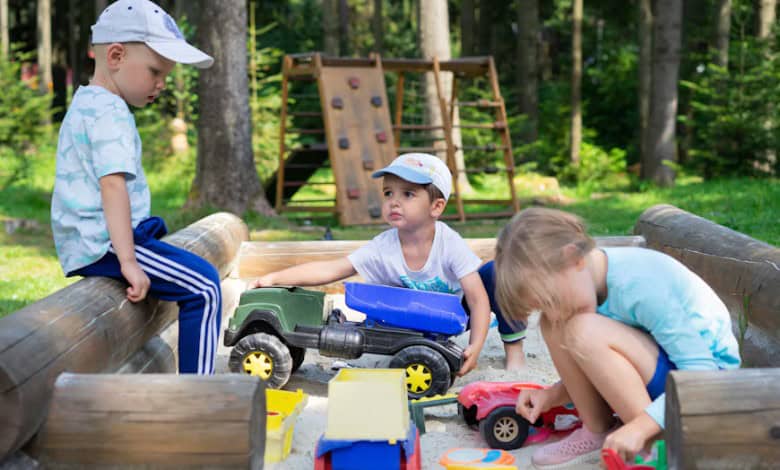
Today I watched my two children, aged two and six, digging in a sludgy puddle of mud. Gradually, bowls, spoons, toy animals, sticks and stones were transported to what became an ever-growing swamp. My initial thoughts turned to the stained clothes and the inevitable clean-up that would follow. But as I stood and watched, I was reminded that they were doing exactly what children do best: they were playing.
They were engaged in a child-led activity that they were intrinsically motivated to do. They were curious, interested and completely absorbed in their chosen activity. While play may look like simple fun to adults, it is one of the most important ways that children learn about themselves and the world around them.
Unfortunately, opportunities for free play seem to be disappearing from many children’s lives. Increased screen time, busier schedules, greater academic demands at younger ages and concerns about safety have all contributed to children having less time and freedom to engage in unstructured play.
Play supports development in countless ways. Running, climbing, jumping and balancing build strength, coordination and body awareness, while drawing, building, digging and handling small objects strengthen the fine motor skills children need for writing, dressing and using cutlery.
Play is just as important for thinking. As children explore and experiment, they practise problem solving and flexible thinking, learn about cause and effect and discover new solutions. Pretend play encourages imagination, planning and storytelling, while games build attention, memory and the ability to follow rules.
Many important social and emotional skills are learned through play too. Children learn to share, negotiate, take turns and resolve disagreements, and they begin to understand other people’s perspectives. Play also gives them a safe space to express their emotions. Whether they are building a tower, acting out a story or falling out with a friend, they are learning to cope with challenges, manage frustration and keep going when things do not go to plan. That is how resilience and confidence grow.
Play is also one of the most powerful ways for parents to connect with their children. In the midst of busy schedules, it creates opportunities to enter a child’s world, follow their interests and enjoy positive time together, free from demands and expectations. These moments strengthen relationships and often make children more cooperative during the rest of the day.
Parents do not need to entertain or direct every moment. Some of the most meaningful interactions occur when adults simply follow a child’s lead. Observing what interests a child, commenting on what they are doing, taking turns, copying their actions or adding a new idea to extend the play can all foster connection and support development.
Play can also be a valuable tool for making daily routines run more smoothly. Young children are often more willing to participate when tasks are presented in a playful way. A race against the clock can motivate a reluctant child to get dressed. Pretending that a toothbrush is a train travelling around the mouth can make toothbrushing more engaging. Walking like different animals to the bath, hopping to the bedroom or singing a tidy-up song can transform routine tasks into enjoyable experiences.
Parents can encourage play by protecting time for unstructured play each day, limiting screen time and creating opportunities for outdoor exploration. Open-ended materials such as cardboard boxes, blankets, blocks, art supplies, sticks and stones invite creativity and imagination. Allowing children to take manageable risks and following their interests rather than directing every activity can lead to rich learning experiences. Perhaps most importantly, boredom is not something to be feared. Often, it is the starting point for creativity, problem solving and imaginative play.
As I watched my children immersed in their muddy world, I realised they were not simply passing the time. They were building skills and confidence, strengthening their bond with one another and learning about the world around them. Where I saw mess, they saw possibility. For more information and resources, visit www.bellavista.org.za
For more on kids, visit Get It Magazine.