
Budget 2021: A mammoth task
When Finance Minister Tito Mboweni steps up to the podium to deliver his Budget Speech in Parliament this afternoon, he will be faced with a mammoth task.
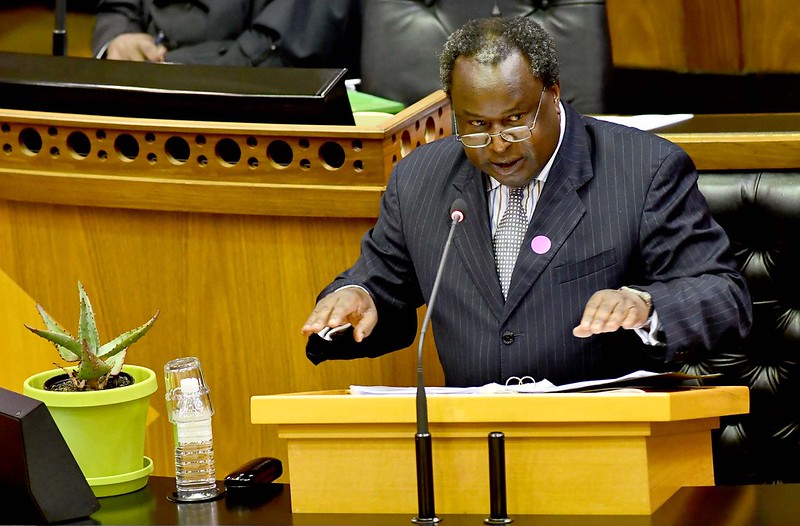
When Finance Minister Tito Mboweni steps up to the podium to deliver his Budget Speech in Parliament this afternoon, he will be faced with a mammoth task.
The Minister will need to tackle tough questions like what will be done to bolster revenue and improve the already ailing economy and where will the money to fund the roll out of the Covid-19 vaccines come from?
With Covid-19 bringing economic activity to a halt in March and April last year, Mboweni announced a projected revenue shortfall of R300 billion during his supplementary budget review in June.
This was at the back of President Cyril Ramaphosa’s announcement of a R500 billion social and economic relief package.
According to Mike Teuchert, the National Head of Taxation at Mazars, not only is National Treasury expected to record a budget deficit of at least 14%, the Finance Minister needs to find ways of funding numerous urgent projects – such as Covid-19 vaccines – while trying to also find a way out of the country’s debt mountain.
Teuchert said the current global pandemic and the nationwide lockdown has made for an extremely challenging landscape in which to collect revenue.
“To start, the taxpayer base has shrunk significantly over the last year. This is partly due to skyrocketing unemployment rates. In order to recover from the events of the last year, our biggest concern is that the organisations that ceased trading during the lockdown – such as the alcohol and tourism industries – need to ‘make up for lost time’ and fast join the economy in order to kick-start it again.”
Should the country expect any tax changes?
Standard Bank senior economist, Elna Moolman, said she does not expect anything significant on this front.
“The direct impact on households are indeed via taxes – this time around, we don’t foresee any tax increases beyond the potential inflation-related increase in specific taxes such as the fuel levy.
“The reasons are two-fold. Firstly, Treasury is concerned about the negative impact on the fragile and weak economy that tax hikes may have – even in the February 2020 budget prior to any local lockdown, government was too cautious to hike taxes.
“Secondly, we expect tax revenues to do much better than Treasury’s MTBPS forecast, which negates the need for tax hikes given the weakness of the economy.”
What is to be expected for the SME sector?
Garth Rossiter, Chief Risk Officer at SME business enabler Lulalend, said SMEs in South Africa are looking for signs of improved business confidence, which will drive growth and lead a turnaround in the economy by increasing demand for products and services as people spend more.
Rossiter said he believed the Finance Minister is stuck between a rock and a hard place when setting out this year’s budget.
“Government, like any of the businesses we fund, needs its income to exceed its expenses to avoid running a deficit. To budget effectively, it either needs to increase income or reduce expenditure, but both of these are going to prove difficult in this year’s budget.
“Minister Mboweni needs to spend on the Covid-19 recovery and a vaccination rollout. This is a clear priority. Getting through this pandemic and seeing some light at the end of the tunnel is key to building confidence in the economy and getting people and businesses back to work,” explains Rossiter.
This is especially important for sectors that have been hit hardest, like hospitality and travel. “Especially when you consider how important tourism is to the local economy and the number of small businesses and restaurants operating in this sector. This is where we have seen the most suffering,” he said.
The Minister’s speech will be tabled at 14:00 and broadcast live on radio and television stations.
#RSABudget2021 pic.twitter.com/tfaql5zrEk
— National Treasury (@TreasuryRSA) February 23, 2021
Notice: Coronavirus reporting at Caxton Local Media aims to combat fake news
Dear reader,
As your local news provider, we have the duty of keeping you factually informed on Covid-19 developments. As you may have noticed, mis- and disinformation (also known as “fake news”) is circulating online. Caxton Local Media is determined to filter through the masses of information doing the rounds and to separate truth from untruth in order to keep you adequately informed. Local newsrooms follow a strict pre-publication fact-checking protocol. A national task team has been established to assist in bringing you credible news reports on Covid-19.
Readers with any comments or queries may contact National Group Editor Irma Green (irma@caxton.co.za) or Legal Adviser Helene Eloff (helene@caxton.co.za).
Read original story on www.georgeherald.com

