
Coffee run turns into dramatic toilet birth rescue
What began as an errand ended with midwives, a shopping centre cleaner and quick-thinking staff joining forces to save a young mother and her newborn son.
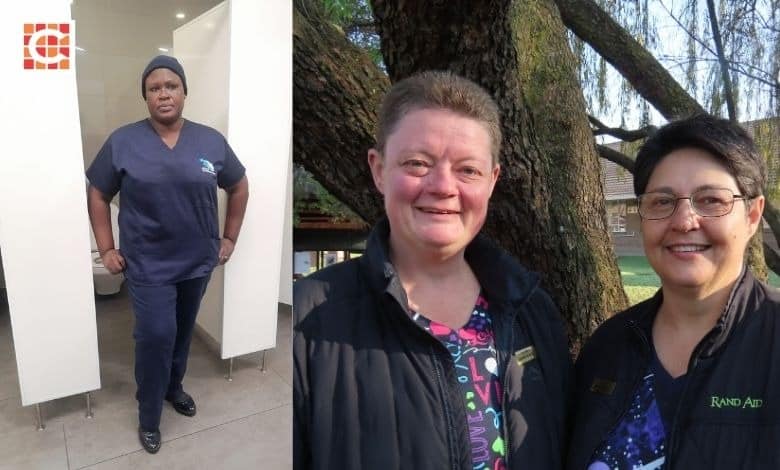
A quick stop for coffee and a pair of jeans turned into a dramatic life-or-death rescue when two Rand Aid midwives rushed to help a young woman and her newborn baby after she unexpectedly gave birth in a shopping centre toilet.
Sister Jana Bezuidenhout and Sister Leanie Bessinger were at Flamingo Shopping Centre in Modderfontein on Saturday morning (May 30) when they learned that a young barista had given birth in a public bathroom.
Within moments, the pair abandoned plans for coffee and sprang into action, drawing on decades of nursing experience to care for both mother and baby in conditions far removed from a hospital delivery ward. In an extraordinary coincidence, they would soon be joined by a third midwife, Sister Selina Rungasamy from the shopping centre’s Dis-Chem clinic.
“It was one of those moments where your professional instincts simply take over,” says Bezuidenhout. “One minute we were waiting for coffee, and the next we were dealing with a medical emergency.”
From coffee run to crisis
The incident unfolded shortly after 08:15. Bezuidenhout and Bessinger had started the morning feeding a feral cat colony before heading to the shopping centre, where Bezuidenhout hoped to buy a new pair of jeans. When they discovered the store they intended to visit was closed, they decided to grab coffee from the Starbucks kiosk inside Checkers.
“The kiosk was completely unattended,” recalls Bessinger. “When the manager appeared, she told us a staff member had just given birth in the public bathroom. We both shouted, ‘What!’ and immediately told her we were qualified midwives and asked where she was.”
What they encountered inside the bathroom was a scene neither will soon forget.
The young mother, believed to be in her early 20s and pregnant with her first child, had not realised she was expecting. Thinking she was experiencing severe back pain, she had gone to the toilet, where she unexpectedly delivered the baby.
“She was in complete shock,” says Bessinger. “She was pale, staring blankly and bleeding heavily. Emotionally and physically, she was overwhelmed.”
Instinct takes over
The baby had landed headfirst in the toilet bowl and had been pulled out by shopping centre cleaner Mavis Sebjeng. He was still attached to the placenta, which lay on the floor, creating a significant infection risk.
“The baby was blue around the mouth, grey in colour and struggling to breathe,” Bezuidenhout says. “He was grunting and flaring his nostrils. We knew we had to act immediately.”
Without discussion, the two nurses instinctively divided responsibilities.
Bezuidenhout, whose career includes more than 1 000 deliveries and extensive neonatal experience, focused on the baby. Bessinger took charge of the mother, immediately performing a uterine massage to help control severe bleeding.
The quick-thinking response drew on decades of experience. Bezuidenhout heads Rand Aid’s Supportive Services division, while Bessinger serves as nursing services manager at Ron Smith Care Centre. Rand Aid is a non-profit organisation providing care services and accommodation for older persons through independent living villages and care centres.
“I closed the toilet lid and helped her sit down so I could begin treating the haemorrhage,” says Bessinger. “The priority was getting her uterus to contract and reducing the blood loss.”
Meanwhile, Bezuidenhout worked to stimulate the baby’s breathing.
“I used the skills I learnt years ago in neonatal care,” she says. “I rubbed his feet, repositioned him and cleared his airway.”
Improvising under pressure
One of the most remarkable aspects of the rescue was the lack of equipment.
“You are used to a sterile delivery room with everything you need,” says Bezuidenhout. “Instead, we had a baby who had swallowed toilet water, a mother who was bleeding and no proper medical equipment.”
To make matters worse, the only gloves available in the first-aid kit were latex gloves, which Bezuidenhout is allergic to.
The team improvised. Checkers staff supplied a roll of string to tie the umbilical cord, which was cut using first-aid scissors. Wet wipes and linen savers helped them manage the situation until they could move both patients.
When Dis-Chem opened at 09:00, a Checkers staff member rushed to alert Rungasamy. Her arrival meant that three experienced midwives were now on hand to help save the mother and baby.
“When I got to the bathroom, Mavis was holding the swaddled baby. He was pale, and his breathing was poor. I took him and ran to the clinic, where he was warmed, put on oxygen and further stimulated,” says Rungasamy.
Bessinger and Bezuidenhout bundled up the mother and supported her on the short walk over.
Rungasamy says the baby’s first cry and the return of colour to his skin allayed her anxieties. “By that time, the mom had also stopped bleeding and was stabilised,” she says. “They were fortunate to have the right people at the right place, at the right time.”
“The change in the newborn was incredible,” says Bezuidenhout. “His colour improved from blue-grey to pink, his breathing settled, and he gave a good cry. That was when we knew he was going to be okay.”
Bessinger was also able to give the mom a more thorough examination in a more sterile environment.
Despite an ambulance having been called before the nurses arrived, it took nearly two hours for one to be freed up and dispatched to the shopping centre.
At one point, Bezuidenhout and Bessinger were preparing to transport the mother and baby to hospital in their own car.
“By then, we were getting desperate,” says Bessinger. “We even contacted the Rand Aid call centre to help us co-ordinate assistance.”
Bessinger says when the state ambulance arrived, the paramedics were helpful and transported the mom and baby to Edenvale Hospital.
Team effort
The story also has several unsung heroes.
Among them was Sebjeng (39), who has worked as a cleaner at Flamingo Shopping Centre for six years. She was cleaning the bathroom when she saw the young barista enter one of the cubicles. Not long after, she heard a faint cry and went to investigate.
“When I looked, I saw the baby in the toilet bowl,” recalls Sebjeng, a mother of three with previous caregiving experience. “I pulled him out and wrapped him in my jacket to keep him warm.”
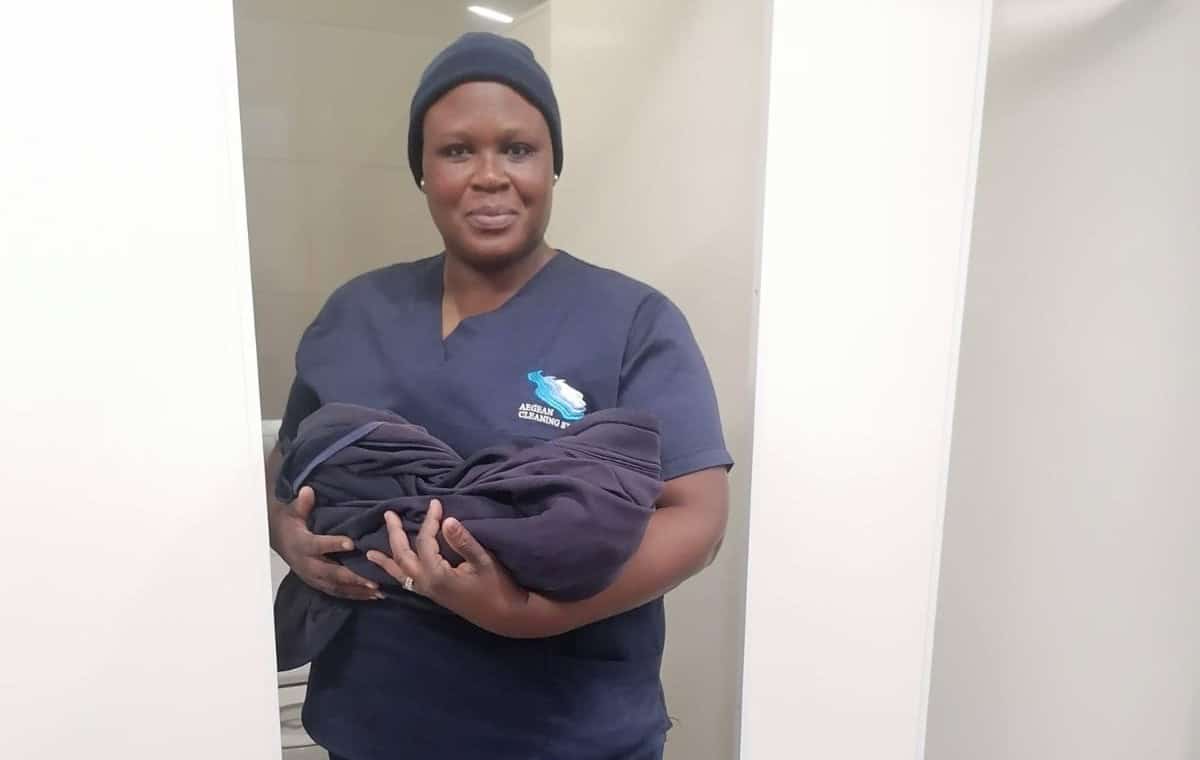
She remained with the mother and baby until help arrived and even guided the young woman through the delivery of the placenta.
When Bezuidenhout and Bessinger arrived, Sebjeng was sitting on the floor holding the baby tightly to keep him warm.
“She kept asking us if he was going to be okay,” Bezuidenhout says. “The look on her face when he started crying and stabilised is something I will never forget.”
Sebjeng says the experience is something she will never forget.
“I couldn’t believe that was how the baby came into the world,” she says. “I am so happy that both the mother and baby are well, and that I was able to play a small part in helping them.”
She has jokingly started calling herself ‘Dr Mavis’ now.
Checkers staff also played a vital role, providing supplies and support throughout the ordeal. One employee even bought a baby outfit for the newborn on the spot. Bezuidenhout and Bessinger purchased nappies and a receiving blanket and are now helping organise donations for the mother and her son.
Flamingo Shopping Centre manager André Vermeulen praised everyone involved in the rescue effort.
“I am so very proud of my staff, who were in the right place at the right time, as well as all the staff members from Checkers and Dis-Chem who assisted,” he says.
Bloody takkies and high fives
Only once the adrenaline began wearing off did the nurses fully appreciate what they had been through.
“We looked down and realised our takkies were covered in blood,” laughs Bessinger. “It was the first moment we actually stopped and processed what had happened.”
When they eventually got home, the two women shared a celebratory high-five.
“We were still in shock,” Bezuidenhout admits. “But we were also incredibly grateful. Both mother and baby survived.”
The pair finally returned later that afternoon to complete their original mission and buy Bezuidenhout’s jeans.
As for the coffee they had planned to enjoy that morning? “That never happened,” Bezuidenhout laughs.
Mother and baby were discharged from Edenvale Hospital on Monday (June 1) and are both doing well.
Miracle baby
Bezuidenhout hopes to stay in touch with the family and left her cellphone number with the Dis-Chem staff in the hope of receiving updates and photographs as the little boy grows.
“He is a strong baby – a miracle baby,” she says. “The fact that he survived those circumstances and will one day be able to read this story is extraordinary. We hope he goes on to live an amazing life.”
Caxton Network News was unable to talk to the mother at the time of publication.
Breaking news at your fingertips… Follow Caxton Network News on Facebook and join our WhatsApp channel.
Nuus wat saakmaak. Volg Caxton Netwerk-nuus op Facebook en sluit aan by ons WhatsApp-kanaal.
Read original story on www.citizen.co.za

