
Debt-burdened households hit 5-year stress peak in SA
A spike in household stress is leaving South Africans struggling to cope with soaring living costs and debt.

More than 70% of South Africans are experiencing severe financial anxiety, according to a major annual survey.
The 2026 Money-Stress Tracker, published by DebtBusters, has laid bare the mounting toll soaring everyday expenses take on families. Now in its fifth year, the study surveyed approximately 18 000 respondents, assessing how financial strain impacts health, home, and work life.
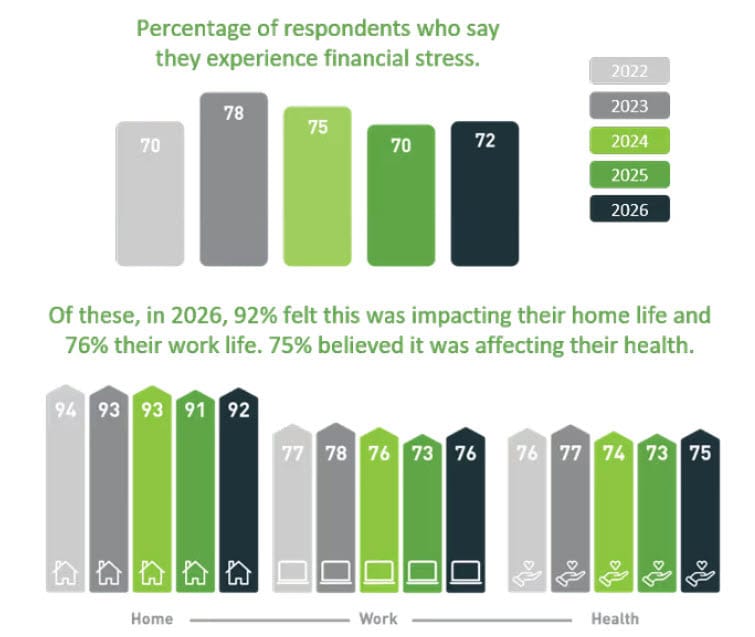
Data shows 72% of respondents admitted to experiencing money stress this year, reversing a previous decline from a peak of 78% in 2023. Crucially, the crisis has firmly breached the front door: home-life stress has surged to 42% – a jump of more than a third compared to 2025, and the highest level recorded since the tracker began in 2022.
Cost of living overtakes interest rates
For the past two years, rising interest rates acted as the primary catalyst for domestic financial anxiety. However, the 2026 data shows a dramatic shift towards short-term cost-of-living fears.
The two most prominent anxieties reported this year are the dread of running out of money before the end of the month and the struggle to cover debt repayments. General worries about inflation and living costs rose by nearly a third, while anxiety surrounding electricity prices skyrocketed by 99% compared to 2025.
Middle class squeezed by debt repayments
The relentless rise in everyday expenses has translated directly into severe debt repayment pressure. More than half of all respondents now allocate more than 40% of their take-home pay to servicing debt.
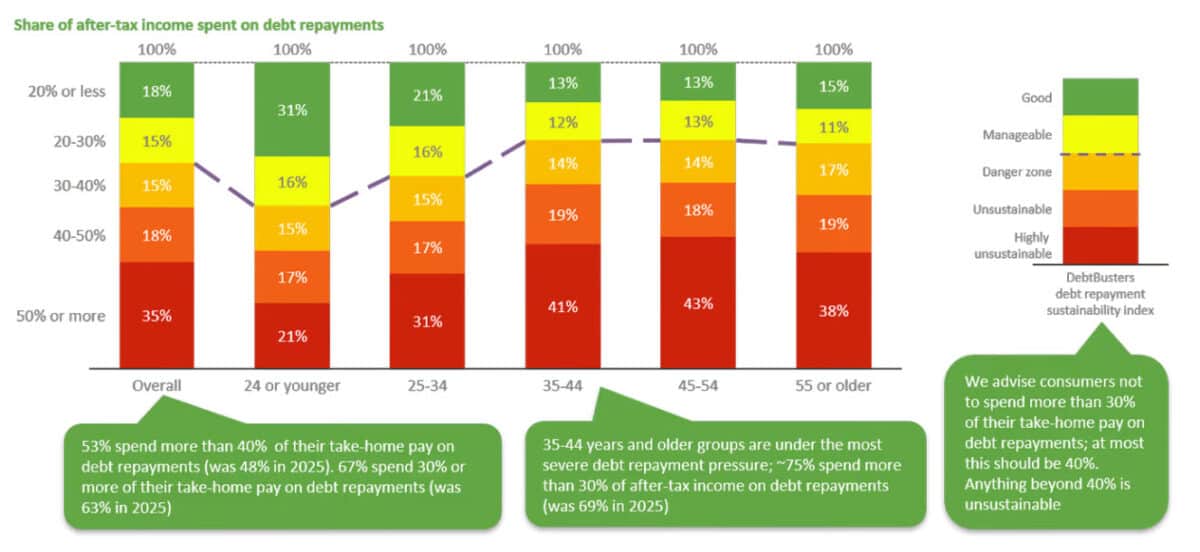
Surprisingly, the heaviest debt burden is being carried by the middle class – specifically those earning more than R20 000 a month. Executive head of DebtBusters Benay Sager noted that this specific demographic forms the backbone of the nation’s middle-class population, yet 75% spend over 30% of their net income on debt repayments.
Youth and women bear the brunt
The survey highlights a shifting demographic landscape of anxiety, with younger citizens and lower-income earners emerging as the most stressed. Three-quarters of respondents under the age of 35 reported feeling anxious or stressed about their money. Furthermore, financial anxiety among those aged 24 or younger jumped by 18% compared to last year, with this group expressing acute worry over living costs and clearing their debt.
In line with historical trends from the tracker, women continue to experience significantly higher levels of financial stress than men. Women scored higher across seven of the survey’s eight core areas of concern, with retirement being the sole exception. Analysts suggest this is because women tend to prioritise – and are expected to prioritise – immediate household needs. Consequently, home-life stress for women has also reached a five-year peak.
Psychological toll of feeling stuck
Drawing on more than 130 000 responses collected over the five-year history of the tracker, DebtBusters identified four primary indicators of money-related strain:
- Feeling financial stress,
- experiencing home-life stress,
- spending over 40% of income on debt,
- and feeling stuck.
The proportion of respondents experiencing every single one of these indicators was higher this year than in 2025.
Psychologist Andrea Kellerman warned that the sharp spike in home-life stress is deeply concerning, as it signals that financial strain has fully infiltrated the domestic sanctuary.
“When financial stress infiltrates the home, and is no longer left at work or contained within monthly budgeting, the opportunity for emotional recovery is lost,” Kellerman explained. “Emotional resources become depleted, patience decreases, communication deteriorates, and conflict becomes more likely. Gradually, the home shifts from being a place of restoration to becoming another source of psychological pressure.”
Rise in entrepreneurial resilience
Despite the bleak indicators, the report highlighted a silver lining: South Africans are actively fighting back. While ‘savings fatigue’ has set in – evidenced by fewer consumers feeling enthusiastic about cutting back on monthly spending – a growing number are proactively managing the crisis.
Younger consumers are leading this charge; they are 1.5 times more likely to follow through with a personal budget and four times more likely to actively seek a higher-paying job compared to older demographics. They also demonstrated 58% more intent to directly confront their money stress.
Across the board, citizens are displaying entrepreneurial spirit to supplement their income, turning to online buying and selling, manufacturing or growing items to trade, and renting out spare accommodation.
Crucially, the social stigma surrounding financial difficulty appears to be fading. Fewer respondents reported feeling embarrassed to ask for assistance, and negative sentiment towards debt counselling has dropped by 23% over the past three years.
Sager remains hopeful that this shifting mindset will encourage more people to seek professional intervention. “Willingness to act, increased awareness, and less resistance to getting help offer some hope that the 80% of South Africans with unsustainable debt levels who could benefit from debt counselling will increasingly start to take the opportunity to rebuild their finances,” he concluded.
Breaking news at your fingertips… Follow Caxton Network News on Facebook and join our WhatsApp channel.
Nuus wat saakmaak. Volg Caxton Netwerk-nuus op Facebook en sluit aan by ons WhatsApp-kanaal.
Read original story on www.citizen.co.za

