
Fadiel Mohamed’s expulsion exposes identity struggle within the FF+ – political analyst
The expulsion of a party member over a post about Israel and Palestine raises questions about the FF+’s political identity and its efforts to broaden its support base.
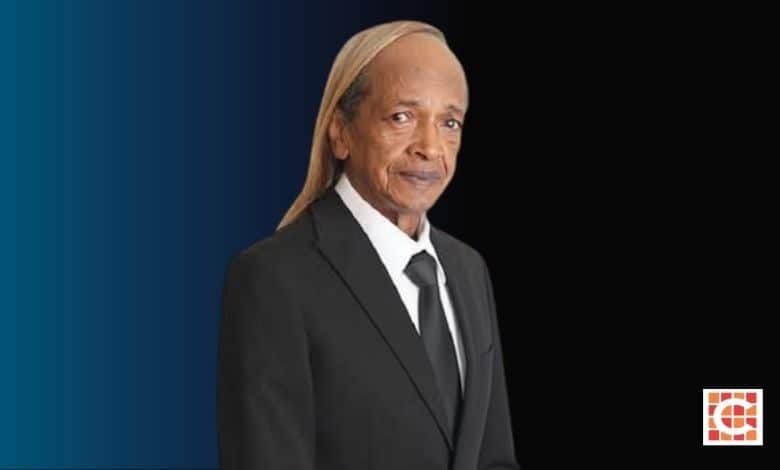
Fadiel Mohamed, a 75-year-old Muslim expelled from the Freedom Front Plus (FF+) less than a year after joining, questions whether the party’s commitment to religious freedom and non-discrimination extends to members whose views differ from its leadership.
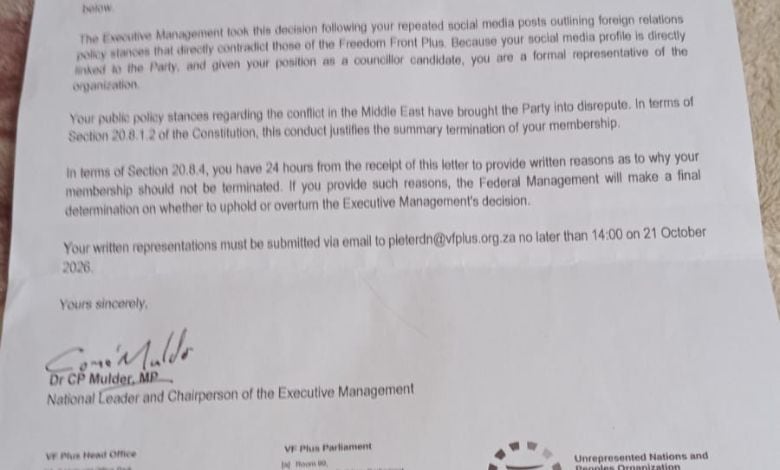
Mohamed was a ward councillor candidate in Uitenhage, Eastern Cape, until he received a letter last Monday (October 19) saying the party was terminating his membership over repeated social media posts that allegedly contradicted its foreign policy positions.
He believes his expulsion was linked to his opposition to the killing of civilians in the Israel–Palestine conflict. He maintains that his position stems from respect for human life, not hostility toward any religious or ethnic group.
“Who gives you the right to kill innocent children and old people?” he asked.
“Life is precious. I respect life.”
Corné Mulder, the FF+ leader, said the party had always supported Israel. “Over time, Fadiel shared or reposted many pro-Hamas slogans and posts,” Mulder said.
“When he signed up for membership, he signed a declaration that he supported our constitution and, in fact, our stance on Israel.”
The case comes amid a broader debate about the FF+’s political identity, its traditionally conservative Afrikaner support base and its attempts to become more inclusive.
Prof André Duvenhage, a political analyst and academic at North-West University, believes the party is struggling to adapt to South Africa’s changing demographics.
“This is a struggle for the soul of the FF+,” he said.
A party at a crossroads
Duvenhage said the FF+ emerged from the conservative Afrikaner nationalist tradition and was historically largely exclusive to white Afrikaans-speaking people.
However, demographic changes, an ageing Afrikaner population and low birth rates have put pressure on the party to broaden its support base.
“The Afrikaner and white populations have declined proportionally, and the Afrikaner population is ageing,” he said.
The shift towards greater inclusivity began under Pieter Groenewald, who allowed coloured candidates to stand for the party, and accelerated under current leader Mulder, according to Duvenhage.
“The party must decide whether it wants to remain inclusive or exclusive,” he said.
Maintaining a more exclusive identity could limit the party’s electoral prospects, while greater inclusivity could introduce values and cultural perspectives that conflict with those of its traditional supporters.
“When you bring new people into a political system, you also introduce new values and cultures,” Duvenhage said.
“This creates a dynamic that can come into conflict with people who remain committed to traditional values.”
The dispute over Palestine
Mohamed said he researched political parties before joining the FF+ because he believed its commitment to non-discrimination would let him practise his Muslim faith while working alongside people from different backgrounds.
He said his professional career had brought him into contact with people of different religions and cultures, including Jewish colleagues and Christian families.
“I was created by the same God they worship,” he said.
Mulder said the party had not known Mohamed was Muslim because it did not ask members about their religion or which church they attended.
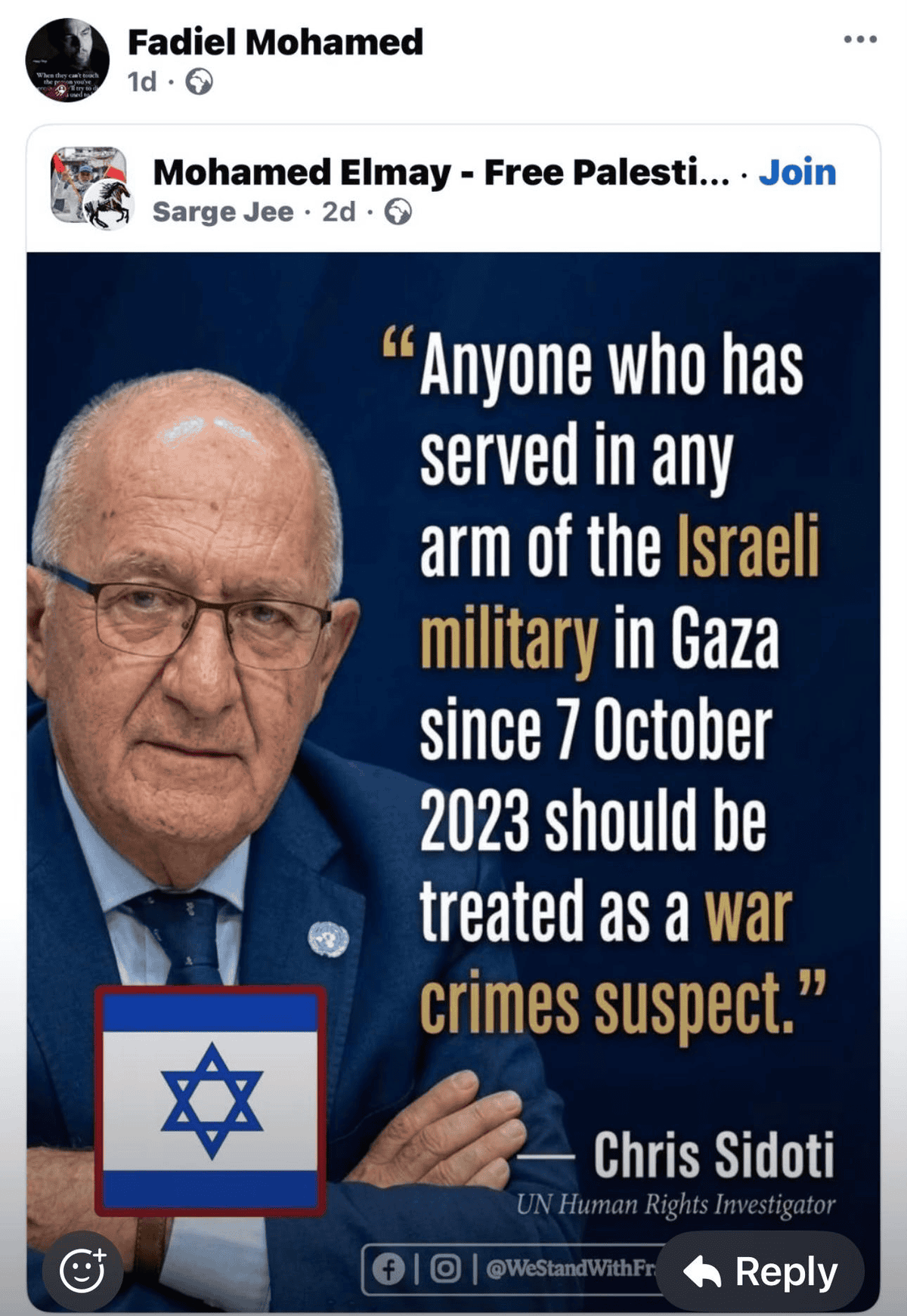
According to Mohamed, a local councillor contacted him about a Facebook post he had shared concerning Israel and asked him to remove it. He initially struggled to identify the post because he had shared material on the subject over several years.
The post in question featured a postcard depicting Chris Sidoti, a UN human rights investigator, alongside a quote calling for anyone who had served in the Israeli military in Gaza since October 7, 2023, to be treated as a war crimes suspect.
Mohamed reposted the postcard over a year ago, before he even joined the party.
He said he was later informed of his expulsion in a letter a friend delivered. He claimed the letter gave him 24 hours to appeal. He contacted party representatives by WhatsApp and email but said he had received no response at the time.
Mulder disputed Mohamed’s account of the process, saying he had been given an opportunity to explain why his membership should not be revoked. The federal committee had found his explanation insufficient, Mulder said.
He added that, under the party’s constitution, a disciplinary process or investigation was not required because Mohamed was a candidate councillor.
Asked whether party members and candidates had freedom of speech, Mulder said political representatives were expected to support party policy rather than promote conflicting personal positions. He said Mohamed’s social media posts had brought dishonour to the party.
Where does the FF+ stand on Israel and Palestine?
Duvenhage said he could not identify a clearly defined policy document setting out the FF+’s position on the conflict.
“My broad assessment is that the party’s position is closer to Israel than to Palestine.”
He said political office bearers were expected to adhere to their party’s principles and code, leaving limited room for personal positions that contradicted its established line.
The historical connection between Afrikaners and Israel
Duvenhage said support for Israel among some conservative Afrikaner and Christian nationalist circles could partly be understood through the historical development of Afrikaner identity.
“Afrikaners arrived in South Africa with an Old Testament perspective and the belief that they were a chosen people on their way to a promised land,” he said.
He drew a parallel between Afrikaner identity narratives and biblical Israel, particularly within conservative Christian and Calvinist traditions.
However, he stressed that this interpretation was primarily associated with the more conservative right-wing political tradition and should not be taken as representative of all Afrikaners or Christians.
A broader question of political identity
Mohamed said he entered politics later in life to help vulnerable communities and defend the dignity of people whose basic needs were being neglected.
Before becoming politically active, he worked as a financial consultant and in marketing and advertising.
He said the early deaths of family members had prompted him to consider how he could use his remaining years to make a difference. He had seen communities without running water or proper sanitation, and children going hungry.
“I thought, what can I do for humanity?” he said.
Mohamed said his opposition to the killing of civilians was consistent with this commitment, regardless of their nationality, religion or political affiliation.
“I can’t sit down and say it’s not my business,” he said. “I’m not that type of person.”
He also spoke about his struggles with depression, saying that staying active and involved in community affairs helped him maintain a sense of purpose.
He remains uncertain about whether he will continue his political involvement.
Breaking news at your fingertips… Follow Caxton Network News on Facebook and join our WhatsApp channel.
Nuus wat saakmaak. Volg Caxton Netwerk-nuus op Facebook en sluit aan by ons WhatsApp-kanaal.
Read original story on www.citizen.co.za

