
Fish die off in Wilge River at Bronkhorstspruit
Preliminary results showed that the pH level of the water in the Wilge River at the site of the fish kill was 4.0 along with low oxygen levels of 45%.
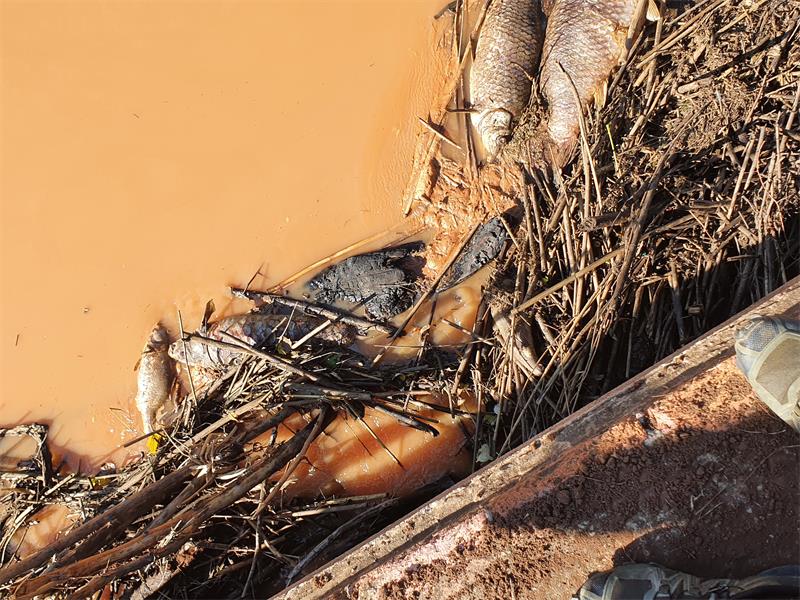
A fish die-off at a lodge on the Wilge River was reported to Cara Stokes, chairperson of the Bronkhorstspruit Catchment Forum on Wednesday February 16.
The Wilge River catchment begins in the Victor Khanye Local Municipality (Delmas area) and takes its journey down the catchment to the Loskop Dam and beyond.
The river passes through Gauteng and Mpumalanga and through various local authorities.
The river was reportedly different colours at different locations.
At the lodge, the colour was described as yellowish and other residents downstream said it was a blueish colour.
That afternoon some residents used a helicopter to view the various inlets to the Wilge River to determine if the source of the problem could be identified from the air.
“The helicopter flight revealed what could be assumed as a point source of pollution which lay in the Kromdraaispruit that leads into the Saalboomspruit and the Wilge River,” Stokes said.

Apart from reporting the incident to the departments of Minerals, Water and Environmental Affairs (three departments), the catchment forum, under the guidance of Dr Dabrowski, an aquatic scientist, sent fish samples to the pathology laboratory at Onderstepoort, and water samples from several sites to an accredited lab to confirm and characterise the pollution source.
The full set of results was not available at the time of publication.
However, preliminary results showed that the pH level of the water in the Wilge River at the site of the fish kill was 4.0 along with low oxygen levels of 45%.
“This is a strong indicator that a significant volume of acid mine drainage associated with coal mining was the problem,” said Stokes.
Dr Dabrowski from Confluent Environmental has been appointed by a stakeholder to analyse the various results and to provide an independent investigation on the matter.
Some community members have been contacted by the mine to begin the public participation process for affected stakeholders.
“The authorities are on the case, however, formal feedback is awaited regarding the nature of the incident, the rehabilitation measure as well as what can be done to prevent it from happening again,” stated Stokes.
The Mpumalanga Tourism and Parks Agency (MTPA) has since confirmed an acidic water spill that occurred at a mine that had dams to hold this water.
“The acidic water flowed downstream along the Wilge River, which joins up with the Olifants River and
into Loskop Dam. Approximately 58 km of the river was affected by this pollution,” the MTPA said in a media statement.
“The impact of the pollution in the river was significant and fish mortalities were observed along the rivers and
at the inlet of Loskop Dam. The impact of the pollution in Loskop Dam extended only approximately 1.7 km
into the dam. Fortunately, the dam level is at 100% and the dilution effect once the pollution plume reached
the dam was effective in limiting the spread.
“As a mitigation measure, water was released from the Bronkhorstspruit and Witbank dams to flush the
remaining acidic water from the rivers. No new fish mortalities were observed since the release of water
from the dams.”
Thungela Resources Limited also confirmed in a media statement that an environmental incident took place at Khwezela Colliery near Kromdraa in eMalahleni on February 14.
“The first stage of time critical remedial actions has now been completed. These include containing the overflow, flushing the river system with water from the Bronkhorstspruit Dam to mitigate the effect of mine-impacted water, and clean-up efforts along the stretch of 60km. Screening for possible residual waste will continue.
“Interim findings indicate that a concrete seal at the South Shaft broke which resulted in an uncontrolled release of mine-impacted water. The shaft was sealed in 2019 as part of the water management strategy. Despite a water management plan in place, the volume of water exceeded the maximum capacity for treatment at the dosing site and flowed into the Kromdraaispruit resulting in lowered pH levels of the water.”
According to Thungela the collaboration efforts include working with the Department of Water and Sanitation, the MTPA, the community, other interested and affected stakeholders.
“Independent biodiversity, environmental, water and health experts, along with the company’s experts are providing guidance on the investigation and evaluation of the impact on the environment, the steps to be taken to control the pollution and the remediation steps that need to be implemented to remedy the effects of the pollution.”
Read original story on ridgetimes.co.za

