
Gauteng launches 6-week measles-rubella drive amid rising cases
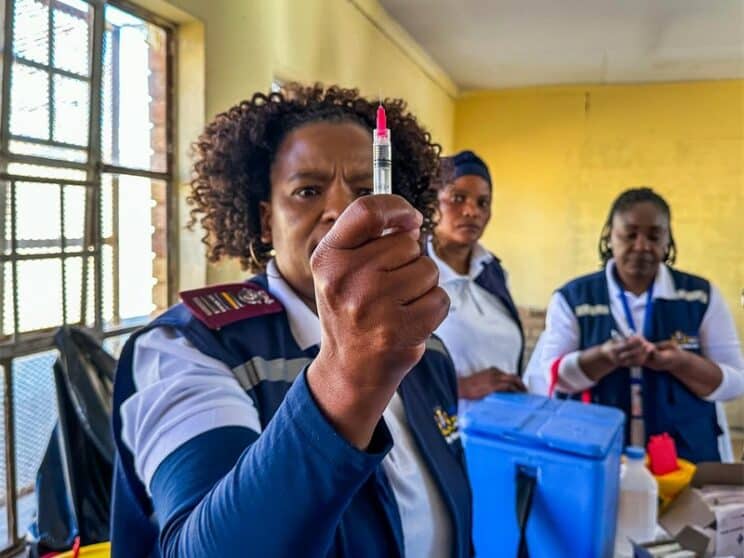
Health teams will visit schools and clinics across Gauteng to provide free measles-rubella vaccinations to children under 15.

The Gauteng Department of Health aims to vaccinate over four million children aged from six months to under 15 years.
The department officially launched its province-wide Mass Measles-Rubella (MR) Vaccination Campaign at Steve Biko Primary School in Orange Farm, Johannesburg, on Tuesday.
Pretoria Rekord reports that the campaign will run for six weeks, from August 4 to September 12.
While the campaign covers all five districts in Gauteng, Tshwane remains one of the key focus areas due to its high number of confirmed measles cases and identified hotspot zones.
The move is a direct response to the ongoing measles outbreak in the province, which has seen a surge in cases since the beginning of the year.

Speaking at the launch, the Gauteng MEC for Health and Wellness, Nomantu Nkomo-Ralehoko, reaffirmed the provincial government’s commitment to containing the outbreak.
“The MR vaccine is safe, free and effective in protecting children from severe illness. We urge all parents and guardians to sign consent forms and ensure their children are vaccinated,” she said.
Addressing the need for accurate health information, Nkomo-Ralehoko added: “We also encourage communities to verify health information through official sources, and avoid misinformation circulating on social media.”
The significance of the campaign is visible in Tshwane, where the outbreak has continued along a concerning trajectory.
According to the Department of Health, 370 laboratory-confirmed measles cases were reported throughout the province between January 1 and June 30.
Many of these originated from Tshwane, particularly in hotspot areas such as Mamelodi and Winterveldt.
In June, Motalatale Modiba, the department’s spokesperson, highlighted the urgency of targeted interventions in hotspots.
This localised approach is being strengthened under the current campaign.
Despite these efforts, the immunisation coverage in Tshwane remains worryingly low, said Modiba.
He emphasised the second-dose coverage for measles sits below 75%, well under the 95% threshold required to prevent outbreaks.
Modiba explained that this shortfall has made communities vulnerable not only to recurring infections but also to infections among vaccinated individuals and adults. This is something not typically seen when herd immunity is achieved.
The department will closely monitor vaccination uptake across all districts and provide regular updates on progress with the current campaign.
The target is to achieve at least 95% coverage across the province, with Tshwane expected to make significant gains due to the focused attention it is receiving.
As part of the campaign launch, learners at Steve Biko Primary School were vaccinated on-site, showcasing how quickly the teams are moving to roll out services.
Parents and guardians are encouraged by Nkomo-Ralehoko to ensure their children are available for vaccination when school health teams visit. Consent forms must be signed and returned to schools promptly to avoid delays.
The department also reminded the public that MR vaccines are available at all public health facilities during the campaign, and are offered free of charge.
The campaign is streamlined with the National Institute for Communicable Diseases’ (NICD) policies.
The NICD urged provinces in June to strengthen measles surveillance and conduct risk assessments for transmission, while implementing public health responses to current outbreaks.
The institute also advised that public awareness must be increased in communities to highlight the ongoing outbreak and encourage parents to vaccinate their children.
According to the NICD, missed routine measles doses should be caught up to prevent serious complications, including pneumonia, ear infections, diarrhoea, encephalitis and even death.
Clinicians are advised to report suspected cases, collect blood specimens for lab confirmation, and log all cases through the Notifiable Medical Conditions surveillance system of the NICD.
The institute also recommends reinforcing routine immunisation services. It said that districts with high incidence rates, such as Tshwane and Johannesburg, should be prioritised.
The institute also encourages efforts focusing on tackling vaccine hesitancy and improving reporting of measles symptoms.
Continued environmental monitoring, including wastewater surveillance, remains essential to track transmission trends and adjust response measures effectively.
Breaking news at your fingertips… Follow Caxton Network News on Facebook and join our WhatsApp channel.
Nuus wat saakmaak. Volg Caxton Netwerk-nuus op Facebook en sluit aan by ons WhatsApp-kanaal.
Read original story on www.citizen.co.za

