
Iron Age and Stone Age artefacts unearthed in Limpopo
Excavation at Dwaalhoek has uncovered ancient treasures that have revealed ancient San and farmer interactions.
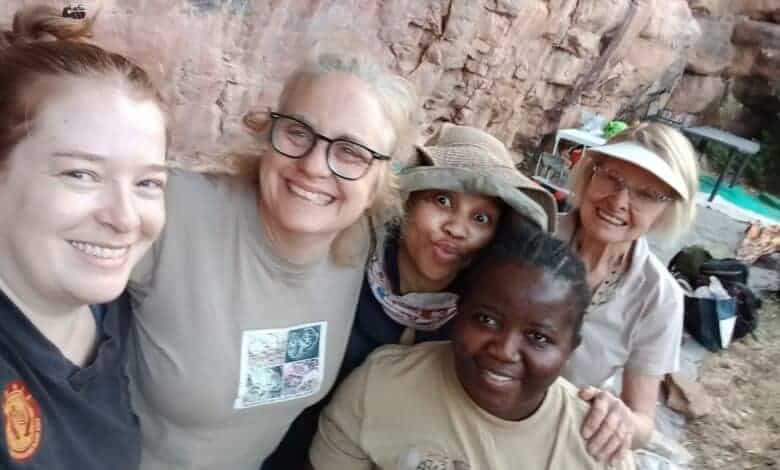
Archaeologists at the Dwaalhoek excavation site in the Kaingo Game Reserve in Limpopo have wrapped up their latest field season on a high note, unearthing new artefacts — including ostrich eggshell beads and Iron Age pottery — and are already planning to return next year.
According to The Witness, the Kaingo Game Reserve, nestled in the Waterberg region, has been the focus of ongoing research by a team from the University of the Witwatersrand (Wits) and the KZN Museum.
Dwaalhoek is the fourth site on the reserve to be excavated by the team. Over the years, the sites have revealed a wealth of artefacts made from bone, seed and stone, shedding light on the lives of ancient communities who once inhabited the region.
Collaboration across institutions
Joining the excavation this year were KZN Museum archaeologists Ghilraen Laue and Dimakatso Tlhoaele, who worked alongside project director Professor Lyn Wadley from Wits University’s Evolutionary Studies Institute, Dr Bongi Zwane from the University of Johannesburg and Dr Rosa Moll from Wits.
“The aim of the project is to find out more about the people of the Waterberg [area] and establish accurate dates,” said Laue. “Many of the sites show that Bushman (San) hunter-gatherers and Iron Age farmers were interacting in the area over 1 500 years ago.”
Gaps in the occupation record
Laue said that while the team has uncovered artefacts dating back to the Early Stone Age — around 780 000 to a million years ago — there remains a puzzling gap in the occupation record between the Middle Stone Age (ending around 30 000 years ago) and the Later Stone Age, which begins only about 2 000 years ago.
“The only Middle Stone Age dates Lyn has been able to get so far from the Waterberg are from about 100 000 years ago. That means we’ve either not yet found other sites where people lived during the intervening years, or there was a hiatus in occupation,” said Laue.
A site rich in history
The Dwaalhoek site first drew Laue and Wadley’s attention because of its rock art. “While I was looking up at the rock art, Lyn was looking down at the archaeology and noticed ashy features and, eroding down the slope, the remains of Iron Age pottery and Later and Middle Stone Age tools. It just looked like a good place to excavate,” said Laue.
The hunch proved right. The team has since found evidence of deep archaeological deposits, a rarity in the Waterberg, where erosion has often disturbed ancient layers. “That’s why we think this is quite an exciting site,” Laue added.
Recent discoveries
Among their latest finds were fragments of Iron Age pottery, glass beads, Later Stone Age scrapers and numerous ostrich eggshell beads, all unearthed during a two-week excavation period. “This excavation is proving very exciting, and we have high hopes for the future,” said Laue.
She said that the site shows evidence of both Stone Age and Iron Age people using the same shelter for different purposes.
“More recently, Iron Age farmers would have used the site for initiation ceremonies, as indicated by the white finger-painted art and possibly rainmaking rituals in earlier times, while Stone Age people actually lived in the shelters,” said Laue. “We see a mix of material culture showing interaction between these two groups.”
Link to ancient San spiritual practices
While the main shelter contains faint finger-painted initiation art made by Iron Age farmers, a nearby alcove holds faded San hunter-gatherer imagery, linking the site to ancient San spiritual practices.
After three weeks of fieldwork — including cleaning, sorting and measuring artefacts — the team has returned home, already eager to continue the excavation next year.
Breaking news at your fingertips… Follow Caxton Network News on Facebook and join our WhatsApp channel.
Nuus wat saakmaak. Volg Caxton Netwerk-nuus op Facebook en sluit aan by ons WhatsApp-kanaal.
Read original story on witness.co.za

