
Kruger National Park spends millions fighting rhino poaching
Ranger services alone cost the park about R250m to protect the rhino from being poached.
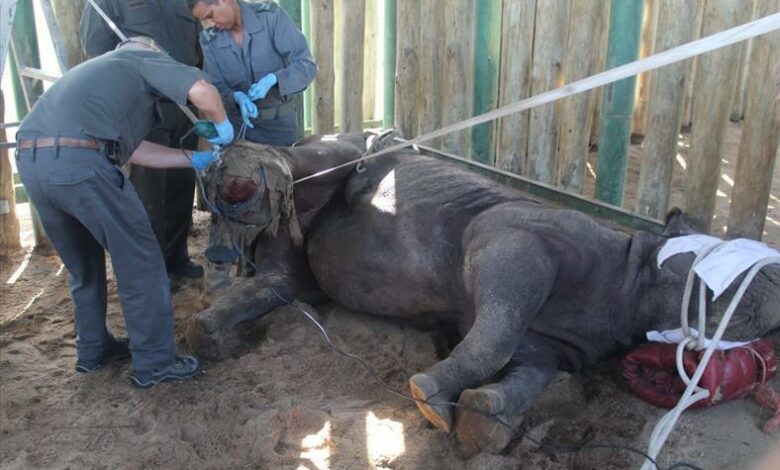
Fighting rhino poaching at one of South Africa’s biggest conservation parks has proven to be expensive as the Kruger National Park continues to battle with this illegal activity.
Over the years the Kruger National Park has faced a decline in the population of rhino due to an increase in poaching.
The mammal has been targeted for its horn which is sold for millions on the black market.
Head ranger Cathy Greyer said the resources that go into protecting rhinos cost the park millions of rands as different role players were involved.
“When it comes to ranger services, just the staff component is costing the park over R250m per year,” she said.
“Everyone in Kruger is protecting the rhino, its not just rangers. It also includes protection services, scientific services and wildlife services who assist with either dehorning or treating injured animals.”
Since the rhinos were introduced to the park in 1960 there has been a steady decrease in the animal population. However, this worsened around 2010 when rhino poaching became prevalent.
Since then rhinos had to be dehorned for their own safety which cost around R6 000 per rhino.
The dehorning of rhinos is an ongoing process, as the animal’s horn grows back again after some months.
Greyers said staff involvement in poaching was also a huge challenge.
“The costs are astronomical.
“We are looking at various other initiatives linked to the rhino guardianship, improved technology and access control. All of those things cost money which we do not necessarily have in in our operational budget.
“We essentially don’t have a budget to cover all the needs we have, so we had to look at partnerships and donors.”
Staff involvement in poaching has also come into the spotlight lately when two field rangers appeared at the park’s regional court in connection with the killing of a rhino.
In August 2019 a tent, that was occupied by the pair while on evening duty, was searched and a rifle and ammunition which were believed to may have been involved in the killing of a rhino, were found.
Greyer said the park was looking at ways to curb inside jobs.
“We are also looking at ways to protect staff because sometimes they are approached and their lives and those of their family are threatened,” she said.
“We would be looking at what to do for rangers to build resilience to not being approached.
“We had a number of staff that have been caught and dismissed. We are now looking at an integrity management programme as a whole.”
Read original story on rekord.co.za

